

Mobile apps are sometimes ‘regionalized’ to better serve the needs of users, functioning differently in, for example, China than in Canada. But some of those differences pose security and privacy risks.
Articles on Google
Displaying 181 - 200 of 746 articles

The Chinese-owned app TikTok continues its growth as one of the most popular social media networks. After pandemic health measures were lifted, other social media networks saw a decline in use.

None of the major digital platforms lets the public see what advertising they carry and how it’s targeted, according to a new report.

There’s no evidence that news outlets are worse off because of Google, Facebook and other aggregators. If anything, evidence shows that, overall, news outlets would be in worse shape without them.

A recent extortion scam involved threatening to leave unfavourable reviews to restaurants unless they paid up shows the dangers of relying on the wisdom of crowds.

The study is the largest of its kind. Researchers hope it could be a breakthrough in the fight against misinformation.

Searching symptoms online has become so common there is a name for the condition of health anxiety induced by self-diagnosis on the internet: Cyberchondria.

News organisations employing employing 15-20% of Australian journalists still don’t get paid by Facebook.
Google’s brief disappearance from the internet felt, for many, like an almost-apocalyptic moment
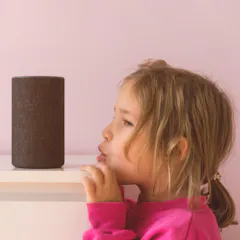
Children’s voices and actions are recorded by virtual assistants, but what is being done with all the collected information?

A Google engineer’s claims that a chatbot can feel things has prompted people to consider what consciousness means. It also begs the questions of the rights of sentient software and machines.

Fluent expression is not always evidence of a mind at work, but the human brain is primed to believe so. A pair of cognitive linguistics experts explain why language is not a good test of sentience.

Explorer came at the dawn of the public internet. For millions of people, it will always be their first experience of the World Wide Web.
A Google employee’s claims that one of its chatbots is sentient has caused a stir across the world.

Computers can now mimic everything from literary characters to Nirvana songs.

A Google engineer claims one of the company’s chatbots has become sentient. Experts disagree, but the debate raises old questions about the nature of consciousness.

Recently, concerns have been raised over the harm caused by misinformation in relation to the COVID-19 pandemic and federal elections.

App stores set the rules on privacy but there is another way.

Google search algorithms often pull up misleading descriptors for controversial people, and results can differ across languages. Understanding how these algorithms function can address misinformation.

From voting info to risqué quips, this election, online political ads are more pervasive than ever before.
Top contributors
-

Director of UWA Centre for Software Practice, The University of Western Australia
-
Senior Research Associate in Media and Communications, University of Sydney
-
Associate Professor, Faculty of Law & Justice; Lead, UNSW Public Interest Law & Tech Initiative, UNSW
-
Associate Professor, School of Law, University of Canberra
-
Professor of Cybersecurity, Head of School of Computer Science and Informatics, De Montfort University
-
Adjunct Senior Lecturer, Applied Ethics and CyberSecurity, Griffith University
-
Researcher at Microsoft Research, Cambridge UK. Previously, The University of Queensland
-
Senior Lecturer in Economics, Lancaster University Management School, Lancaster University
-
Associate Professor, Informatics and Operations, Kingston University
-
Professor of AI, Research Group Leader, UNSW
-
Professor of Cyber Security Practice, Edith Cowan University
-
Professor of Digital Communications and Culture, The University of Sydney, University of Sydney
-
Professor of Media Studies, Queensland University of Technology
-
Professor of Management and Innovation, International Institute for Management Development (IMD)
-
Associate Professor, University of Sydney