

Our research is the first to estimate what the tech giants owe publishers. The actual sums paid out are usually covered by non-disclosure agreements.
Articles on Google
Displaying 141 - 160 of 746 articles

Search engines run by generative AI could fundamentally change the online ecosystem.

Google is paving the way to serve you ads based directly on your browsing history, instead of cookies.

It’s hard to remember life before Google, when the closest thing to it was your local librarian. Soon the search engine will be offering AI-based summaries in its search results.

A new law in Canada attempts to force big tech to pay for the news stories on its sites. But big tech isn’t playing ball, which is a huge problem for journalism.
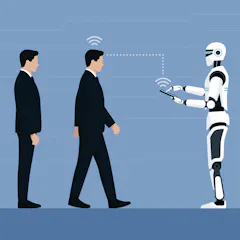
From open letters to congressional testimony, some AI leaders have stoked fears that the technology is a direct threat to humanity. The reality is less dramatic but perhaps more insidious.

A series of crises in the Canadian media sector will become a crucial test for what the country’s media landscape could and should look like in the 21st century.

Australia’s law to force tech giants like Meta and Google to pay media organizations has not always meant better outcomes for journalism. Will the same happen in Canada?

A competition is heating up between the two tech giants over AI.
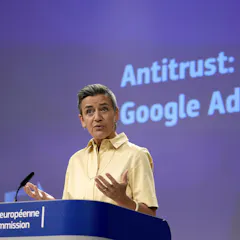
Antitrust suits against Google for its advertising practices center on the technology for buying and selling online ads. A computer scientist explains how these ad networks work.

There’s really no such thing as one global internet – it all depends on your perspective. But the internet is poised to fracturing even more.

I study artificial general intelligence, and I believe the ongoing fearmongering is at least partially attributable to large AI developers’ financial interests.

Figuring out how to regulate AI is a difficult challenge, and that’s even before tackling the problem of the small number of big companies that control the technology.

Generative AIs may make up information they serve you, meaning they may potentially spread science misinformation. Here’s how to check the accuracy of what you read in an AI-enhanced media landscape.
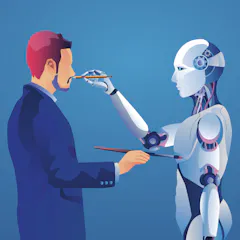
Generative AI can seem like magic, which makes it both enticing and frightening. Scholars are helping society come to grips with the potential benefits and harms.

Passwords are both annoying to use and vulnerable to hackers. Google is moving to support stronger, easier-to-use passkeys (and other tech companies are close behind).

Pausing AI development will give our governments and culture time to catch up with and steer the rush of new technology.
The new tools are expected to free up space for workers by helping out with tedious and repetitive task. Here’s how it will work.

If people rely on ChatGPT or Google for complex medical questions, they could come unstuck.
Searching the web with ChatGPT is like talking to an expert – if you’re OK getting a mix of fact and fiction. But even if it were error-free, searching this way comes with hidden costs.
Top contributors
-

Director of UWA Centre for Software Practice, The University of Western Australia
-
Senior Research Associate in Media and Communications, University of Sydney
-
Associate Professor, Faculty of Law & Justice; Lead, UNSW Public Interest Law & Tech Initiative, UNSW
-
Associate Professor, School of Law, University of Canberra
-
Professor of Cybersecurity, Head of School of Computer Science and Informatics, De Montfort University
-
Adjunct Senior Lecturer, Applied Ethics and CyberSecurity, Griffith University
-
Researcher at Microsoft Research, Cambridge UK. Previously, The University of Queensland
-
Senior Lecturer in Economics, Lancaster University Management School, Lancaster University
-
Associate Professor, Informatics and Operations, Kingston University
-
Professor of AI, Research Group Leader, UNSW
-
Professor of Cyber Security Practice, Edith Cowan University
-
Professor of Digital Communications and Culture, The University of Sydney, University of Sydney
-
Professor of Media Studies, Queensland University of Technology
-
Professor of Management and Innovation, International Institute for Management Development (IMD)
-
Associate Professor, University of Sydney