

Informal governance is both a survival mechanism and a structure of power.
Articles on Harare
Displaying all articles
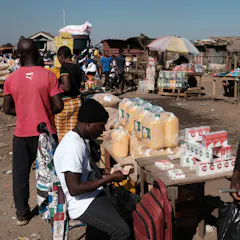
Economic crises since the 1990s led to a sharp rise in Zimbabwe’s informal economy, hence some call the country a nation of vendors.
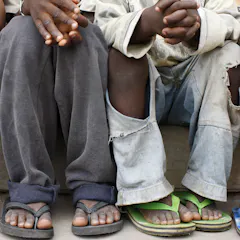
It is not enough to merely send street children home to their families: everyone involved needs sustained support.

What outsiders might view as wasted time (betting on sports) is actually being used productively to prepare for the future.

Women’s representation in Zimbabwe’s parliament has declined in spite of a quota imposed in 2013.
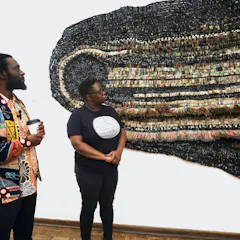
Using found materials from dump sites, the large scale works examine the residues of colonialism.
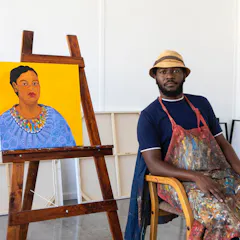
Harare aims to join a growing list of African cities hosting high profile events to sell local art and bolster artists.

To kick-start ethical regeneration of Zimbabwean society political leaders need to take the lead in the fight against corrupt and speculative activities.

How Harare has dealt with its urban canine citizens over the years following independence reflects the competing visions of a modern city.

Gallerist and writer Robert Huggins and his wife, the artist Helen Lieros, have passed away. But their lives are a testament to what kind of impact one African art gallery can have.
CC BY-NC-ND8.32 MB (download)
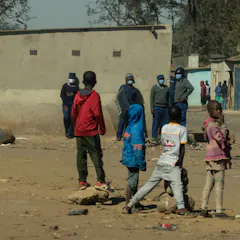
A story map shows how Harare's young people coped with lockdown in Zimbabwe.
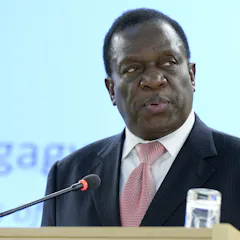
President Emmerson Mnangagwa’s decision to double the price of petrol shows very poor judgement and bad leadership.
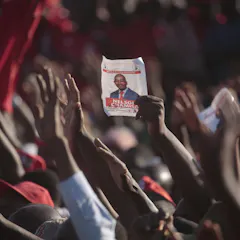
Zimbabweans face a complicated array of choices at the polls.
After the fall of autocratic ruler Robert Mugabe, Zimbabwe faces a difficult choice between the stability of a transnational government or a potentially divisive election contest.
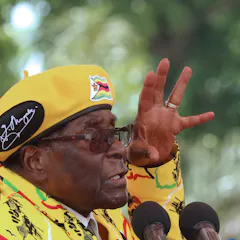
Are we witnessing the end of an era in which dictators stayed in power for decades? If so this must be good not only for Angola and Zimbabwe but for southern Africa as a whole.

The effects of President Mugabe’s post-independence security clampdown that led to the murder of between 10 000 and 20 000 Zimbabweans, known as the Matabeleland massacre, continue to be felt.
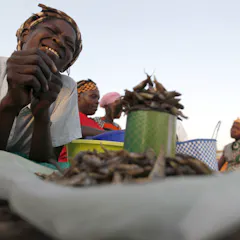
The harassment of informal food vendors by national and municipal governments remains a major impediment to improving the resilience of the urban poor in African cities.
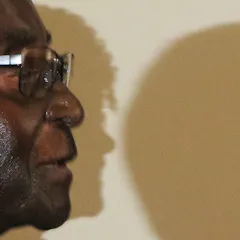
Leo Zeilig’s novel features a superbly crafted cast of characters. It’s a page turner for readers interested in the profound questions of radical politics and humanity.
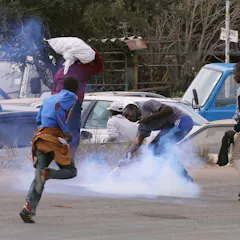
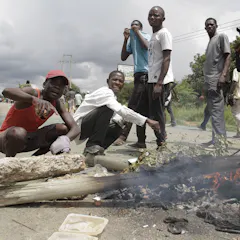
The protest by Zimbabweans against police road blocks and banned imports highlights a new political economy that is rising on the back of informalisation of the economy.
Top contributors
-

Assistant Professor, Harvard University
-
Professorial Fellow, Institute of Development Studies
-
Founding Director of Program on Intrastate Conflict, Harvard Kennedy School
-
Professor of Democracy, University of Birmingham
-
Emeritus Professor, University of Cape Town
-
Honorary Senior Research Fellow, University of Stirling
-
Research Associate, Dept of Anthropology & Development Studies and Fellow, Clare Hall, University of Cambridge, University of Johannesburg
-
Professor of Anthropology, University of the Western Cape
-
Researcher, University of Dundee
-
Postdoctoral Researcher, The Nordic Africa Institute
-
Post-doctoral research fellow in the International Studies Group, University of the Free State
-
Professor, University of Dundee
-
Associate Professor of Sociology & Director of the Centre for Data Ethics at the Institute for Intelligent Systems, University of Johannesburg
-
PhD candidate in Art History, Rhodes University
-
Professor of History, Stellenbosch University