
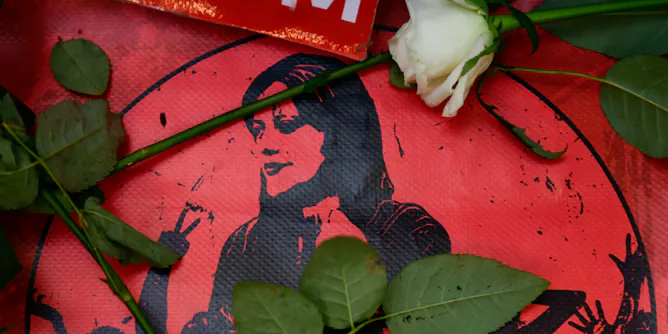
Protests over the death in custody of Mahsa Amini have gone global. But in Iran there is a unique version, known as ‘amameh parani’, targeting a garment sacred to Shi’a clerics.
Articles on Hijab
Displaying 21 - 40 of 77 articles
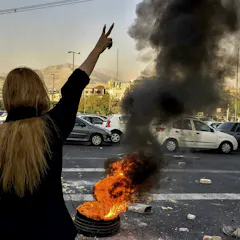
The veil as a symbol of oppression has once again moved to center stage in Iran, but it’s important to know about the history of veiling – and mandatory unveiling.
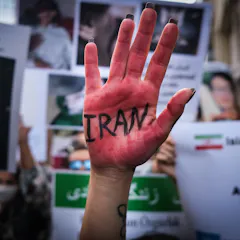
Iran’s constitution guarantees human rights but its government doesn’t.

As calls for greater freedom grow, the author examines how secularism might work in Iran.
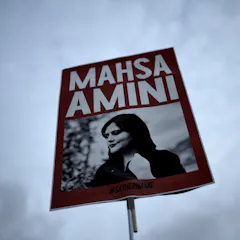
Iranian women have a long history of campaigning for their rights. The latest protests bring together a host of religious and gender groups suppressed by the country’s clerical regime.
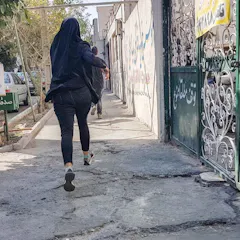
In a range of ways, young Iranian women – with the support of men – are working to change their lives and with that, their country.
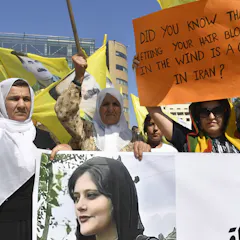
A powerful protest movement has taken hold in Iran following the death of Mahsa Amini. It may affect change, but it is up against a ruthless regime that will not easily relinquish control.
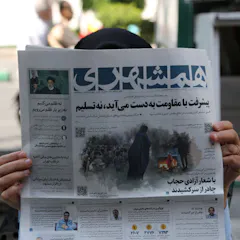
Controversy of veils goes back more than a century, a scholar of Iran explains.
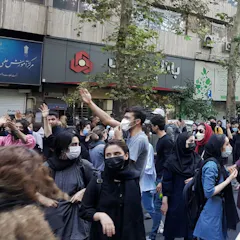
In 1979 the decision of military commanders not to fire on protesters led to the revolution. There is no sign of that yet.
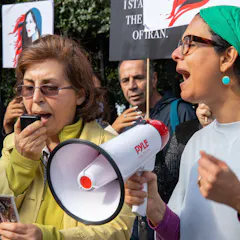
Protesters call for a change in rules over what women are forced to wear in Iran. An expert tells us what the law says.
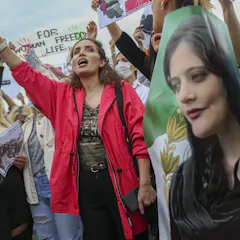
Imposing restrictions on women has been a way for many countries to demonstrate to the world what policies they want to pursue.
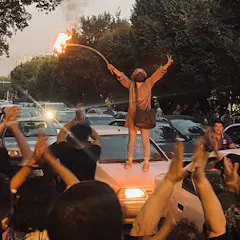
Data shows that more than half of Iranian women oppose the compulsory wearing of hijabs and that the vast majority oppose an Islamic Republic.

Women have long demanded change in Iran. In the aftermath of the death of a woman for a hijab violation, women protesters may be leading their country to a freer and more just society.
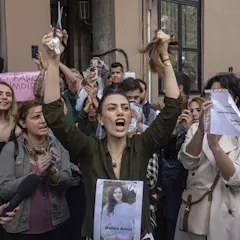
Feminist campaigners are using the internet to challenge the conservative establishment and empower Arab women.

The Québec government thought it would Charter-proof its religious symbol law when it invoked the nothwithstanding clause. It was wrong.
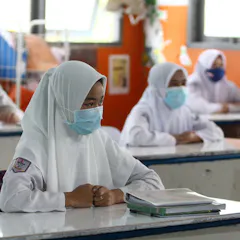
Under Indonesian rules designed to protect religious freedom, female Muslim students are not compelled to wear “Muslim attire”. But those regulations are often interpreted differently by schools.

Hijab controversy in Nigeria’s public schools has further exposed how religion has polarised Africa’s most populous nation.

Ignorant assumptions about what the headscarf means fail to recognise how integral it can be to a woman’s identity.
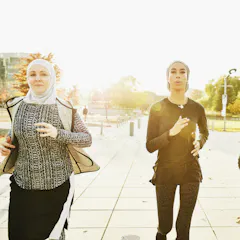
Two researchers collected data from Muslim women in 34 countries on their views on wearing sports hijab. Here is what they found.
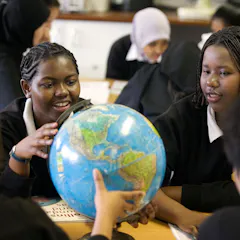
In the absence of explicit national legislation against hair-based discrimination, young people are demanding fairer rules - and a culture shift.
Top contributors
-

PhD Candidate, Feminist and Gender Studies, L’Université d’Ottawa/University of Ottawa
-
Associate Professor (Senior Lecturer) in Middle East Politics & International Relations at Keele University, Keele University
-
Visiting Scholar in Religious Studies and Gender, Northwestern University
-
Professor of Communication Studies; Research Chair on Intersectionality, Violence and Resistance, Concordia University
-
Director, Executive Leadership Academy, University of California, Berkeley
-
chercheure associée au LEGS de Paris 8 spécialiste de genre et conflits armés, Université Paris 8 – Vincennes Saint-Denis
-
PhD Candidate, Lancaster University
-
Reader in International Development, University of Westminster
-
Professor and Chair of Department, University of Sydney
-
PhD Candidate, Digital Media Research Centre, Queensland University of Technology
-
Senior Lecturer in Politics, King's College London
-
Associate Professor of Media and Communication at Monash University, Malaysia., Monash University
-
Professor of Philosophy and Religion, Northeastern University
-
Associate Professor, School of Criminology, University of Leicester
-
Professor, Université Sidi Mohammed Ben Abdellah