

Two Denisovan leg bones from Taiwan came from tall individuals. But we can’t generalise to a whole species just yet.
Articles on Homo erectus
Displaying 1 - 20 of 29 articles

The discovery points to a long evolutionary history in north Africa, much earlier than modern Homo sapiens.
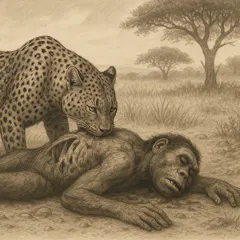
Paleoanthropologists have thought that Homo habilis was the first stone-tool maker and meat-eater in our genus. But new research suggests H. habilis might not have been so advanced.
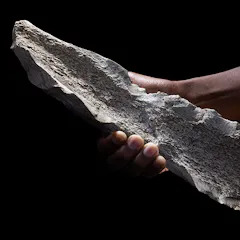
By 1.5 million years ago, Homo erectus was able to transfer tool-making skills from stone to bone.
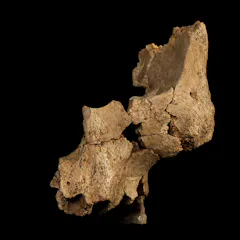
Western Europe appears to have been difficult territory for early human relatives to settle in.

A fossil face reveals that a prehistoric human species reached Western Europe much earlier than anybody thought.
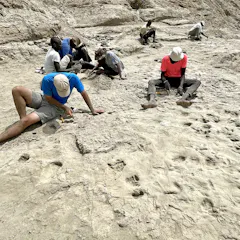
Ancient fossil footprints are the first evidence of two different hominin species − Homo erectus and Paranthropus boisei − living in the same place at the same time.

Our understanding of human ancestry has changed dramatically since the discovery of Lucy the ancient hominin 50 years ago. Here is the history of humanity as we know it today.

What do the world’s fastest creatures on land, sea and air all have in common? My colleagues and I have taken a key step towards solving this mystery.

New 700,000-year-old fossils from island east of Bali hint at ancient shrinking of extinct miniature humans.
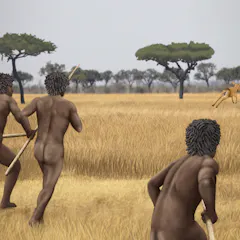
Africa’s large mammal heritage has formed a deep cultural legacy for all of humankind.
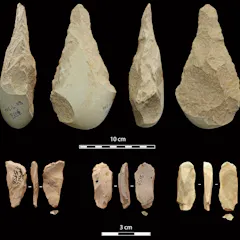
Knowing that our North African ancestors were making handaxes helps scientists to understand how our human ancestors spread across the African continent.
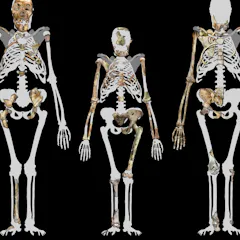
Walking has taken a very long time to develop, with evidence of bipedalism among early humans in Africa roughly 4.4 million years ago.

This is a hugely important find. It means that one of our earlier ancestors possibly originated in southern Africa.

Our extinct, distant cousins still lived in Indonesia 110,000 years ago.

300,000 years ago, there were lots of different species of human. Now it’s only us – and we’re probably the reason why.

New research models how the Homo floresiensis species could have evolved its small size remarkably quickly while living on an isolated island.

New research outlines how the ancestors of modern humans interbred with several archaic human groups on the passage from Africa to Australia.

No area of archaeology has seen such vibrant change in recent times than how we understand our family tree. Could 2019 be the year we learn more about our mysterious ancestor Homo erectus?
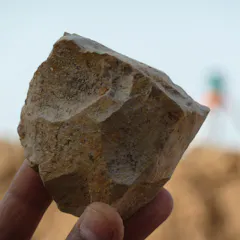
New discovery could be a game changer for archaeology.
Top contributors
-

Professor of Archaeology, Griffith University
-
Associate Professor in Hominin Palaeoecology, Bournemouth University
-
Senior Lecturer in Palaeolithic Archaeology, University of Southampton
-
Paleoanthropologist, University of Wisconsin-Madison
-
Lecturer in African Studies, Yale University
-
Professor in Archaeology, University of New England
-
Emeritus Professor, University of Cape Town
-
Adjunct professor, UNSW
-
Researcher of Prehistoric Archaeology, Université Paul Valéry – Montpellier III
-
Emeritus Research Professor of African Ecology, University of the Witwatersrand
-
Professor of Archaeological Science, Flinders University
-
Professor of Ecology and Evolution, Universidade Federal de Goiás (UFG)
-
Professor of Anthropology, University of Tennessee
-
Senior Lecturer in Paleontology and Evolutionary Biology, Life Sciences at the University of Bath, University of Bath
-
Professor of Environmental and Geographical Sciences, Bournemouth University; University of Reading