
Advances in genetic engineering have enabled researchers to seek ways to program new life. But has synthetic biology actually changed medicine and the environment, nearly two decades on?
Articles on Human Genome Project
Displaying 1 - 20 of 50 articles

Researchers are embarking on the RNA equivalent of the Human Genome Project, including sequencing all the chemical modifications that make cells unique.

Genetic insights into the Fulani people not only illuminate their biological history but also enrich our understanding of their cultural and historical narratives.
On DNA Day, Canada should be inspired by the lifesaving discoveries of its researchers. However, lack of funding threatens Canadian researchers’ ability to meet the challenges of the future.

As genetic engineering and DNA manipulation tools like CRISPR continue to advance, the distinction between what science ‘could’ and ‘should’ do becomes murkier.

The African BioGenome Project is a pan-African project that seeks to sequence Africa’s endemic and indigenous plants and animals.

Advances in technology have enabled researchers to sequence the large regions of repetitive DNA that eluded the Human Genome Project.

Record-breaking technology can sequence an entire human genome in a matter of hours. The work could be a lifeline for people suffering from the more than 5,000 known rare genetic diseases.

Three pioneering technologies have forever altered how researchers do their work and promise to revolutionize medicine, from correcting genetic disorders to treating degenerative brain diseases.
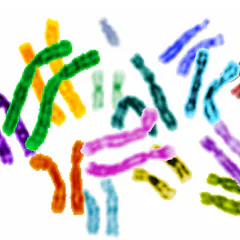
Two decades after the ‘full’ human genetic code was released to global fanfare, researchers have finally filled in the blanks that made up 8% of the sequence, thanks to recent advances in genome sequencing.

The first full human genome was sequenced 20 years ago. Now, a project is underway to sequence 1 million genomes to better understand the complex relationship between genetics, diversity and disease.

The achievement didn’t live up to the hype, but it has illuminated new areas of ‘genetic dark matter’.
Genome sequencing technologies have transformed biological research in many ways, but have had a much smaller effect on the treatment of common diseases.

Nearly 20 years ago, Bill Clinton said that sequencing the human genome would give us a “new power to heal”.
A new study in Nature finds that large research teams develop recent ideas, while small teams conduct more disruptive and innovative research.

In 2003 the Human Genome Project “cracked the code of life”, yet parts of our DNA remained unidentified. A new study fills out our genetic blueprint by using a nanotechnology-based technique.

Cancer researchers dream of offering personalized treatments to patients. Can they get there using the same math that drives Netflix recommendations?
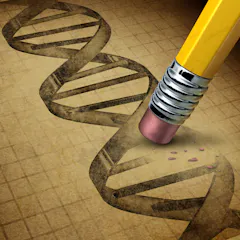
A recent closed meeting about building synthetic genomes raised suspicions about just what scientists were planning, away from the public eye.
It seems like a no brainer to edit out genetic disease…until we pause to consider what would be lost.

The compact system that can cut the process of sequencing the Ebola virus from weeks to days.
Top contributors
-

Honorary Fellow, Department of Pathology, The University of Melbourne
-
Chair Precision Medicine, Monash University
-
Professor of Genomics, The University of Melbourne
-
Head, Molecular Medicine Laboratory, WEHI (Walter and Eliza Hall Institute of Medical Research)
-
Professor in Functional Genetics, University of Aberdeen
-
Chair, The Conversation Media Group
-
Clinical Project Manager for the Melbourne Genomics Health Alliance, WEHI (Walter and Eliza Hall Institute of Medical Research)
-
Professor of Molecular Bioscience and Deputy Vice-Chancellor (Research), University of Sydney
-
MRC Special Training Fellowship in Biomedical Informatics, University of Birmingham
-
Adjunct Professor, Murdoch University
-
Executive Director, Melbourne Genomics Health Alliance
-
Senior Lecturer in Microbiology & Infectious Diseases, Western Sydney University
-
Research Scientist in Mathematics, Informatics and Statistics, CSIRO
-
Ph.D. Candidate in Chemical Biology, Harvard University
-
Associate Professor of Law, Bond University