
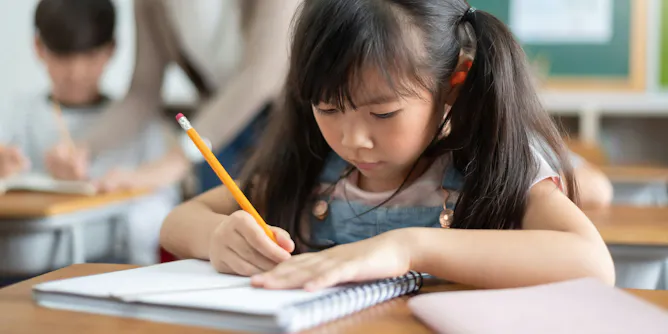
Student success depends not only on children’s readiness to learn but also on schools’ readiness to welcome and affirm who they are.
Articles on Inclusive classrooms
Displaying all articles

Inclusive education doesn’t just mean placing disabled children with their non-disabled peers, but re-organizing teaching and learning in the classroom.

Integrating autistic students fully and meaningfully in classrooms is important for their education, for broader classrooms as well as for families’ employment security and well-being.
The government must call together a task force of educators, families and researchers to work toward better solutions for inclusive education as education for all.

‘Don’t Say Gay’ bills claim to use science to justify a binary definition of sex based on certain traits. But the biology of sex and gender is not so simple.

Traditional learning formats often fail marginalized students. We should be skeptical of a ‘one-size-fits-all’ or even ‘one-size-fits-most’ model.
There is good evidence behind some of the recommendations from the Gonski review that will help all students, particularly those who get left behind.

Leaving young people to figure sexuality and sex out themselves could result in ill-informed decision-making, and withholds knowledge that is their right to have.
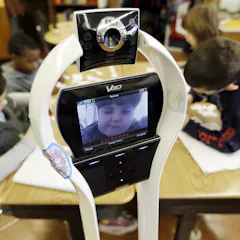
Students with chronic illness often get only a few hours of education a week. Telepresence robots could let them participate fully in classroom and school activities.

Developing friendships in classrooms is important for kids. How can teachers help?
Top contributors
-

Professor of Adolescent Health, Co-Head of the General Practice Clinical School, University of Sydney
-
Professor and Director of the Centre for Inclusive Education, Queensland University of Technology
-
NIH NCATS Biomedical and Health Informatics Fellow, University of California, Irvine
-
Professor of Special Education and Department Head, University of Illinois Urbana-Champaign
-
Senior lecturer, University of Sydney
-
Researcher in Inclusive Education, Monash University
-
Assistant Professor of Education, University of Vermont
-
Professor of Education and Informatics, University of California, Irvine
-
Associate professor, Department of Pediatrics, McMaster University
-
Professor, Political Science, McMaster University
-
Postdoctoral Scholar, McMaster Children and Youth University, Department of Pediatrics, McMaster University
-
Professor & Director, Canadian Research Centre on Inclusive Education, Western University
-
Assistant Professor of Biological Sciences, Florida International University
-
Postdoctoral Fellow, University of British Columbia
-
Associate Professor of Health Studies, Research Associate, International Migration Research Centre, Wilfrid Laurier University