

University histories need to be re-examined with attention to the role of Indigenous Peoples, connections to Residential Schools and universities’ fundraising efforts.
Articles on Indigenous
Displaying 261 - 280 of 768 articles
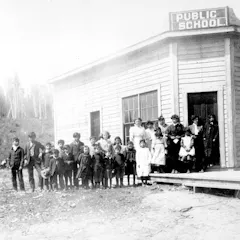
In B.C., residential school principals sat on public school boards, and some Indigenous children even attended public schools. Understanding such links matters for truth and reconciliation.

To fully understand what led to the stabbings in James Smith Cree Nation, we need to look at how the legacy of settler colonial violence impacts Indigenous communities.

In the middle of the tremendous outpouring of love and grief for the Queen and the monarchy she represented, not everyone wants to take a moment of silence. And there are a lot of reasons why.
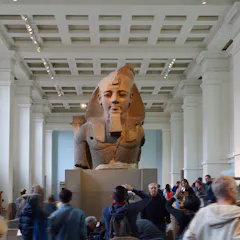
Western museums are beginning to re-evaluate how they portray cultures and history and return stolen artifacts. But for change to be meaningful, it needs to be truly inclusive.

The Albanese government’s decision to eliminate the cashless debit card has been celebrated but the effect on First Nations communities has raised concerns.
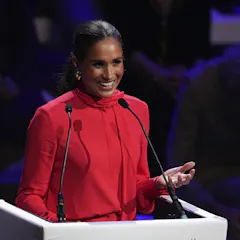
Shadeism, also known as colourism, is a global issue rooted in white supremacy but it’s seldom discussed here in Australia
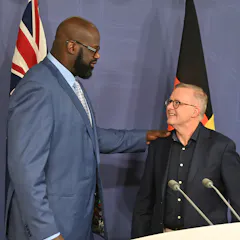
Is the Albanese government’s decision to bring NBA star Shaquille O'Neal in on Indigenous reform inspired or ‘cultural cringe’?

Indigenous-led conservation economies have immense reconciliatory potential and need to be respectfully supported and engaged in order to create a new shared and equitable economic system.

The common misconception among Canadians that Indigenous people do not pay any taxes perpetuates harmful stereotypes and hinders reconciliation.
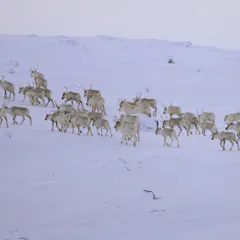
Support for Inuit and other Indigenous-led strategies for conservation and community well-being must be prioritized.
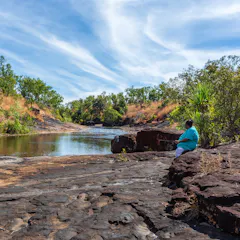
Reports of barriers facing Indigenous people with disability in remote communities are not new. Let’s stop relying on old excuses.
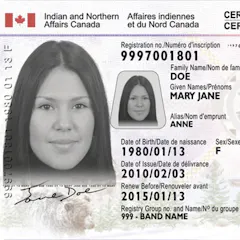
Challenging Indigenous identity fraud in academia must name and focus explicitly on structures of whiteness, white entitlement and settler colonialism so we don’t recreate the harms of past policies.
Beyond revamping misleading terminology, some library science scholars and Indigenous knowledge holders are looking at how to index library materials in ways that reflect Indigenous knowledge.

The Pope’s apology could mark a new way forward if the Catholic Church makes genuine reparations for the evils it perpetrated.

Visiting Indigenous people on their land was a step in the right direction, but the pope’s visit was full of tensions over both what was said and what wasn’t.

Apologizing for people versus the establishment that upheld not only the Indian Residential Schools system but protected – and continues to protect — the people who committed the crimes is horrifying.

Whether this apology has truly advanced the goal of healing may become evident only in years and decades to come.
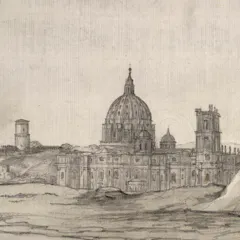
Residential schools and the papal bulls justifying the doctrine of discovery call out for concrete acts of atonement and reparation on the part of the church.

Pope Francis’ visit concerns all Canadians. It’s about our relationship to history and the construction of a state that marginalized Indigenous people and tried to assimilate them.
Top contributors
-

Professorial Fellow, University of Canberra
-
Professor of Law, University of Technology Sydney
-
Professor, Faculty of Education, University of Manitoba
-
Professor of Economics and Public Policy, ANU College of Arts and Social Sciences, Australian National University
-
Associate Professor, Departments of History and Indigenous Studies, University of Manitoba
-
Associate professor, McGill University
-
Assistant Professor, Indigenous Methodologies, Chanie Wenjack School of Indigenous Studies, Trent University
-
Professor of Political Science, University of Guelph
-
Executive Co-Director, UNU Hub on Empowering Communities to Adapt to Environmental Change, Institute for Water, Environment and Health, United Nations University; University of Calgary
-
Associate Professor, UNSW
-
Professorial Fellow, Jumbunna IHL, University of Technology Sydney
-
Professor, Critical Indigenous Studies and Director of The Centre for Global Indigenous Futures, Macquarie University
-
Professor of History, University of Illinois Urbana-Champaign
-
Associate Professor, Faculty of Law & Justice, UNSW
-
Adjunct Professor, RMIT University