

Linguistic rights are human rights that apply to majorities and minorities alike, not just at the discretion of those who hold power.
Articles on Indigenous
Displaying 321 - 340 of 768 articles

Australia’s political economy was built on the primacy of (white) male labor, male power and male control, writes Julianne Schultz. Women have changed this culture - but still risk abuse when speaking out.

Reconciliation can help address the interrelated global problems of climate crisis, interspecies displacement, gendered and racialized violence and white supremacist structures.

Participants in the “freedom convoy” have been allowed to carry on with minimal police and state interference in contrast to how Black and Indigenous protesters have been treated in the past.

Learning from Indigenous cultures to treat animals as more than just food sources could help us combat the climate crisis.
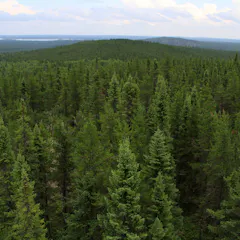
The Ring of Fire Regional Assessment is Canada’s first opportunity to apply new legislative tools to co-operating with Indigenous jurisdictions. But the government is messing up.

Indigenous Nations have always maintained their citizenship orders. They have always retained the right to determine who does and does not belong. We know who we are.

Rather than sitting in the back seat, Indigenous Australians must be up front in managing the recovery of Australia’s unique and precious environment.

Plus, a lawyer explains the legal battle over Canada’s discriminatory First Nations child welfare system. Listen to The Conversation Weekly.

In the next year, public support will be needed more than ever to ensure that the spirit of the agreement is respected and translated into meaningful change for First Nations children.

When the media consults the CTF, it demonstrates contemporary hostility towards Indigenous nations. Viewing the CTF’s advocacy as a whole demonstrates their orientation very clearly.

Sea ice is thinning at an alarming rate. Snow is shifting to rain. And humans worldwide are increasingly feeling the impact of what happens in the seemingly distant Arctic.
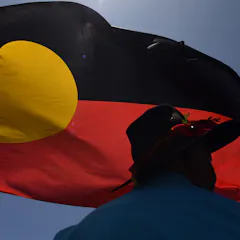
There has been a clear trend since the 1980s towards more favourable public attitudes on Indigenous issues. The reason? A better-educated citizenry.
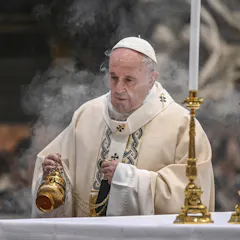
A papal apology, if done in ‘a good way,’ could help remove barriers to transforming harmful relationships between Indigenous Peoples and the Catholic Church.
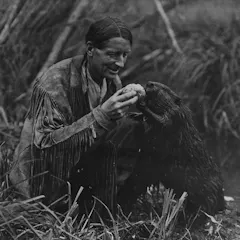
Those quick to call-out are often not clamouring for Indigenous nations’ jurisdiction over citizenship, nor are they demanding “pretendians” be held accountable to Indigenous nations.
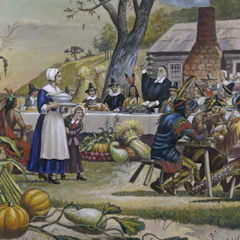
The communion between Native Americans and the Pilgrims makes for a compelling narrative. But it masks the suspicions and brewing violence that were far more representative of the era.
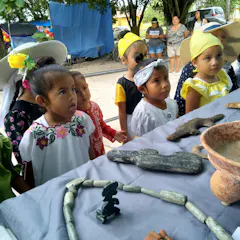
What’s happening in Belize is a work in progress. Its citizens pursue diverse self-determined actions along with repatriation as steps toward generational healing and redress.
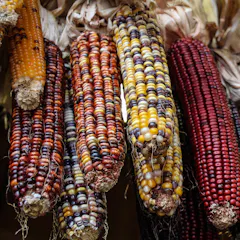
Our food systems are failing to feed all of us.
In this episode of Don’t Call Me Resilient, we pick apart what is broken and ways to fix it with two women who battle food injustice.
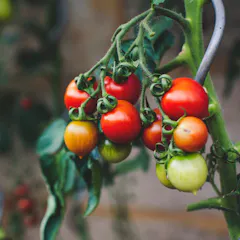
The COVID-19 pandemic has highlighted the problem of food insecurity for many people, especially racialized and Indigenous households.
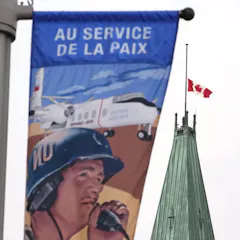
Remembrance Day has typically focused on commemorating the costs of military conflict. It is time to reconsider what and we remember and how.
Top contributors
-

Professorial Fellow, University of Canberra
-
Professor of Law, University of Technology Sydney
-
Professor, Faculty of Education, University of Manitoba
-
Professor of Economics and Public Policy, ANU College of Arts and Social Sciences, Australian National University
-
Associate Professor, Departments of History and Indigenous Studies, University of Manitoba
-
Associate professor, McGill University
-
Assistant Professor, Indigenous Methodologies, Chanie Wenjack School of Indigenous Studies, Trent University
-
Professor of Political Science, University of Guelph
-
Executive Co-Director, UNU Hub on Empowering Communities to Adapt to Environmental Change, Institute for Water, Environment and Health, United Nations University; University of Calgary
-
Associate Professor, UNSW
-
Professorial Fellow, Jumbunna IHL, University of Technology Sydney
-
Professor, Critical Indigenous Studies and Director of The Centre for Global Indigenous Futures, Macquarie University
-
Professor of History, University of Illinois Urbana-Champaign
-
Associate Professor, Faculty of Law & Justice, UNSW
-
Adjunct Professor, RMIT University