
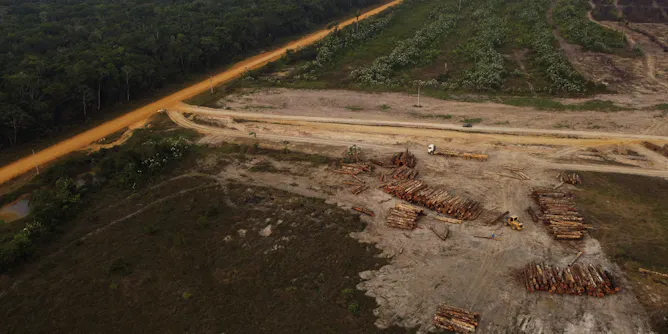
Getting serious about protecting global biodiversity requires not just policy but a revolution in how we talk about, and with, our planet’s forests.
Articles on Indigenous knowledge
Displaying 61 - 80 of 174 articles

Digitalisation offers a way to preserve indigenous knowledge of agricultural practices and connect new generations of farmers to knowledge and wisdom from the past.

Indigenous knowledge of spiritual protection could help fight crime.

To the ǀXam and San people, being in the world as a person includes “the sky’s things” - an understanding of and deep connection with the cosmos.
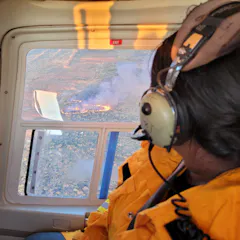
Deserts in Australia burn – and burn big – if fuel is left to build up. But this year, Indigenous rangers across the deserts have burned huge tracts early to make Country healthier.

Many ‘myths’ are authentic memories of human pasts, told by people who passed down precise accounts of their history.

In-person collaboration between Indigenous communities has been aided by information technologies like Zoom. However, recent attempts to mine personal data raise concerns about data ownership.
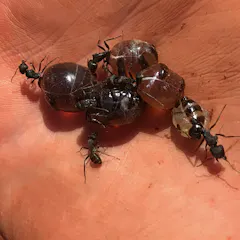
Experiments show honey from Australian desert ants has potent antimicrobial power.
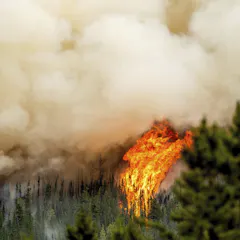
To effectively address climate hazards like wildfire, we must consider the diverse experiences of people, account for longstanding institutions and create processes that empower local people.
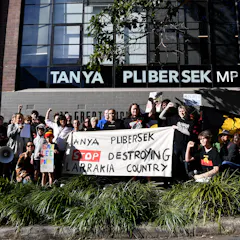
The Darwin woodland is home to endangered species and important for the Larrakia people. The development approval requires habitat offsets – yet the minister herself has publicly doubted offsets work.
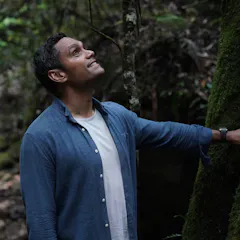
The First Inventors documentary series is appearing on our screens at a time when Australia engages in some big national conversations about voice, truth, and treaty.

As we approach the start of gardening season, it’s a good time to ask some questions about what to plant and who gets to plant.
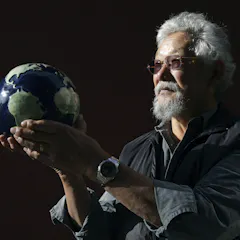
In a new edition of his classic work, Suzuki suggests the major crises we face – pandemics, climate disruption, biodiversity loss – all have roots in our lack of recognition of our place in nature.
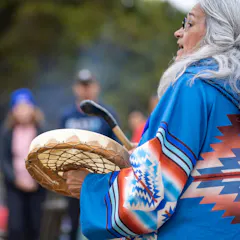
Canada’s commitment to halt biodiversity loss can only be realized by weaving together Indigenous and non-Indigenous knowledge.

Strange barren patches in the Australian outback have been long-studied by scientists – but until recently, nobody had consulted the Aboriginal people who live among them.
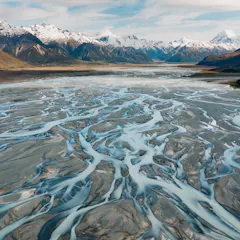
One key difference between kaitiakitanga and conservation is that the former considers people as part of the environment, while the latter manages nature as if people were separate from it.
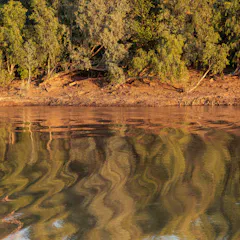
A fascinating new collection of essays explores Indigenous deep histories and conceptions of time, showing pre-colonial Australia’s rich human past.
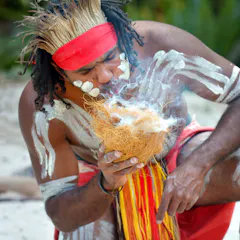
First Nations people should have a real say in decisions affecting them and their Country. Here, we look at how two current policy-making efforts measure up.
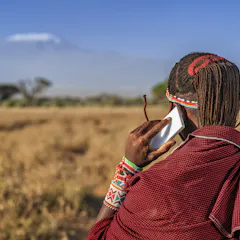
The huge gathering of policymakers focused on culture’s crucial role in sustainable development.

A recurrent theme in the testimonies of Residential School survivors is how their cultural and linguistic identities were adversely affected.
Top contributors
-

Research Associate, African Centre for Coastal Palaeoscience, Nelson Mandela University
-
Professor, Faculty of Education, University of Manitoba
-
Professor, North-West University
-
Professor, UNSW
-
Senior Scientia Lecturer (Research), UNSW
-
Clive Thompson is a Friend of The Conversation.
Research Associate, African Centre for Coastal Palaeoscience, Nelon Mandela University; Research Associate, Research Associate, Centre for Transformative Regulation of Work, University of the Western Cape
-
Professor, University of Oxford
-
Professor of Science, University of Technology Sydney
-
Sean Ulm is a Friend of The Conversation.
Director, ARC Centre of Excellence for Indigenous and Environmental Histories and Futures, James Cook University
-
Founder of Msit No’kmaq
-
Professor of Environmental Geography, Royal Holloway, University of London
-
Associate Professor, Singapore Management University
-
Professor, Environment and Development Sociology, The University of Queensland
-
Professor of Philosophy of Science, Durham University
-
Associate professor in Vertebrate Palaeontology, University of the Witwatersrand