
There’s little transparency about who has access to deeply personal medical data or how companies handle it.
Articles on Informed consent
Displaying 1 - 20 of 30 articles

Aerial lidar raises ethical questions because it can collect data remotely without the knowledge or consent of Indigenous and descendant populations that are on the ground.
Continuous tracking using real-time location systems is becoming increasingly common in hospitals and long-term care homes, raising questions about ethics and data use.

The Catholic Church opposes assisted suicide and euthanasia, but it also doesn’t support treatments that prolong suffering in the face of unavoidable death.
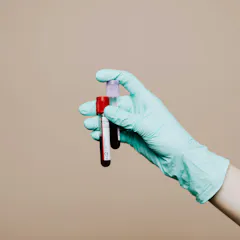
In most cases, leftover pathology samples are thrown away. Sometimes though, they may be used again for other purposes, including research.

The tech industry and police must listen to the concerns of victim-survivors when using child sex abuse material for legitimate purposes.

The Nuremberg Code was developed during trials for Nazi officials accused of performing inhumane experiments − but its influence has been far wider.

Biobanks collect and store large amounts of data that researchers use to conduct a wide range of studies. Making sure participants understand what they’re getting into can help build trust in science.

A scholar who has studied imprisonment explains why the promise of sentence reductions in return for organ donation raises ethical issues about whether inmates can ever consent freely.

Researchers have a number of responsibilities when embarking on their work - not least of all to the participants.

With no clear biomedical basis for most early surgery on intersex children, interventions should be postponed until a child is competent to decide for themselves.

Why are sex workers routinely excluded from debates on their own legal and human rights?

Aged-care residents will be among the first to receive the Pfizer vaccine when the rollout begins next week. For some, the process of consenting to the vaccine could raise ethical questions.
Cyber-attacks on medical devices and hospital networks are a growing threat, and patients have the right to know.

There is a growing call for so-called challenge trials to speed up vaccine development.

The tragedy at Whakaari/White Island highlights the need for consent forms to ensure tourists are fully informed when choosing to visit dangerous locations.
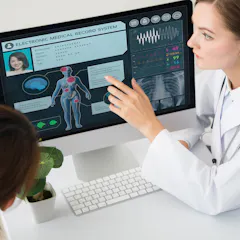
A project involving tens of millions of patient records poses ethical issues, even though patients could ultimately gain. Here’s why privacy concerns are a hurdle.

Deliberately infecting people with a disease-causing agent as part of carefully considered medical research can be ethically acceptable or even necessary.

Most tech companies make it difficult for users to say no to aggressive surveillance practices. But it is helpful to know about the default settings on your smartphone and how to change them.

Questions abound about whether the scientist who created the first gene edited human beings took shortcuts in the ethical oversight process. But pedantically focusing on protocol misses the point.
Top contributors
-

Professor, Head of Institute for Ethics in Technology - TUHH, Technical University of Hamburg
-
Professor of Human Genetics: Stem Cell Researcher, University of Cape Town
-
Professor of Law and Director, Center for Law Health and Society, College of Law, Georgia State University
-
Associate Professor, Faculty of Social Sciences, University of Nottingham
-
Professor in psychology, Australian Research Council Future Fellow, Flinders University
-
Military Space Bioethicist, UNSW
-
Director of the Steve Biko Centre for Bioethics and Adjunct Professor and Head of Department of Bioethics at the Faculty of Health Sciences, University of the Witwatersrand
-
Associate Professor of Public Policy and Women's Studies, University of Michigan
-
Assistant Professor of Law, Georgia State University
-
Director of Consumer Privacy, Center for Internet and Society, Stanford University
-
Professor, The University of Melbourne
-
Sessional Academic, Solicitor, Macquarie University
-
Director of the Program for Empirical Bioethics, Associate Professor of Medicine, Duke University
-
PhD Candidate, Steve Biko Centre for Bioethics, Faculty of Health Sciences, University of the Witwatersrand
-
Associate professor, Department of Recreation and Leisure Studies, Brock University