
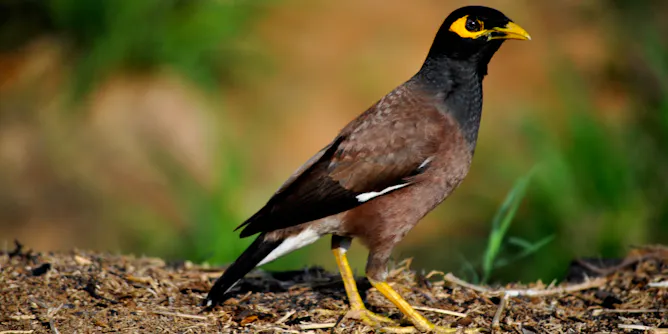
Plants and animals that are seemingly harmless in their native habitats can become quite aggressive or even destructive in a new location. Think of the rats that have been a source of human and animal…
Articles on Invasive species
Displaying 361 - 380 of 380 articles
Domesticated rabbits arrived in Australia with the first fleet and some became established as feral populations around colonial settlements as early as the 1830s. However, the situation changed dramatically…
My cat caught a starling this week. By the time I intervened, the poor bird’s leg was broken, the kitchen floor was strewn with feathers, and I had to make one of those awful decisions. Was I to leave…
New molecular techniques show that an iconic palm only grows in central Australia because humans moved it there thousands of years ago. It poses the question: should we still regard this as a native species…
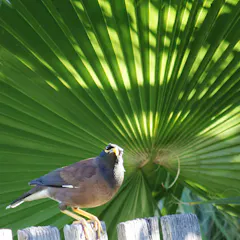
In Australia we are all too familiar with devastating environmental impacts of introduced species such as foxes, rabbits and cane toads. But did you know that some introduced species may have a relatively…
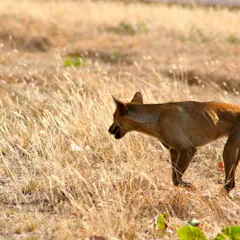
The sad reality of human-dingo relations is that blood will be shed, as Brad Purcell recently reminded us in these pages with his article about non-violent co-existence, The Australian Dingo: to be respected…
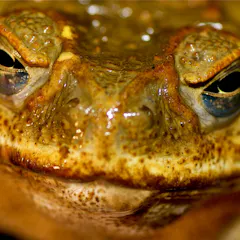
The cane toad’s highly toxic poison could ultimately prove the most effective weapon against the invasive species itself, according to a team of researchers who say the poison is an effective bait for…
Worldwide, and especially in Australia, much valuable science is being wasted or stalled through what is known as technology rejection – the public’s hostile reception of new technologies or scientific…
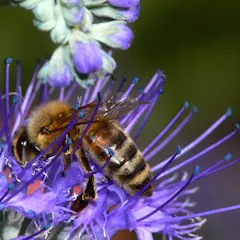
In many countries there has been concern about a decline in honeybees. You may have even heard that honeybees face dangers so dire that their imminent decline threatens world food production, with potential…
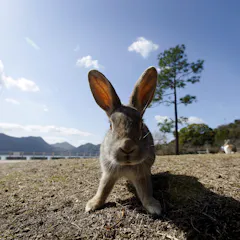
Rabbit-killing viruses - first myxoma, then rabbit haemorrhagic disease - have rid many of our landscapes of rabbits and lulled Australians into a false sense of security. Rabbits are now fighting back…
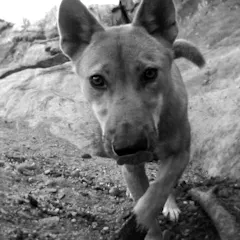
Native status is a big deal. It affects where conservation dollars are spent, and our inherent reaction to a species. Most people believe that native equals good and alien equals bad, but in some cases…
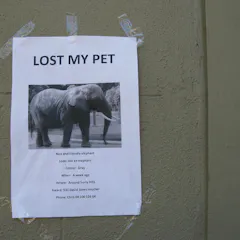
Last week I published an opinion piece in Nature attempting to crystallise debate on a number of issues in Australian environmental management: bushfires, weeds, feral animals, management of Aboriginal…
A University of Tasmania scientists has suggested that introducing elephants, rhinoceros and Komodo dragons in mainland Australia…
Researchers say much more could be done to predict the likelihood and spread of serious disease - such as tuberculosis (TB…
Global transport networks are increasing the number of exotic invasive species coming into Australia, some of which have…
The toxins produced by cane toads kill many Australian predators that eat them. But to date, the potential economic impact…
Image courtesy of Nick Clemann Daring members of the animal kingdom practise hitch-hiking, a feat that might lead to serious…
Image courtesy of Noel Burkead. A highly invasive fish that can tolerate and adapt to a range of environmental conditions…
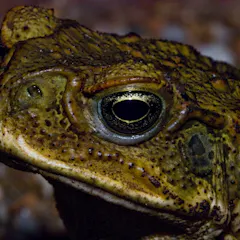
A chemical produced naturally by cane toad tadpoles may one day be used to help control the invasive species, according to new research published today. Cane toads are native to South America but have…
The reproductive ecology and dispersal ability of Australia’s most invasive species of willows is being explored to help…
Top contributors
-

Professor in Wildlife Ecology and Conservation, School of Life & Environmental Sciences, Deakin University
-
Honorary Research Fellow, University of Sydney
-
Professor in Terrestrial Ecology, Deakin University
-
Professor in Evolutionary Biology, Macquarie University
-
Professor of Wildlife Conservation, University of Tasmania
-
Professor Emeritus in Terrestrial Ecology, University of Sydney
-
Professor in Environmental Science, Charles Darwin University
-
Professeur, UMR ISYEB (Institut de Systématique, Évolution, Biodiversité), Muséum national d’histoire naturelle (MNHN)
-
Director of the Wildlife Crime Research Hub, Australian Research Council Industry Laureate Fellow, Adelaide University
-
Professor of Conservation Biology, Charles Darwin University
-
Associate Professor, Global Ecology, University of Sydney
-
Research Director CSIRO Health & Biosecurity, CSIRO
-
Professor in Zoology, James Cook University
-
Lecturer in the School of Applied Sciences, Edinburgh Napier University
-
Adjunct Professor, The University of Western Australia