
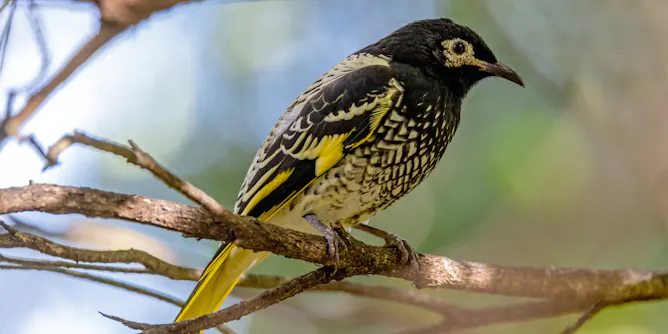
The regent honeyeater is a beautiful bird at risk of extinction. So how can we protect it from native predators, such as possums and sugar gliders?
Articles on land clearing
Displaying 1 - 20 of 84 articles
Queensland’s conservation ledger is in the red. Despite some new national parks, bulldozers are still clearing forests and vegetation across the state.

Flexitarian diets and breeding better livestock can make farming more sustainable. But it will take much more to farm within the planet’s limits

New research found regrowth in Queensland provided valuable habitat after 15 years, on average, with some species benefiting from trees as young as 3 years of age.
Three experts consider what’s required to protect and conserve Australia’s natural wonders, from fighting invaders to stopping habitat loss and saving species.
Protecting 30% of Australian lands sounds good – but what matters much more is whether we’re protecting dwindling habitat for endangered species.

Archaeologists and Wurundjeri Woi-wurrung people are shedding new light on a series of enigmatic earth rings located in southeastern Australia.
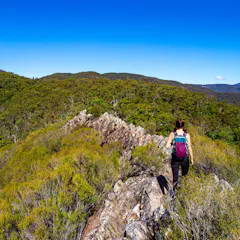
Amidst habitat destruction and ecological grief, let’s make a New Year’s resolution for nature — to care for beetles and butterflies, rainforests and reefs, ourselves, and future generations.
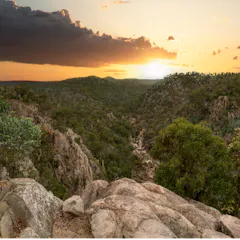
Many ecosystems face multiple serious threats. Recovery will be complex and difficult – but not impossible.

We’re discovering more species of richly coloured peacock spiders all the time. But their small ranges puts them at very real risk. One species faces likely death by suburban sprawl.
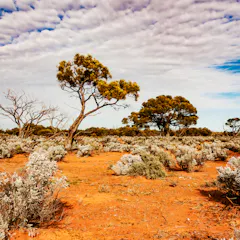
Australia’s main environment laws have long been regarded as not fit for purpose. But efforts to strengthen environmental protection have met huge pushback.

We must make protected areas more effective, to conserve what’s left of Earth’s plants and animals.
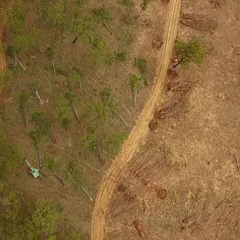
Three years ago, Australia pledged to end deforestation by decade’s end. But land clearing continues due to legal exemptions and a lack of enforcement
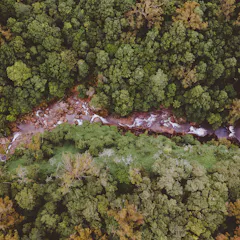
Koalas in trouble, land clearing at speed – nature in New South Wales is not well. Now the government is proposing significant changes to its ineffective biodiversity laws.

We think of laughing kookaburras as common in Australia and their call certainly lets us know when they’re about. But several factors are driving down their numbers.
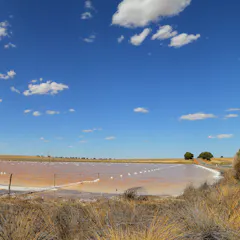
We’ve known about dryland salinity for a century. But while we’ve made progress, the problem hasn’t yet been solved.

Human health depends on having a liveable planet and this is inextricably linked to food systems.
A group of prominent environmental scientists devised this list of 5 things we must see in Australia’s new national environmental laws, if we are to avoid calamity and hasten recovery.
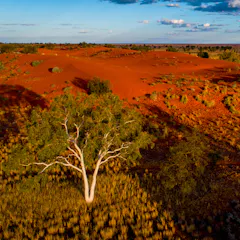
Australia has a once-in-a-decade opportunity to fix environmental law. A new Wentworth Group report says the cumulative impacts from multiple projects must be considered.
Nature positive is the new rallying cry to reverse environmental decline. But it could easily become greenwash – if we’re not careful.
Top contributors
-

Professor in Conservation Science, School of the Environment, The University of Queensland
-
Professor of Environmental Management, The University of Queensland
-
Professor in Wildlife Ecology and Conservation, School of Life & Environmental Sciences, Deakin University
-
Distinguished Research Professor and Australian Laureate, James Cook University
-
Senior Lecturer, Public Sector Management, School of Business, UNSW
-
Professor of Conservation Biology, Charles Darwin University
-
Lecturer in Conservation, The University of Queensland
-
Lecturer, School of Environment and Science, Griffith University
-
Professor, Conservation Biology, The University of Queensland
-
Professor of Ecology, Charles Darwin University
-
Professor & Director, QUT Centre for Environment and Society, Queensland University of Technology
-
ARC Future Fellow, Queensland University of Technology
-
Landscape Ecologist, The University of Queensland
-
Professor, The University of Queensland
-
Senior Research Fellow, Environmental Science, The University of Melbourne