

How apes make sense of actions is shedding new light on the evolution of a key component of human language.
Articles on Language evolution
Displaying all articles
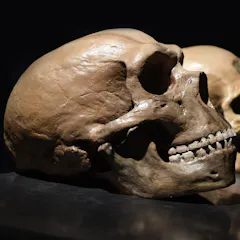
The two human species had many similarities but their communication would have been different.

The idea a language should grow simpler if people need to learn it as adults has an intuitive appeal. But an analysis of more than 1,200 languages shows this doesn’t quite stack up.
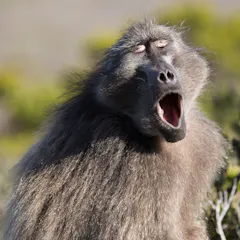
Researchers say it’s time to finally discard a decades-old theory about the origins of human language – and revise the date when human ancestors likely were able to make certain speech noises.
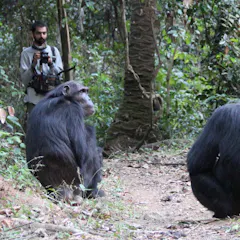
Do chimpanzee talk to each other? Scientists follow and record chimpanzees in the wild to find out – and to fill in details about how human language might have evolved.

New research suggests that hints left in Creole languages can identify where the original speakers came from – even hundreds of years after they migrated and mixed together.

One of the distinguishing features of New Zealand English is how much it borrows from the indigenous Māori, with consequences for both languages.
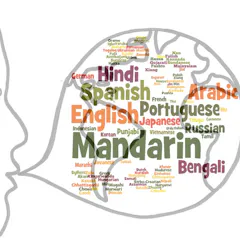
There’s little research into origins of the geographic patterns of language diversity. A new model exploring processes that shaped Australia’s language diversity provides a template for investigators.

New research investigates how people sequentially add new color terms to languages over time – and the results hold surprises about assumptions linguists have made for 40 years.
Top contributors
-

Postdoctoral Associate in Linguistics, University of the West Indies, Mona Campus
-
Associate Professor of Ecology, Evolution and Behavior, University of Minnesota
-
Assistant Professor of Biological Sciences, Vanderbilt University
-
Associate Professor in Linguistics, University of Waikato
-
Associate Professor of Human Dimensions of Natural Resources, Colorado State University
-
Professor of Linguistics, Yale University
-
Research Fellow, Evolution of Cultural Diversity Initiative, Australian National University
-
Visiting Scholar in New College, University of Alabama
-
Chercheur en Sciences de la parole au GIPSA-lab (CNRS), Université Grenoble Alpes (UGA)
-
Associate Professor, University of Auckland, Waipapa Taumata Rau
-
Doctoral Researcher, Department of Linguistic and Cultural Evolution, Max Planck Institute for Evolutionary Anthropology
-
Professor of Early Prehistory, University of Reading
-
Lecturer in Psychology, University of Hull