

Climate change is already leading to lasting damage to the Sundarbans mangrove forest and causing families and farmers to lose their livelihoods.
Articles on Mangroves
Displaying 1 - 20 of 84 articles
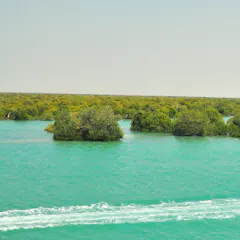
An oil spill has reached Qeshm Island’s mangrove forests, with a possibly devastating environmental impact.

A new study suggests the world’s mangrove forests are expanding.

Blue carbon involves more than just counting carbon. It requires governance, finance, policy, and practice. Ultimately, success hinges on people and their skills.
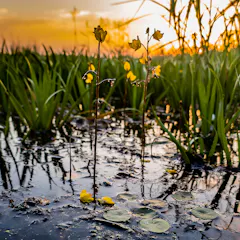
The rules for plants can be different in water.
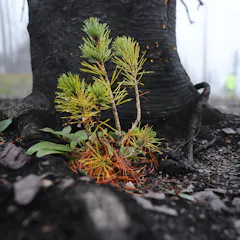
The dead remains of foundation species can boost or deter how well future generations are able to grow and thrive.
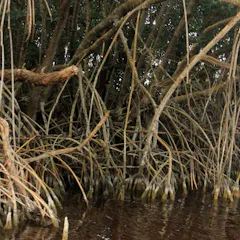
Mangroves offer natural protection against flooding. Without them, communities are left vulnerable.
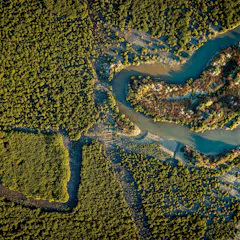
Traditional cost-benefit analyses treat wetland restoration as a one-off expense with fixed returns. New research shows this misses long-term climate and biodiversity benefits.
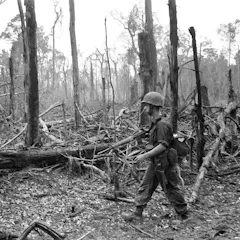
Harmful dioxins in Agent Orange, used to strip forests of their leaves, still linger in soil. Restoration work has been slow, and upheaval at USAID may slow it more.
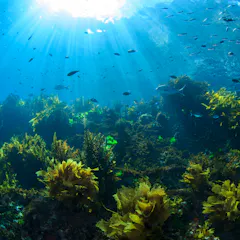
Seagrass meadows, mangroves and kelp forests are carbon sinks. Restoring or protecting them addresses both biodiversity loss and the climate crisis.

Protecting and restoring mangroves and peatlands can reduce more than half of the carbon emissions from land use in Southeast Asia. But some challenges remain.
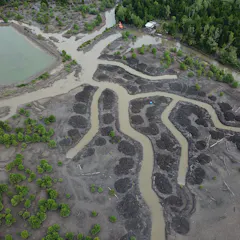
Experts are calling for the end of human-driven mangrove loss, a doubling of the area of mangroves with effective conservation status, and the restoration of half of recently lost mangroves.

As sea levels rose around this low-lying island nation, soil salinity increased beyond what even the salt-tolerant mangrove trees could handle.

How much microplastic does a city produce? To find out, we looked at Brisbane’s Moreton Bay, where microplastics build up without being washed away
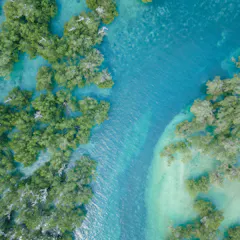
Indonesia could show global leadership by protecting more of the country’s rapidly disappearing, carbon-rich mangroves and seagrass meadows.

Scientists have monitored mangroves in Mauritius, and found some forests are growing.
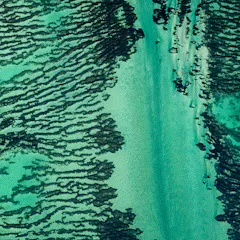
Blue carbon is stored in mangroves, seagrass and sediments. Discussions at the UN Ocean Decade conference reiterate the importance of preserving existing sea floor habitats, before it’s too late.
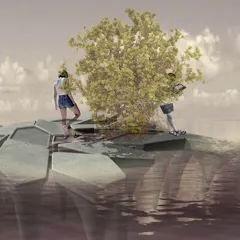
Mangrove forests are shrinking due to human activities, yet they’re essential for shoreline protection and carbon sequestration. Ongoing research explores the concept of “floating” mangrove forests.
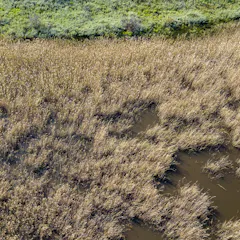
Wetlands can prevent flooding, trap carbon and support livelihoods, as long as they are protected and managed.
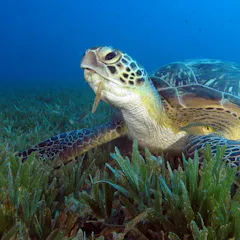
Global marine life is on the move with significant consequences – new study.
Top contributors
-

Research Associate, Institute of Coastal and Marine Research, Nelson Mandela University
-
Professor of Biology, The University of Queensland
-
Professor, School of Natural Sciences, Macquarie University
-
Professor in the School of Geography and Sustainable Development, University of St Andrews
-
AXA Chair in Coastal Resilience & Research Professor, University of California, Santa Cruz
-
Postdoctoral research associate, Charles Darwin University
-
Assistant Professor, East Carolina University
-
Professor of Mangrove Ecology, James Cook University
-
Lecturer in coastal environmental sciences and sustainable development, Uppsala University
-
Honorary Adviser on Burma for the State of the Tropics, James Cook University
-
Senior Lecturer, Macquarie University
-
Assistant Professor of Bioscience at at Imam Abdulrahman bin Faisal University. With Ph.D from Kaust, King Abdullah University of Science and Technology
-
Associate Professor of Biology, Villanova University
-
Managing Director, Triple Helix Consulting; Honorary Professor, ANU Fenner School for the Environment and Society, Australian National University
-
Visiting Scholar, Global Development and Environment Institute, Tufts University