

When migrants internalise expectations of gratefulness, they can come to think of racism and discrimination as inevitable – to be endured rather than challenged.
Articles on Migrant labour
Displaying 1 - 20 of 37 articles

Amid the fierce political debate about figures and systems, it’s easy to lose sight of the purpose of migration, to governments, individuals and society as a whole.

The story of donkeys in Namibia is one of colonial control but also resistance.
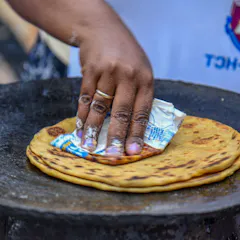
Rural people mostly grew their own food. But in the city, the daily meal became a commodity to be bought and sold.

As Canada continues to welcome international students, it’s essential to uphold their rights.

Carter struck a balance between satisfying the needs of employers and protecting American workers from foreign labor competition. That tension has never let up.

The Chinese Exclusion Act and other discriminatory measures had profound and lasting impacts on Chinese women and families in Canada.

Both at home and in schools, food can become a powerful tool to empower young people to take climate action, which can lead to reduced climate anxiety and increased feelings of hope for the future.

Recent reports that 700 international students and graduates could be deported from Canada reveal how the immigration system leaves them open to exploitation.

Smart, capable students struggled to navigate cultural and language norms in university accounting classrooms.

Australian and New Zealand demand for seasonal workers is having a major impact on Pacific nations’ economies. It will be a hard cycle to break.

Through the Scarborough Charter, many Canadian universities committed to fostering alternative ways of knowing. But more must be done to realize that commitment.

Unable to change the country’s vulnerability to shifts in the global and regional economy, the new prime minister Matekane has few economic levers to pull.

The country urgently needs more people who are committed to living decently to undo the systemic humiliation caused by political and economic institutions.

Poor housing put migrant workers at risk for COVID-19. A federal government consultation on national housing standards is a crucial opportunity to support migrant workers’ health, safety and dignity.

He used his powerful research to promote social change for justice in South Africa.

The claim that workers are simply moving to white-collar sectors obscures structural barriers to labour mobility, including racism and discrimination.

The promise of labour mobility in the Australian government’s new temporary migrant labour scheme is mostly for employers, not workers.

Don’t Call Me Resilient is a provocative podcast about race that goes in search of solutions for those things no one should have to be resilient for.
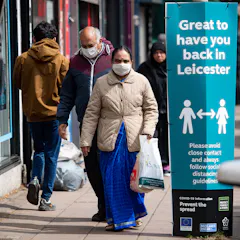
Cramped living conditions, a lack of social distancing and informal businesses staying open during lockdown may have come together to drive up the city’s infection rate.
Top contributors
-

ARC Future Fellow and Professor of Criminology, The University of Melbourne
-
Professor of Sustainable Development, Keele University
-
Associate Professor in Law, Adelaide University
-
Associate Professor, Department of Political Economy, University of Sydney
-
Researcher, Centro Brasileiro de Análise e Planejamento (CEBRAP); University of Johannesburg
-
Associate Professor of Women's, Gender, and Sexuality Studies and Associate Professor of Geography, Penn State
-
Deputy Program Director (Migration), Grattan Institute
-
Professor of Development Studies, University of Fort Hare
-
Professor of Social Economics, UTS Business School, University of Technology Sydney
-
Adjunct Senior Research Fellow, School of Media, Film and Journalism, Monash University
-
Associate professor, University of Johannesburg
-
Professor of Social Development Studies, University of Johannesburg
-
Senior Lecturer in Public Policy, Lancaster University
-
Associate Professor, Department of Sociology and Criminology, University of Windsor
-
Professor of Work and Labour Market Policy, University of Sydney