

Working within existing informal regulations in Kenya’s sand industry would help boost livelihoods and inclusion.
Articles on Mombasa
Displaying all articles
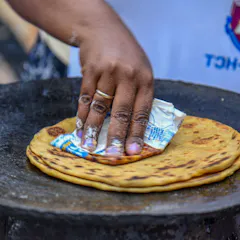
Rural people mostly grew their own food. But in the city, the daily meal became a commodity to be bought and sold.

African governments and other local actors have a crucial role to play in shaping the activities of Chinese firms.

What was once just a cultural moment has become a powerful economic engine of cultural tourism.
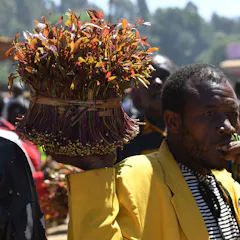
Khat is classified as a cash crop in Kenya, but its detractors say it is a harmful product and some regions have moved to ban it.

Fears about witchcraft and terrorism in coastal Kenya have shaped the ways in which various religious groups express themselves.
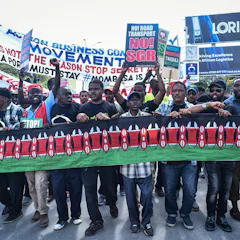
Mega-projects tend to represent the interests of state and business elites.
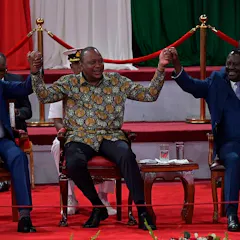
Kenya’s ethnic-based politics often leads to electoral violence that hurts regional trade.

Harnessing the combined effect of trade and urbanisation could significantly boost the economies of African countries.

The fear that borrowers’ strategic assets are at risk from Chinese banks continues to fail the test of evidence.

Oil spills, cracked buildings and pollution. Just some of the environmental effects of Kenya’s massive railway project.

In Kenya, the Spanish flu caused various forms of social and economic disruption, ranging from social distancing to the suspension of nonessential services and widespread food shortages.
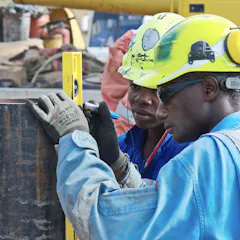
A major constraint that prevents Kenyans from benefiting from the oil sector includes the lack of specialised training or technical skills

When people migrate they can end up worse off when it comes to getting access to health care. Analysing migration trends can help drive local public health policy towards the correct targets.
Top contributors
-

Senior Researcher in Public Health, University of the Witwatersrand
-
Reader in Population and Public Health, MRC/Wits Rural Public Health and Health Transitions Research Unit, School of Public Health, University of the Witwatersrand
-
Director and Lecturer, Extractives Baraza, Strathmore University
-
Professor of Demography, Université catholique de Louvain (UCLouvain)
-
Research Associate, Kenya Medical Research Institute
-
Marie Curie Fellow, University of Amsterdam
-
Post Doctoral Research Fellow, University of Nairobi
-
Research associate at African Centre for Cities, University of Cape Town
-
Associate Professor in Social Anthropology, Department of Anthropology and Archaeology, University of Bristol
-
Assistant Professor of Religion and Heritage, Utrecht University
-
Assistant Professor, Department of History, West Virginia University
-
Bernard L. Schwartz Professor of International Political Economy, Johns Hopkins University
-
Researcher, United States International University
-
Senior Lecturer , University of Gothenburg
-
Associate Professor, International Relations, United States International University