
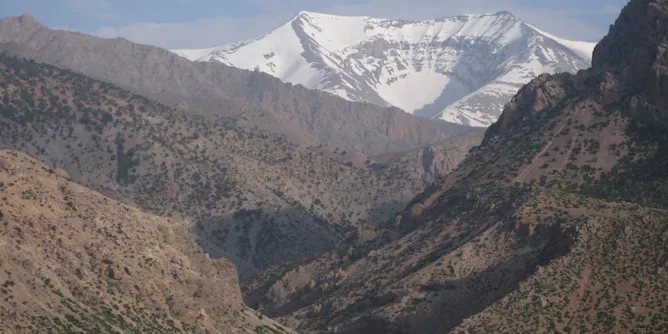
Africa has some of the world’s most important geological landscapes, yet they remain under-represented in digital geoheritage research.
Articles on Mountains
Displaying 1 - 20 of 93 articles
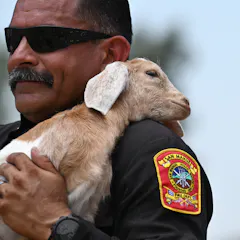
Targeted grazing is gaining interest as fire risk rises, particularly in hard-to-manage areas of the Western US. But it isn’t always as simple as it seems.
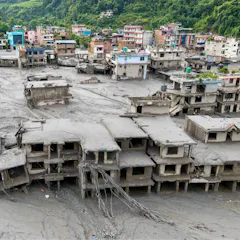
A geologist explains how thawing permafrost and melting ice are increasing the risk of destructive floods in the Himalayas and other high mountain regions around the world.
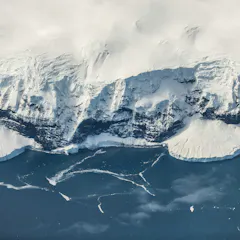
New solutions to two interlinked mysteries reveal how and why the Antarctic’s enormous ice sheet formed.

They’re called rock glaciers, and they might not look like much, but they’ll continue to provide meltwater after the world’s iconic white glaciers are gone.

Survival depends on information and social networks.

Three of the four new chameleon species found in Mozambique are probably at high risk of extinction.

Many insects in Africa are likely to face dangerous levels of heat stress, with serious consequences for ecosystems.
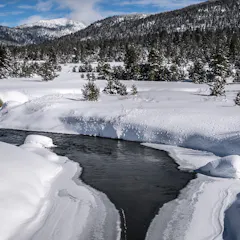
Streamflows the West relies on for drinking water and farms used to follow a fairly predictable arc as winter snow melted. Rising temperatures are changing that.
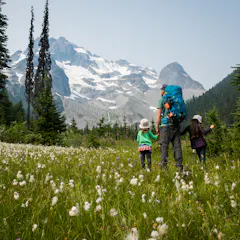
The answer has to do with the air we breathe and that bright white snowpack, as an atmospheric scientist in Colorado explains.
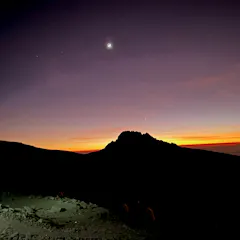
At altitudes over 2,400 metres, lack of oxygen — a condition called hypoxia — can cause acute mountain sickness. Incidence rises with altitude, but there are ways to lower risks.
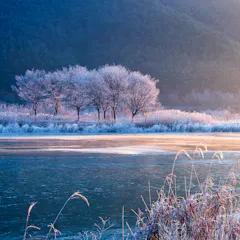
Over a three-decade experiment in the Rocky Mountains, fungi and plant life fundamentally changed. The result has consequences for cattle and wildlife.
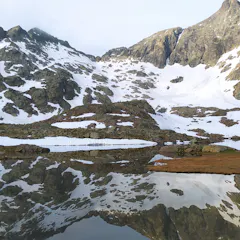
Snow cover has declined rapidly since the 1980s, and it’s only accelerating.
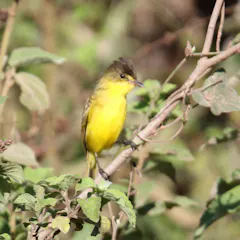
Warblers in high mountain wetlands change their dawn singing with temperature, rain, wind, humidity and moonlight, showing how weather shapes wildlife behaviour.
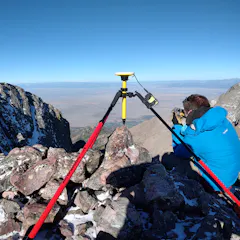
To most accurately measure mountain peaks, Eric Gilbertson lugs equipment all the way to the top.

The moss beds in Antarctica are like miniature forests – they create their own climate.

The humble ‘broken image’ icon has a rich backstory – one connected to early web design, camera culture and our timeless urge to find meaning in the landscape.
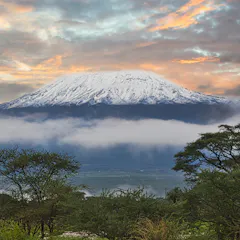
75% of Mount Kilimanjaro’s indigenous plants have been wiped out over the last century.
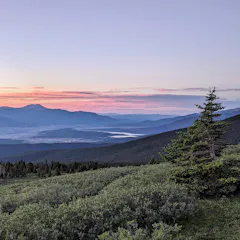
Most people want to properly dispose of their waste, but they’re typically not prepared. Land managers can help users meet the moment.
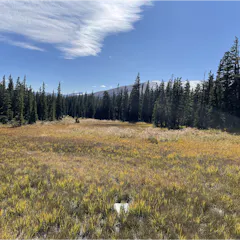
Subalpine wetlands in the Rocky Mountains are warming, creating the perfect conditions for producing methylmercury, a potent neurotoxin.
Top contributors
-

Research Associate in Climate Science, Massachusetts Institute of Technology (MIT)
-
Associate Professor of Civil Engineering, Boise State University; United Nations University
-
Directeur de recherche CNRS, Expert for Conservation Biology, Axa Chair for Functional Mountain Ecology at the École Nationale Supérieure Agronomique de Toulouse, Centre national de la recherche scientifique (CNRS)
-
Professor of Paleoclimatology and Paleoecology, University of Wyoming
-
Professor of Physical Geography, University of the Witwatersrand
-
Research Scientist in Ecological Transformation, University of Colorado Boulder
-
Associate Professor of Environmental Management, University of Waterloo
-
Professor of Fire Ecology, University of Montana
-
Chair in Global Tectonics and Paleogeography, Utrecht University
-
Professor of Engineering, University of California, Merced
-
Professor of Sustainability, Bangor University
-
Emeritus Professor, Griffith University
-
ARC Future Fellow, Fenner School of Environment and Society, Australian National University
-
Professor of Earth Sciences, University of Oxford
-
Professor of Biogeochemistry, University of Wollongong