
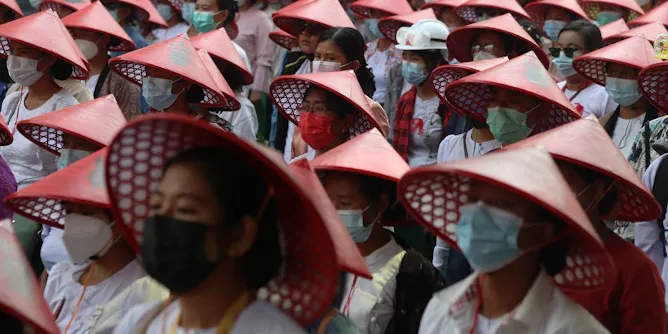
The military is escalating its pressure on protesters in Myanmar, but it’s running out of options for resolving the crisis. Bullets may not be enough to quash the opposition this time.
Articles on Myanmar
Displaying 101 - 120 of 223 articles
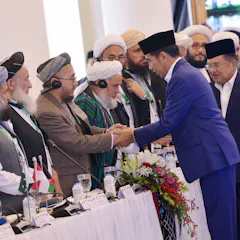
Indonesia needs to consider long-term engagement to produce deeper and more sustainable impacts.
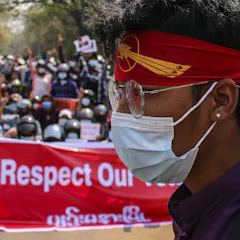
Beijing is shaping as an important player in the international effort to resolve the political situation in Myanmar.

Technology has played a key role for both sides engaged in the conflict. So what would happen if Myanmar’s military shut down all communication to the outside?

Many have looked to Asia for lessons on successful pandemic management. However, recent COVID-19 outbreaks in Thailand and nearby countries also offer warnings about what not to do.

TikTok has a high aptitude as a booster for grassroot political activism, even in regions where freedom of expression is limited.

Aung San Suu Kyi’s government did not have a perfect environmental record. But at least things were starting to change.
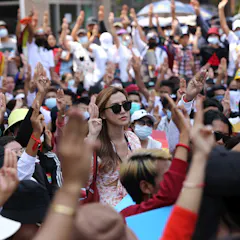
Despite having a woman leader, women are largely excluded from key positions of influence and leadership in Myanmar — a situation that helped the country’s military succeed in its recent coup.

It will take time for international donors to disentangle their programs from Myanmar’s new military leaders — and even then, continuing their programs remains a big question.
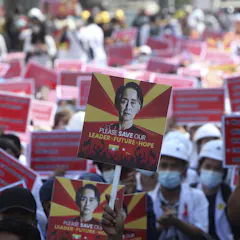
Internet shutdowns and social media bans in Myanmar have helped the military retain control after the Feb. 1 coup. Here’s why ISPs should develop clear policies around forced internet shutdowns.
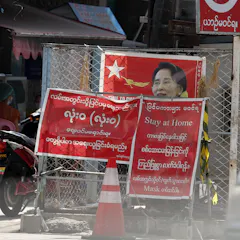
Myanmar’s military is now using COVID restrictions as a way of getting protesters off the streets.
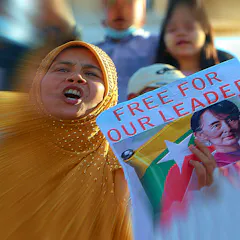
The two military-owned corporations that control much of Myanmar’s private sector were under threat.
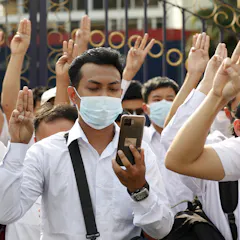
The Hunger Games salute, teabags and Pepe the Frog are being adopted by young pro-democracy activists across south-east Asia.
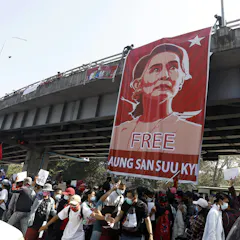
Plus we talk to an American virologist testing wild animals for COVID-19. Listen to episode 2 of The Conversation Weekly podcast.

Continued persecution in Myanmar and dire living condition in Bangladesh push Rohingya people to keep seeking refuge.

The roots of Buddhist nationalism in Myanmar go back to colonial days. Those behind the military coup are seeking to harness it to legitimize the seizure of power.
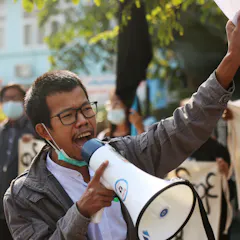
Myanmar is increasingly connected to the world via social media, which will make it more difficult for the country’s new military leaders to maintain social control.
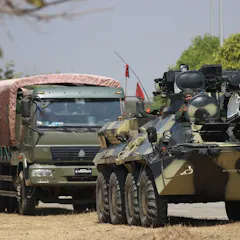
After arresting Aung San Suu Kyi once again, the army is clearly not ready to relinquish control.
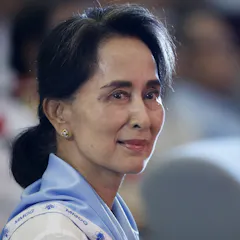
It is difficult to see how the military will benefit from another coup, since it already enjoyed immense political and economic influence under the previous power-sharing agreement.

Despite their enormous value, mangroves are being removed at an alarming rate. A new tool aims to help communities reverse mangrove loss and tap into conservation programs and funding.
Top contributors
-

Senior Lecturer in International Studies in the School of Society and Culture, Adelaide University
-
Pro Vice-Chancellor, University of Tasmania
-
Associate Professor of World Cultures and Languages, Northern Illinois University
-
Leverhulme Trust Early Career Fellow, Loughborough University
-
Associate Professor in International & Community Development, Deakin University
-
Associate Professor in International Management, Curtin University
-
Co-Deputy Director, Human Rights Centre and Co-Director of Postgraduate Studies, School of Law, University of Essex
-
Senior Lecturer in Politics and International Relations, University of Dundee
-
Lecturer, Department of International Relations, Universitas Gadjah Mada
-
Lecturer, School of Political Science and International Studies, The University of Queensland
-
Host, The Conversation Weekly Podcast, The Conversation
-
Professor, School of Law, Western Sydney University
-
Industry Professor and Chief Economist, University of Technology Sydney
-
PhD Candidate, UNSW Law; Assistant professor, International Relations, University of Chittagong
-
Lecturer, Chinese Studies, The University of Melbourne