
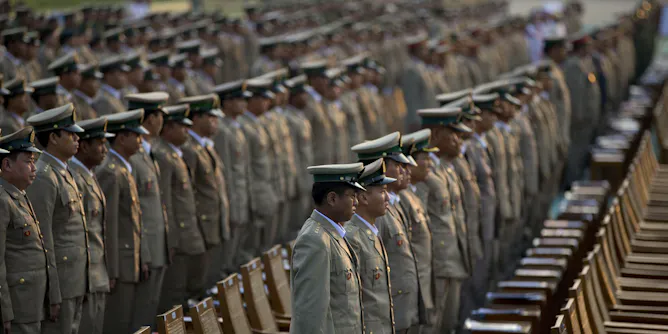
Foreign companies are failing to heed the UN call to stop doing business with Myanmar’s blood-stained military elite.
Articles on Myanmar
Displaying 121 - 140 of 223 articles
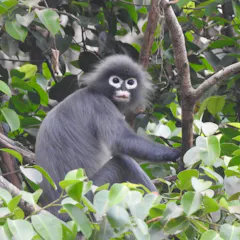
How scientists discovered the ‘Popa langur’ was a separate species of just 200 monkeys.
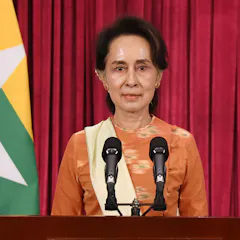
Our project carried out interviews and produced animated films of brave people seeking to bring about real change.
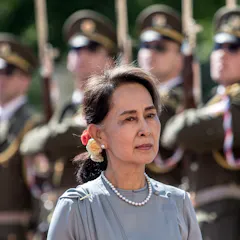
Human rights groups have expressed concern after 1.5 million voters in ethnic minority areas were not allowed to vote, ostensibly due to continuing conflict in the regions.
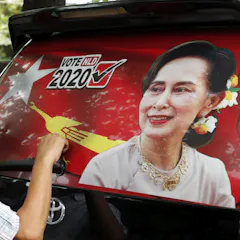
The constitutional change needed to further democratise Myanmar is impossible without the military’s consent, so achieving major political transformation through the election alone seems unlikely.

If albanerpetontids were around today, they’d easily fit in your hand. And although their bones are found all over the world, these unique amphibians eluded experts for a long time.
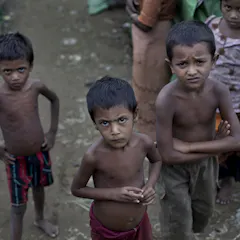
Australia has maintained military and trade ties with Myanmar. If Myanmar is not fully complying with the ICJ order, this puts Canberra in a sticky position.
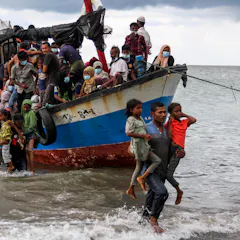
Islamic solidarity, customary law and their experience of conflict and foreign aid can explain the Acehnese greeting people in need with open arms.
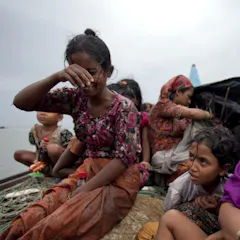
In a country with 135 ethnic minorities, democratic elections have little meaning if the stateless, persecuted Rohingya people continue to be ethnically cleansed.
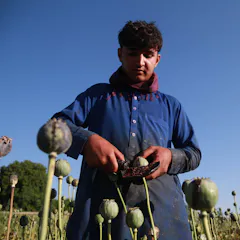
Conventional thinking on drugs, conflict and development isn’t working – here’s why.

The skull of Oculudentavis, found encased in amber, provides new clues into the transition from dinosaurs to birds and may be smallest of either ever found.
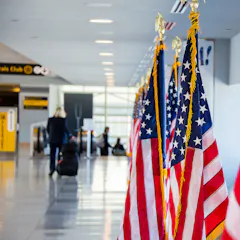
Immigrants from Eritrea, Kyrgyzstan, Myanmar, Nigeria, Sudan and Tanzania constitute less than 1% of terrorism cases in the United States, and none of the cases in the last two years.
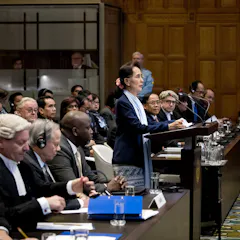
The International Court of Justice has ordered Myanmar to make wholesale reforms at the drop of a hat, wielding a stick of shame rather than a ladder of support.
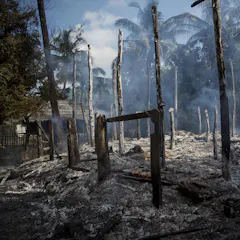
The International Court of Justice ordered Myanmar to protect its Rohingya minority and preserve any evidence relevant to the genocide charges against it. But compliance is not guaranteed.
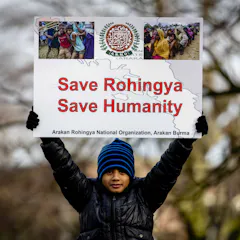
The Rohingya case before the International Court of Justice is politically and legally significant.
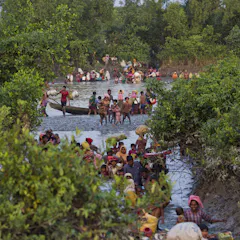
Dozens of Muslim-majority countries are asking the UN’s International Criminal Court to investigate and prosecute a 2017 massacre in Myanmar that killed an estimated 10,000 Rohingya Muslims.
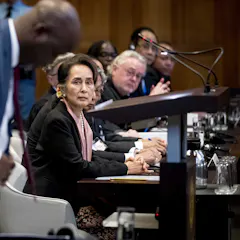
A case brought by the Gambia claims that Myanmar’s military committed genocide against its Rohingya Muslim minority.
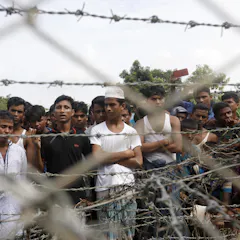
The sheer volume of pregnant women in the refugee camps was an early indicator of the extent sexual violence was used against Rohingya women and girls.
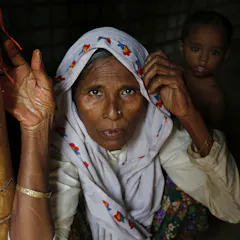
The current repatriation deal signed by Myanmar and Bangladesh fails to guarantee the safety and citizenship of the Rohingya people or address issues of justice for crimes perpetrated against them.
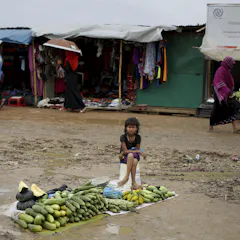
An estimated 500,000 Rohingya children, refugees from Myanmar, are growing up in Bangladesh in overcrowded camps with no access to formal education.
Top contributors
-

Senior Lecturer in International Studies in the School of Society and Culture, Adelaide University
-
Pro Vice-Chancellor, University of Tasmania
-
Associate Professor of World Cultures and Languages, Northern Illinois University
-
Leverhulme Trust Early Career Fellow, Loughborough University
-
Associate Professor in International & Community Development, Deakin University
-
Associate Professor in International Management, Curtin University
-
Co-Deputy Director, Human Rights Centre and Co-Director of Postgraduate Studies, School of Law, University of Essex
-
Senior Lecturer in Politics and International Relations, University of Dundee
-
Lecturer, Department of International Relations, Universitas Gadjah Mada
-
Lecturer, School of Political Science and International Studies, The University of Queensland
-
Host, The Conversation Weekly Podcast, The Conversation
-
Professor, School of Law, Western Sydney University
-
Industry Professor and Chief Economist, University of Technology Sydney
-
PhD Candidate, UNSW Law; Assistant professor, International Relations, University of Chittagong
-
Lecturer, Chinese Studies, The University of Melbourne