

Nanomedicine prompts RNA to make protein-based drugs to treat diseases. Now we can fine-tune protein production by dialling it up or down, creating personalized medicine on an invisible scale.
Articles on Nanomedicine
Displaying all articles
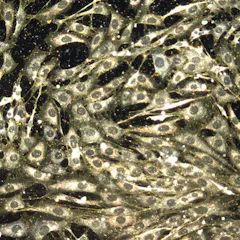
As it does with other pathogens, your immune system sees drugs as foreign invaders to be expelled from your body. But exploiting this process could reduce the side effects of chemotherapy.

Cardiovascular disease and cancer share many parallels in their origins and how they develop. Nanoparticles offer one potential way to effectively treat both with reduced side effects.
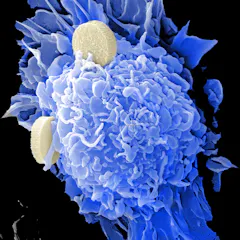
The proteins that cover nanoparticles are essential to understanding how they work in the body. Across 17 proteomics facilities in the US, less than 2% of the identified proteins were identical.
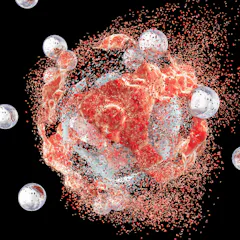
The COVID-19 mRNA vaccines put nanomedicine in the spotlight as a potential way to treat diseases like cancer and HIV. While the field isn’t there yet, better design could help fulfill its promise.

The NanoMslide causes potentially cancerous cells to ‘light up’ with vivid colour contrast. It has already been successful in finding early-stage breast cancer cells in human tissue.

Nanotechnology has an impressive record against viruses.
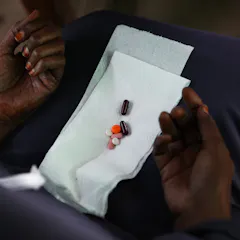
The reason that nanoparticles hold such hope for TB treatment is that they can be carefully targeted.

Cancer is the second leading cause of death globally. Mathematicians have joined the fight, developing models to both test cancer drug combinations and understand chemotherapy drug resistance.

Nanoparticles are a form of transport for drugs and can go places drugs wouldn’t be able to go on their own. They make drug delivery more targeted, reducing collateral damage to healthy tissues.

From tiny robotic doctors repairing your body to the latest climate change-tackling tools, nanotechnology is fighting an invisible battle on our behalf.
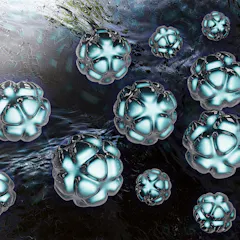
New research could into nanoparticles could help deliver drugs straight to the site of tumours and make them more effective when they get there.

Sepsis claims the lives of 8m people worldwide each year. It is the leading cause of hospital deaths in the US, a major threat to soldiers wounded in battle and a killer of children, particularly in under-resourced…
Top contributors
-

Professor of Engineering Science, University of Oxford
-
ARC Laureate Fellow, Monash University
-
Senior Coordinator, Communications and Events, Monash University
-
Professor, Children's Cancer Institute
-
Project Leader, Children's Cancer Institute and Senior Lecturer, Medicine, UNSW
-
Founding Director of the Wyss Institute, Harvard University
-
Reader in Nanoelectronics, University of Southampton
-
Postdoctoral Fellow in the Tuberculosis Nanomedicine Research Group, University of the Western Cape
-
Associate Professor of Applied Mathematics, University of Waterloo
-
Associate Professor, Pharmaceutical Sciences, University of the Western Cape
-
Professor of Physics, La Trobe University
-
Associate Professor of Biomedical Engineering, Michigan State University
-
Postdoctoral research associate, Cardiff University
-
Associate Dean for Research, Charles Walgreen Jr. Professor of Pharmacy and Pharmaceutical Sciences, University of Michigan
-
Senior Faculty/Laboratory Head, Peter MacCallum Cancer Centre