

If Spider-Man were real, he could help scientists revolutionize healthcare. Since he’s not, researchers develop creative ways to produce spider silk to study.
Articles on Drug delivery
Displaying 1 - 20 of 25 articles

AI is reshaping biomedical research and drug discovery and delivery. But challenges still exist.
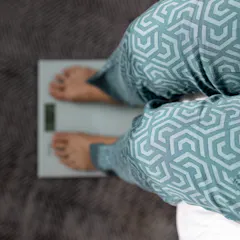
Before you spend your money, here’s why you should think twice about buying a weight-loss patch.

Ultrasound is perhaps best known as an imaging technique to monitor pregnancy or disease. When these sound waves are highly concentrated, however, they can be used to treat a host of diseases.
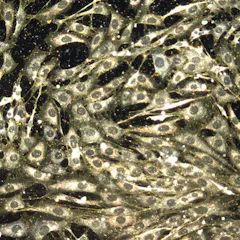
As it does with other pathogens, your immune system sees drugs as foreign invaders to be expelled from your body. But exploiting this process could reduce the side effects of chemotherapy.

Getting drugs into the brain is a challenge. A new study suggests a brain parasite may be able to help.
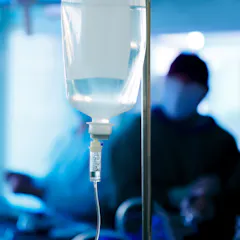
Some IV fluids are in short supply due to higher-than-expected demand and manufacturing issues. But why do IV fluids contain different chemicals? And why can’t they be interchanged when one runs low?

Green algae carry drug-loaded nanoparticles directly to the lungs, reducing side effects in other organs and increasing treatment efficiency.

Researchers successfully treated diabetes in mice by engineering cells to make insulin in response to the music of Queen.
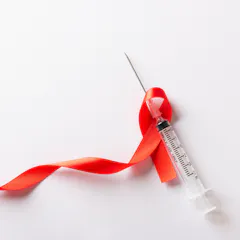
The next step in HIV prevention — long-acting injectable pre-exposure prophylaxis (PrEP) — is not yet available in Canada, a year after its approval in the U.S.
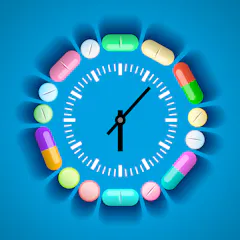
There is a best time to take your medications, but your doctor may not know when that is. Researchers are still figuring it out, one drug at a time.
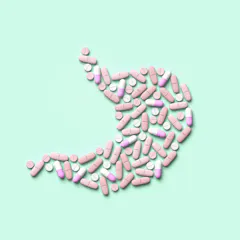
While pills are more practical than injections or infusions, digestion in the stomach prevents many drugs from being taken orally. Better drug design could change this.
From tablets and patches to ointments and infusions, the best way to deliver a drug is the one that gets the right amount to the right place.

New approach to preventing seizures proves effective in mice.
Humble hydrogels could one day replace hypodermic needles and repair damaged hearts.

Scientists are using DNA to build exciting new nanotechnologies that could change everything from electronics to energy.

Half of all vaccines are wasted. Microneedles may be one way to tackle the problem.
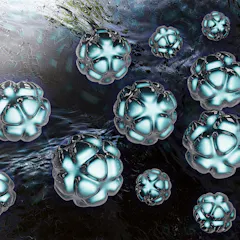
New research could into nanoparticles could help deliver drugs straight to the site of tumours and make them more effective when they get there.

In the development of new drugs, taking something from nature and modifying it has been a successful tactic employed by medicinal chemists for years. Now, with the help of nanotechnology, researchers are…
The history of science is full of episodes when a seemingly ludicrous theory is ridiculed, but then slowly gathers evidence and support to move from the fringes to the heart of the scientific consensus…
Top contributors
-

Professor of Pharmaceutical Sciences, University of Colorado Anschutz
-
Professor of Pharmaceutical Chemistry, Macquarie University
-
Molecular Imaging Post-Doctoral Research Assistant, University of Hull
-
Professor of Microbiology and Immunology, Indiana University
-
Senior Lecturer in Pharmaceutical Sciences, Queen's University Belfast
-
Research Associate in the Fabrication and Validation of Implantable Ion Pumps, University of Cambridge
-
Reader (Associate Professor), Queen Mary University of London
-
Postdoctoral research fellow, Queen's University Belfast
-
Professor of Science Communication and Chemistry, University of Hull
-
Honorary Professorial Fellow, Department of Critical Care, Melbourne Medical School, The University of Melbourne
-
Professor, School of Health Sciences, University of Northern British Columbia; University of Victoria
-
Professor of Anesthesiology, University of Colorado Anschutz
-
MD/PhD Candidate in Polymer Science and Engineering, UMass Amherst
-
Professor in Polymer Science and Engineering, UMass Amherst
-
Ph.D. Candidate in Materials Science and Engineering, University of California, San Diego