
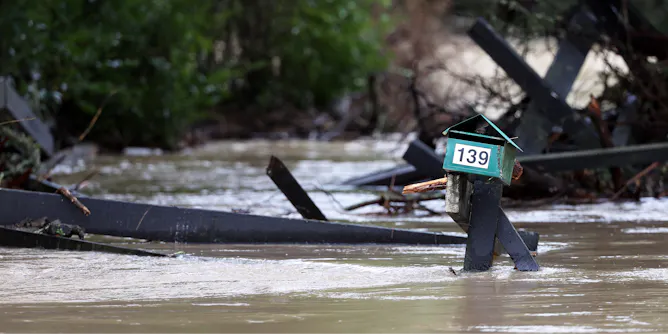
New research shows successive NZ governments keep opting for expensive short-term fixes after floods and other disasters. But there are two other choices available.
Articles on Natural disasters
Displaying 81 - 100 of 691 articles
Historically, climate disasters were thought of as rare, singular events. But thanks to climate change, disasters are escalating.

Progressive adaptation could ensure society is not only better prepared for future shocks, but thrives in the face of uncertainty.
Uncertainty from Washington along with staff and budget cuts have created turmoil for the US Forest Service’s fire management efforts.
When volcanoes like Alaska’s Mount Spurr erupt, the ash can damage people’s lungs, smother crops and kill animals, and the harm can continue to spread long afterward.

Thousands were killed in 7.7 magnitude earthquake. Yet military generals were slow to agree to pause in civil war fighting, and continued airstrikes.
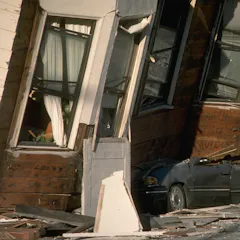
The US experiences violent earthquakes, but the damage and death toll is much lower than in many countries because of the work of federal seismologists and engineers.
President Trump’s national energy emergency declaration does not qualify as an emergency that would exempt energy projects from environmental laws and regulations.
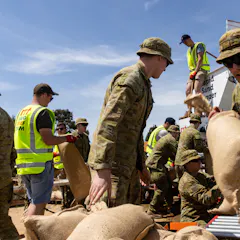
Recruitment incentives are needed to boost the number of emergency services volunteers to respond to natural disasters and take the pressure off the ADF.

A million tourists visit Milford Sound every year, including on cruise ships. What is the level of risk from natural disaster New Zealand is prepared to accept?
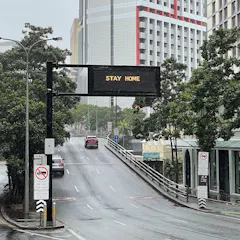
As climate change accelerates and trust in authority declines, natural disasters trigger waves of easy – but false – explanations.
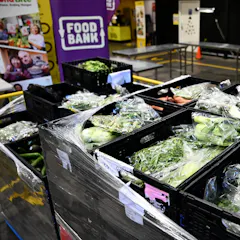
The cost-of-living crisis means more Australians are going without adequate food. The growing problem must be tackled by a promised food security strategy.
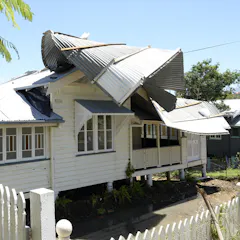
When a cyclone hits, the wind is trying very hard to pull the roof off your house. It’s vital the roof stays on – but one weak link can spell disaster.
This is a particularly tough time for people who have lived through other disasters. Here are some signs of retraumatisation to watch out for.
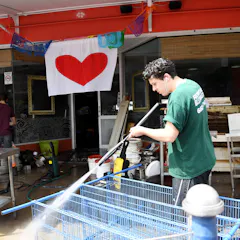
Northern Rivers residents are preparing for Cyclone Alfred’s arrival – and drawing lessons from the 2022 floods.
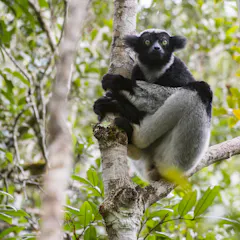
Lemurs show traits associated with resilience to living in a disaster-prone environment.

Globally, scientists predict each person could lose up to 58 hours of sleep a year by 2100 if planetary warming continues unchecked.
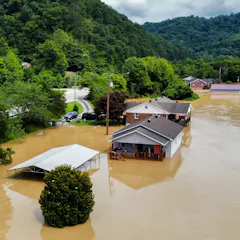
The latest floods exposed the deep vulnerability of many mountain communities in eastern Kentucky, where land ownership patterns and other barriers to recovery can leave residents with few options.

We don’t need to reinvent the wheel and can dispense with unhelpful terms like ‘climate refugee’. Existing laws, applied correctly, can protect people.
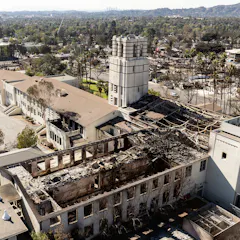
As students and teachers return to school after the fires, educators will have to focus on emotional rehabilitation before academic recovery can begin.
Top contributors
-

Professor of Geology and Environmental Geosciences, University of Dayton
-
Honorary Professor of Hazards and Disaster Risk Sciences, University of Sydney
-
Professor of Climate Science, UMass Lowell
-
Associate Professor of Landscape Architecture and Urban Planning, Texas A&M University
-
Professor of Disasters and Health, UCL
-
Professor Emeritus of Geography, Louisiana State University
-
Clinical Assistant Professor of Education, Health and Behavior Studies, University of North Dakota
-
Professor of Political Science, Public Policy and Urban Affairs, Northeastern University
-
Scientia Professor and ARC Laureate Fellow, Kaldor Centre for International Refugee Law, UNSW
-
Professor of Geography, University of Tennessee
-
Professor of Earthquake Science, The University of Melbourne
-
Associate Professor of Civil Engineering, Boise State University; United Nations University
-
Professor of Public Administration, Binghamton University, State University of New York
-
Associate Professor of Human Geography, University of Tasmania
-
Principal Investigator FiRES Project (SNSF Consolidator Grant), ETH Zürich, Switzerland // Honorary Associate Professor, University of Wollongong, Australia.