

The fungus appears to feed on the airborne alcohol vapours produced during whiskey maturation.
Articles on Ozone
Displaying 1 - 20 of 55 articles
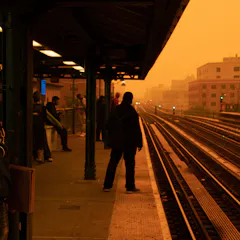
The number of ozone-related premature deaths due to wildfires is also rising.

Concentrations of a forever chemical known as TFA is increasing in rainwater, drinking water, soil and plants.
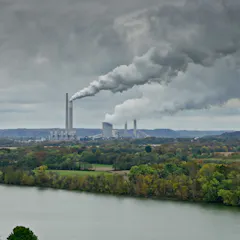
In the world of cost benefit analysis, if an impact isn’t monetized, it doesn’t exist. A former EPA official explains what’s changing now and why it matters.
The EPA is changing how it assesses proposed regulations by dropping the monetary value of health benefits from its cost-benefit analyses. That misses a big piece of the picture.

Just because a therapy works in a hospital doesn’t mean in works in a wellness clinic, or is even safe.
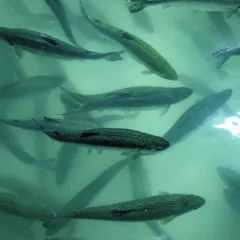
Tires are complex chemical products. When they wear away, they release additives into the environment that can poison wildlife.
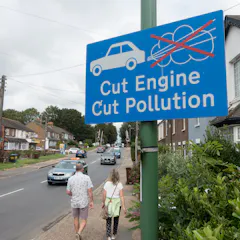
Researchers have analysed UK-wide trends for three major pollutants.

The main focus of research in the Antarctic revolves around climate change.

An unplanned experiment when wildfire smoke rolled through Colorado shows how trees keep some of the smoke out.
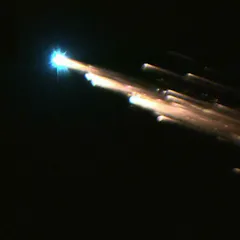
Burnt-up satellites could dump hundreds of tonnes of aluminium in the stratosphere every year. An atmospheric chemist explains what that might mean

HCFCs were a temporary replacement for CFCs, the initial subject of the 1987 Montreal protocol.

For decades, big-box retailers have evaded federal regulation of the pollution their operations generate. But a new air emission rule in Southern California could become a model for state controls.

Some ancient texts record what were likely dying stars, faintly visible from Earth. If close enough, these events can disturb telescopes and even damage the ozone layer.
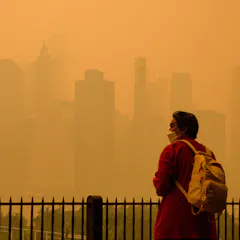
So much pollution goes into the air today that even without wildfire smoke, 99% of the global population breathes unhealthy air.

People are becoming more aware of the health risks of laughing gas, but fewer people realise it’s a potent greenhouse gas.

The UK space launch failed but it succeeded in releasing hazardous pollutants to multiple layers of the atmosphere.
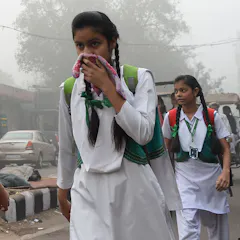
It’s the World Health Organization’s first update of global air quality guidelines since 2005. We know far more today about the serious risks these pollutants pose to human health.
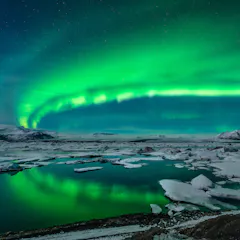
Depending on who you ask, the northern lights may, very occasionally, sound like ‘rustling silk’ or ‘two planks meeting flat ways’.

Ozone pollution is on the rise, and it’s getting into people’s homes.
Top contributors
-

Professor of Civil and Environmental Engineering, Rice University
-
Professor of Atmospheric Chemistry and Air Quality, UCL
-
Professor of Environmental Sciences and Engineering, University of North Carolina at Chapel Hill
-
Professor, University of Washington
-
Professor of Atmospheric Science, University of Birmingham
-
SEI York Centre Director, University of York
-
Professor, Environmental Futures & Securing Antarctica's Environmental Future, School of Earth, Atmospheric and Life Sciences, University of Wollongong
-
Assistant Professor of Economics, Iowa State University
-
Professor of Atmospheric Chemistry, University of Leeds
-
Postdoctoral Research Associate, Rice University
-
Canada Research Chair, Royal Roads University
-
Assistant Professor of Applied Economics, Cornell University
-
Professor of Environmental Law, University of Maryland
-
Research Scientist in Atmospheric Modeling and Chemical Mechanisms, Rice University
-
Assistant Professor of Resource Economics, UMass Amherst