
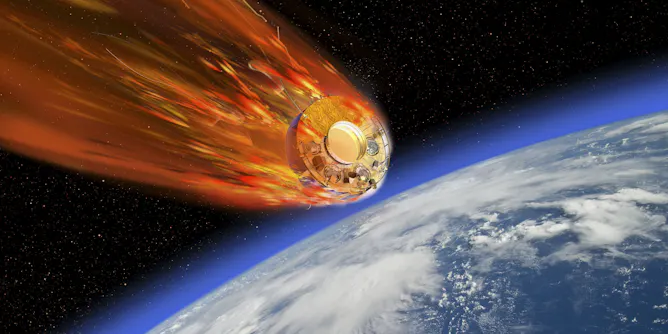
Human activity is causing large disruptions to the near-Earth space environment. We need an intergovernmental panel on space sustainability.
Articles on Ozone layer
Displaying 1 - 20 of 52 articles
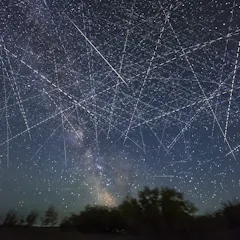
Planned ‘megaconstellations’ of satellites could cause unforeseen harm to the ozone layer and climate systems. Global regulation is needed before it’s too late.
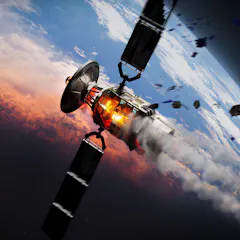
The number of satellites is exploding, and we still don’t have a fully safe way to dispose of them.
Factories producing non-stick coatings for cookware aren’t properly limiting emissions of one of the most potent greenhouse gases, our research suggests.

Every few thousand years, the Sun unleashes a burst of high-energy particles that can have serious consequences for life on Earth.
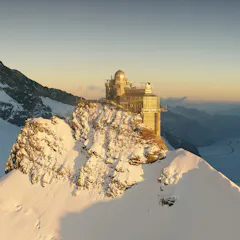
HCFCs were a temporary replacement for CFCs, the initial subject of the 1987 Montreal protocol.

An inhaler that costs nearly $300 in the US goes for just $9 in Germany. What gives?
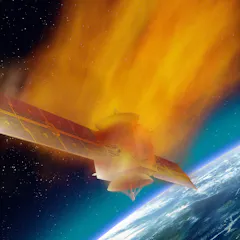
We know particles from spacecrafts are in the stratosphere. But what this means for the ozone layer or the climate is still unknown.
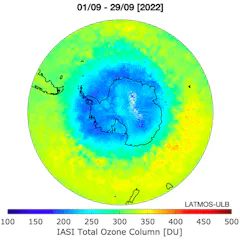
In 1987, the Montreal Protocol established a ban on substances responsible for destroying the ozone layer, which is essential for protection against the sun’s rays.

People are becoming more aware of the health risks of laughing gas, but fewer people realise it’s a potent greenhouse gas.

Chlorofluorocarbons (CFCs) are also potent greenhouse gases which contribute to climate change.
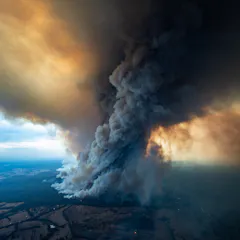
Over 30 years ago, the world banned CFC chemicals to save the ozone layer. But now, climate-fuelled bushfire smoke is putting it at renewed risk
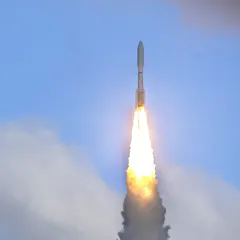
Rocket emissions in the upper atmosphere can damage the ozone layer but are neither measured nor regulated. It’s a policy gap we have to close if the space industry is to grow sustainably.
The US Senate voted to ratify the Kigali Amendment, agreeing on a bipartisan vote to phase down climate-warming HFCs. Now what?

Expanding the low-Earth orbit economy through increased commercial spaceflight will only push our planet further into its climate crisis.
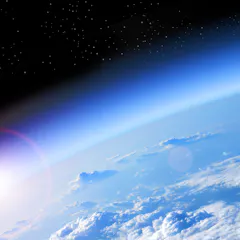
New research shows how the Montreal Protocol protected vegetation, helping keep carbon out of the atmosphere.

HFCs keep refrigerators cool, but when these short-lived climate pollutants leak, they warm the planet.
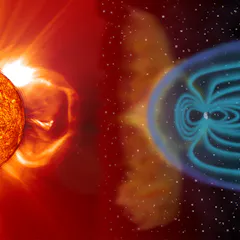
When solar particles reach the Earth, they not only produce spectacular auroras but also contribute to the chemical reactions leading to ozone depletion, which in turn influences climate patterns.
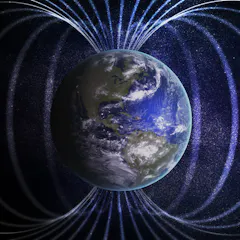
Scientists have uncovered evidence of a global paleopocalyspe.
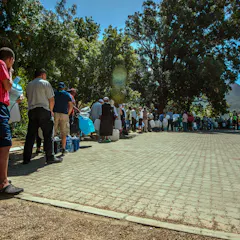
Artificially dimming the sun, by injecting reflective particles into the upper atmosphere, could reduce the risk of Day Zero level droughts in Cape Town by more than 90% in the future.
Top contributors
-

Honorary Professorial Fellow, School of Chemistry, The University of Melbourne
-
Research Group Leader, CSIRO
-
Honorary Fellow, CSIRO
-
Associate Professor in Planetary Astronomy, University of Canterbury
-
Principal Research Scientist, Australian Antarctic Division and Adjunct Senior Lecturer, University of Tasmania
-
Associate Professor in Atmospheric Chemistry, University of Wollongong
-
Research Associate in Atmospheric Science, University of Bristol
-
Professor of Atmospheric Chemistry, University of Canterbury
-
Australian Laureate Fellow, Distinguished Professor, Deputy Director of ARC Securing Antarctica's Environmental Future (SAEF), University of Wollongong
-
Professor of Atmospheric Science, Colorado State University
-
Professor, Earth and Planetary Sciences, Johns Hopkins University
-
Associate Lecturer in Biology, University of Wollongong
-
Lecturer in Observational Atmospheric Science, University of Leeds
-
Senior Principal Research Fellow (Honorary), James Cook University
-
Research Projects Officer, Oceans and Atmosphere, Climate Science Centre, CSIRO