

From phones and laptops to coffee machines and earbuds, new legislation is making it easier to fix tech products.
Articles on Right to repair
Displaying 1 - 20 of 29 articles

Although visible mending was once seen as a quiet, grassroots resistance movement to fast fashion, its popularity is fast growing.

The price cap would have lowered costs for Enbrel, an immunosuppressant drug made by Amgen.

Retrofit solutions need to prioritise the use of renewable, sustainable materials that minimise the consequences of resource consumption and pollution.

Manufacturers would benefit from establishing a better, more efficient service network and offering more attractive warranty programs.

Efforts to use technology to police copyright evolved into companies using copyright law to lock people out of repairing their own devices.
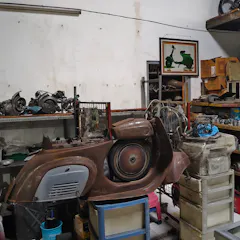
Consumers and companies need help engaging in reuse, repair and other circular practices, which have environmental and economic benefits.

If housing violations arise, it’s on tenants to defend their rights. It’s a system that may not be effective at preventing poor health.
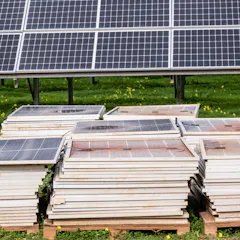
Older rooftop solar systems are being scrapped – often well before the end of their useful life. Establishing a product stewardship scheme is part of the solution.
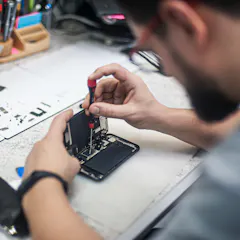
The right to repair can increase the amount of well-paying Canadian jobs and reduce Canada’s dependence on unpredictable global markets.
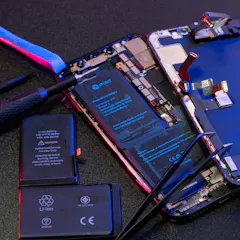
Two new bills will amend the Copyright Act to protect consumers’ right to repair their possessions. But more work is needed, including ensuring that manufacturers make their devices repairable.

Australian consumers deserve a legal right to repair beyond the warranty. If we fail to keep up with the UK and EU, we risk becoming a dumping ground for cheap and nasty appliances.
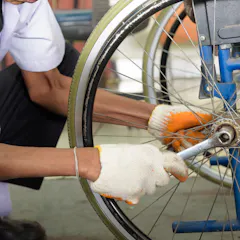
The ‘right to repair’ empowers consumers to fix and modify the products they purchase. When it comes to medical devices, the right to repair can help save lives.
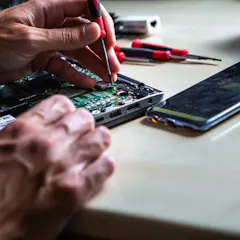
A ‘right to repair’ bill before parliament aims to reduce the cost and difficulty of fixing consumer items. Setting minimum acceptable lifespans for common products should be the first step.

In the Fall Economic Statement, the Canadian government signalled its commitment to the right to repair.

Today’s cars include hundreds of computer chips, and carmakers say the data produced by those chips is proprietary – and a security risk. This means you don’t own the data your car generates.

Manufacturers have too much legal freedom to sell products that don’t last or are hard to repair. It’s time local law caught up with global efforts to address this environmental and consumer issue.

Companies like it when your phone breaks and you have to buy another. But we’d all save a lot of money if we could actually repair the things we purchased.

The Canadian government is planning to implement ‘right to repair’ for electronic devices. This has the potential to give consumers more options, and challenges corporations’ hold over knowledge.

Humans generate a lot of trash, but there are cheaper and safer ways to handle it than loading it on rockets.
Top contributors
-

Professor of Law, Griffith University, Griffith University
-
Assistant Professor of Law & Computer Science, Dalhousie University
-
Associate Professor, Criminology, Department of Social Science, York University, Canada
-
Assistant Professor of Mechanical and Aerospace Engineering, University at Buffalo
-
Professor in Commericial Law, University of Auckland, Waipapa Taumata Rau
-
Professor of Building Physics, Ulster University
-
Professor of Sustainable Architecture, Lancaster University
-
Journalist, author and educator, Swinburne University of Technology
-
Lecturer in Sustainable Design Futures, Lancaster University
-
Associate Professor & Program Director of Design Studies, University of Technology Sydney
-
Associate Professor in Human Geography, UNSW
-
Professor, Faculty of Design and Society, University of Technology Sydney
-
Associate Professor, Griffith University
-
Scientia PhD candidate in Science and Technology Studies, UNSW
-
PhD Candidate, Circular Economy & Digital Construction, Ulster University