

Extreme storm surges can be predicted much faster with high accuracy thanks to a new AI model that helps researchers and practitioners improve coastal flood risk assessment and adaptation planning.
Articles on Risk assessment
Displaying 1 - 20 of 50 articles

When people harness the logic of natural selection, they can often find efficient and effective ways to solve complex problems.
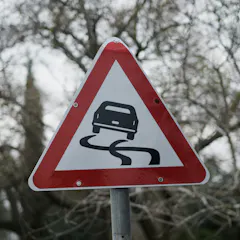
Near-misses, when accidents are narrowly avoided, aren’t false alarms. They’re the most honest feedback a system gives: the future, whispering in the present.
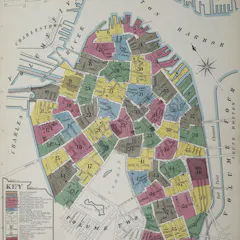
Hundreds of thousands of Sanborn maps mapped the fire risk of every US city with over 1,000 people in the 20th century.

Better measuring the risks posed by rising sea levels and more intense storms requires rigorous, comparable and transparent assessment.

Adaptive planning doesn’t mean people have to abandon coastal towns. It is about having a roadmap with multiple options to adjust as climate conditions evolve.

Letting employees use their own devices for work has many benefits – and many risks, too.
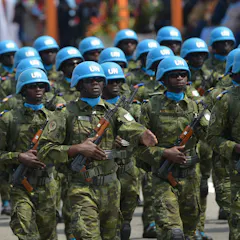
Poorer states, like Rwanda and Burundi, have economic incentives for maintaining peacekeeping armies.
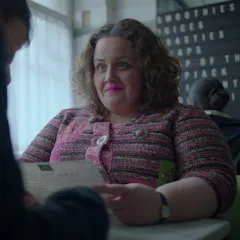
By using risk assessment guidelines, police could have taken steps to mitigate Martha’s stalking of Donny before it got worse.
Internal carbon prices – also known as shadow carbon pricing – could prod companies into taking decisions that are good for both business and the planet.

In its annual threat assessment, the spy agency has named sabotage by foreign actors as an increasing concern - and we too, should take it seriously.

One fan died and others reported burns at the Swift concert. And we’re going to see similar incidents at future concerns if we don’t start planning for extreme weather.

A new community risk assessment tool allows post-secondary institutions to make evidence-based decisions about their policies and procedures.

‘I no longer exist, I have become a construct of their imagination. It is the ultimate act of dehumanisation.’

A team of rescuers has located debris from the Titan, indicating the end of search-and-rescue efforts. Risky undertakings need to assess the cost and capacity of any potential rescue needs.

Emergency management plans need to address the growing risks emerging from increasing applications of artificial intelligence.

A national framework to address and prevent sexual and gender-based violence at post-secondary institutions includes a tool to guide responses to victims, alleged perpetrators and the community.

Climate change is a game changer and our disaster response is no longer sufficient. We must begin to address the underlying causes that make some communities more vulnerable than others.

Rising concern about possible environmental damage from the active ingredients in sunscreens could have ripple effects on public health if it causes people to use less of them.

Telling people they have a flood risk rating of 10 is less powerful than explaining how much they’re likely to pay to deal with flooding over the next five years.
Top contributors
-

Professor, Disaster & Emergency Management, Faculty of Liberal Arts & Professional Studies & Director, CIFAL York, York University, Canada
-
Psychologist and Faculty Member, Toronto Metropolitan University
-
Professor, Department of Psychology, MacEwan University
-
Head of the Centre for Water, Environment, Sustainability and Public Health, University of Strathclyde
-
Associate Director (International) - Melbourne Centre for Cities, The University of Melbourne
-
Geoscientist, University of Exeter
-
Professor of Ocean Leadership, University of Tromsø
-
Senior Manager, Descriptive Epidemiology, Cancer Council Queensland
-
Tomas Remenyi is a Friend of The Conversation.
Climate Research Fellow, Climate Futures Programme, University of Tasmania
-
Winton Professor of the Public Understanding of Risk, University of Cambridge
-
Public health doctor and Wellcome Trust Clinical Research Fellow, London School of Hygiene & Tropical Medicine
-
Associate Professor, Social Innovation, CQUniversity Australia
-
Associate Professor at the Implementation Science & Practice Advances Research Center, UMass Chan Medical School
-
Professor of Advanced Technology Transitions, Arizona State University
-
Associate Professor in Human Factors, Heriot-Watt University