
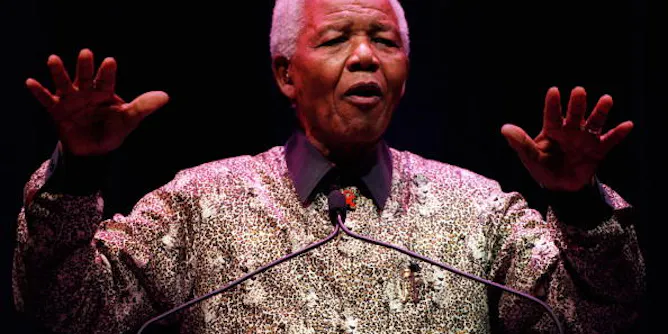
South Africa frequently invokes its celebrated constitution that is based on human rights, but has often failed to live up to its ideals.
Articles on Rohingya
Displaying 21 - 40 of 109 articles

Plus why the situation for Rohingya Muslims living in Bangladesh has gone from bad to worse. Listen to episode 9 of The Conversation Weekly podcast.

Continued persecution in Myanmar and dire living condition in Bangladesh push Rohingya people to keep seeking refuge.
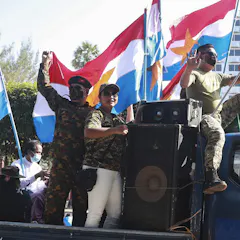
The roots of Buddhist nationalism in Myanmar go back to colonial days. Those behind the military coup are seeking to harness it to legitimize the seizure of power.
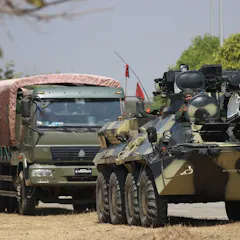
After arresting Aung San Suu Kyi once again, the army is clearly not ready to relinquish control.
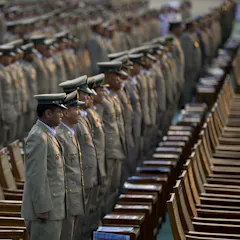
Foreign companies are failing to heed the UN call to stop doing business with Myanmar’s blood-stained military elite.
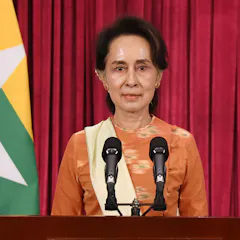
Our project carried out interviews and produced animated films of brave people seeking to bring about real change.
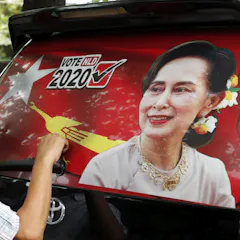
The constitutional change needed to further democratise Myanmar is impossible without the military’s consent, so achieving major political transformation through the election alone seems unlikely.
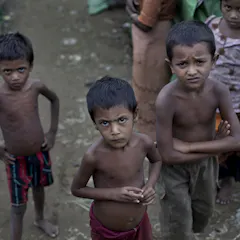
Australia has maintained military and trade ties with Myanmar. If Myanmar is not fully complying with the ICJ order, this puts Canberra in a sticky position.

As more comes to light about the money-making tactics of social media platforms we need to reevaluate our relationship with them.
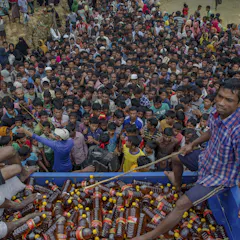
A scholar who spent time in refugee camps argues that Bangladesh’s culture as well as a painful history of a war in which 10 million sought refuge played a role in the country’s opening up of its borders.
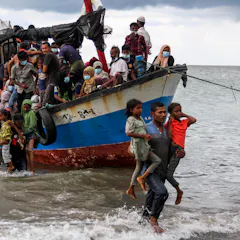
Islamic solidarity, customary law and their experience of conflict and foreign aid can explain the Acehnese greeting people in need with open arms.
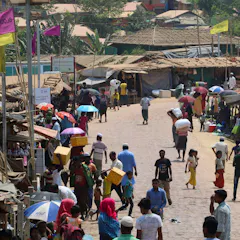
COVID-19 is spreading quickly in Bangladesh. An outbreak in the refugee camps that house some 1 million Rohingya Muslims in cramped, unsanitary quarters would be calamitous.
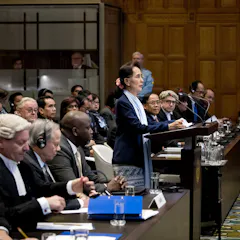
The International Court of Justice has ordered Myanmar to make wholesale reforms at the drop of a hat, wielding a stick of shame rather than a ladder of support.
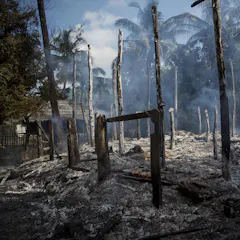
The International Court of Justice ordered Myanmar to protect its Rohingya minority and preserve any evidence relevant to the genocide charges against it. But compliance is not guaranteed.
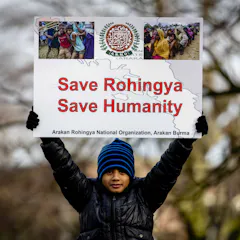
The Rohingya case before the International Court of Justice is politically and legally significant.
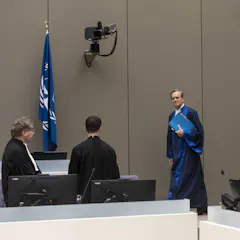
With the ICC facing intense criticism and scrutiny, its member states have met to create a plan to improve the court’s standing and performance.
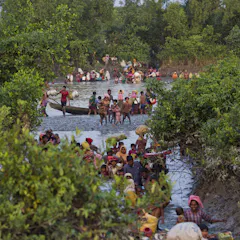
Dozens of Muslim-majority countries are asking the UN’s International Criminal Court to investigate and prosecute a 2017 massacre in Myanmar that killed an estimated 10,000 Rohingya Muslims.
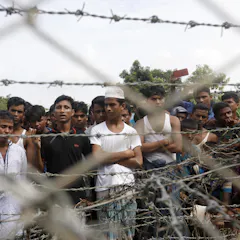
The sheer volume of pregnant women in the refugee camps was an early indicator of the extent sexual violence was used against Rohingya women and girls.
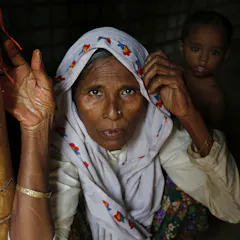
The current repatriation deal signed by Myanmar and Bangladesh fails to guarantee the safety and citizenship of the Rohingya people or address issues of justice for crimes perpetrated against them.
Top contributors
-

Associate Professor in International & Community Development, Deakin University
-
Lecturer, Department of International Relations, Universitas Gadjah Mada
-
Senior Lecturer in Politics and International Relations, University of Dundee
-
PhD Candidate, UNSW Law; Assistant professor, International Relations, University of Chittagong
-
Leverhulme Trust Early Career Fellow, Loughborough University
-
Deputy Chief Executive, Institute of Strategic and International Studies
-
Researcher, Research Centre for Politics, Indonesian Institute of Sciences (LIPI)
-
Doctoral Student, College of Community and Public Affairs, Binghamton University, State University of New York
-
Senior Fellow at the ASEAN Studies Center, Universitas Gadjah Mada
-
Lecturer, School of Political Science and International Studies, The University of Queensland
-
Honorary Enterprise Professor in the School of Social and Political Sciences, The University of Melbourne
-
Visiting Fellow, Crawford School of Public Policy and Visitor, Regnet School of Regulation and Global Governance, Australian National University
-
Research Associate, International State Crime Initiative, Queen Mary University of London
-
Director of the International PhD Program in Human Rights and Peace Studies, Institute of Human Rights and Peace Studies, Mahidol University
-
PhD Candidate, International Relations, Australian National University