
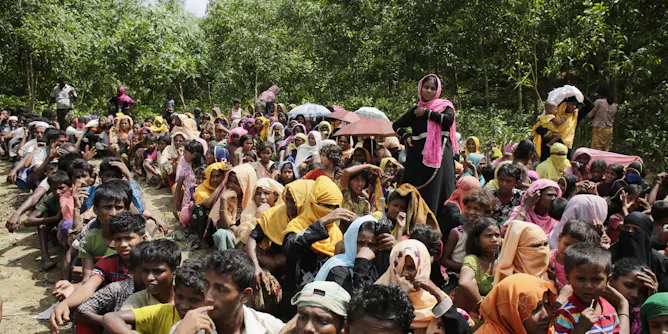
Genocide doesn’t begin with mass murder. It’s a long, insidious process that can be stopped before it’s too late.
Articles on Rohingya
Displaying 81 - 100 of 109 articles

Turkey’s humanitarian response to Rohingya’s crisis highlights President Erdoğan ambition to appear as a world champion for Muslim rights.
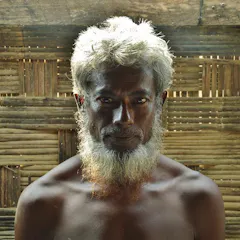
Alongside the present horrors being inflicted against the Rohingya in Myanmar, we must consider the broader political and economic context that continues to marginalise minority groups.
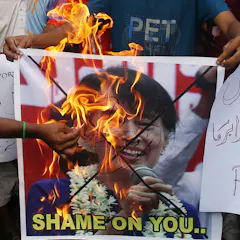
The international community is powerless to stop the Rohingya genocide – mainly because the countries who could have other interests in the region.
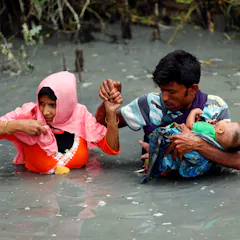
The campaign against Myanmar’s Muslim Rohingya is so extreme and violent with the intent of eliminating them from the country that it meets the criteria for genocide.
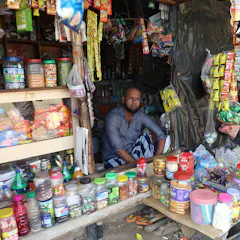
The recent move by Modi’s government to deport Rohingyas from India reveals the religious based-discrimination at the heart of the country’s refugee policies.

The mass movement of people across the world is nothing new, but migration today is so global and so unrelenting that it may well be the great humanitarian issue of our time.

The idea of relocating thousands of Rohingya refugees to a remote flood-prone island would set a bad precedent for managing human rights crises.
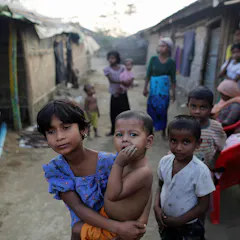
Myanmar’s Rohingya issue has become a full-blown humanitarian crisis that affects all of southeast Asia. ASEAN nations would do well do move beyond their non-interference policy and help.
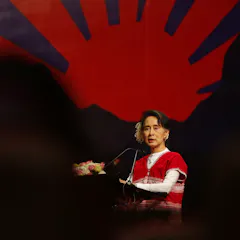
Long regarded as something approaching a saint, Myanmar’s de facto head of state appears to be running out of moral capital.

Rohingya songs and drawings are a form of resistance against the persecutions they face in Myanmar and in Bangladesh.
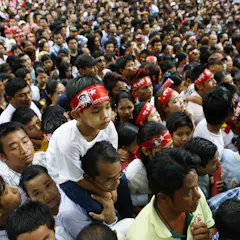
The world has waited hopefully for democracy to blossom in Myanmar. But the new regime looks much like the old one.
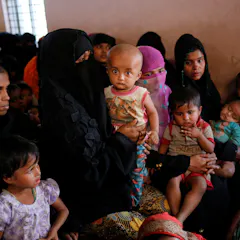
Unless reconciliation efforts involve people at the grassroots, persecution of ethnic Rohingya will not stop. Indonesian should offer support for dialogue between communities in Myanmar.
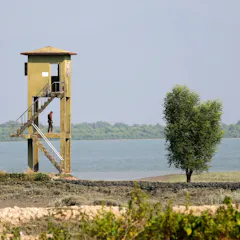
Abuses on Rohingyas have reached new height but neither Myanmar nor neighbouring Bangladesh are taking responsibilities to grant basic human rights to this population.
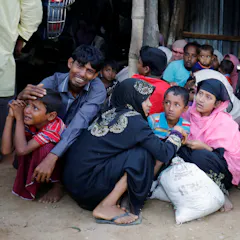
Talks among ASEAN leaders are often limited to political and economic issues, pushing problems with deep social and cultural roots like the persecution of ethnic Rohingya to the margins.
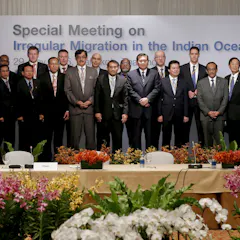
Plans for more robust architecture on forced migration need to be more advanced. Countries in our region must not rest on their laurels.
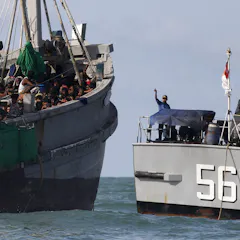
The region is showing signs it is determined to ensure similar mass displacement crises such as that which took place in the Andaman Sea in 2015 are avoided.
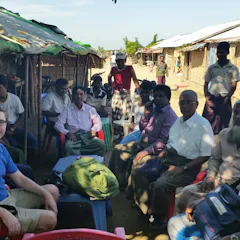
We recently undertook extensive fieldwork in Myanmar to find out what could help resolve the underlying issues that drive the conflict between the Muslim Rohingya and the majority Buddhist Rakhine.
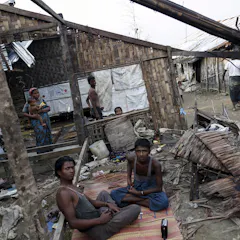
As Myanmar nears a historic election, a long-embattled minority is still struggling to escape lethal violence and trafficking.
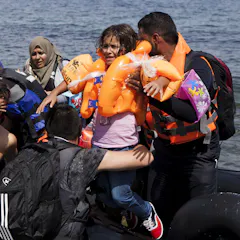
Australia should not reserve its help for those fleeing conflict in distant wars. Its first duty should be to those who face death and persecution in its own region.
Top contributors
-

Associate Professor in International & Community Development, Deakin University
-
Lecturer, Department of International Relations, Universitas Gadjah Mada
-
Senior Lecturer in Politics and International Relations, University of Dundee
-
PhD Candidate, UNSW Law; Assistant professor, International Relations, University of Chittagong
-
Leverhulme Trust Early Career Fellow, Loughborough University
-
Deputy Chief Executive, Institute of Strategic and International Studies
-
Researcher, Research Centre for Politics, Indonesian Institute of Sciences (LIPI)
-
Doctoral Student, College of Community and Public Affairs, Binghamton University, State University of New York
-
Senior Fellow at the ASEAN Studies Center, Universitas Gadjah Mada
-
Lecturer, School of Political Science and International Studies, The University of Queensland
-
Honorary Enterprise Professor in the School of Social and Political Sciences, The University of Melbourne
-
Visiting Fellow, Crawford School of Public Policy and Visitor, Regnet School of Regulation and Global Governance, Australian National University
-
Research Associate, International State Crime Initiative, Queen Mary University of London
-
Director of the International PhD Program in Human Rights and Peace Studies, Institute of Human Rights and Peace Studies, Mahidol University
-
PhD Candidate, International Relations, Australian National University