

Some of these agencies told researchers that their organizations couldn’t afford to pay their workers enough money for them to cover basic living expenses.
Articles on Safety net
Displaying 81 - 100 of 186 articles

Minnesota Gov. and vice presidential contender Tim Walz has championed his state’s free school meals policy.

About 1 in 9 Americans are facing poverty today. But more than half of the people residing in the US will experience poverty at some point in their adult lives.

Michigan’s migrant farmworkers are the backbone of the country’s second-most diverse agricultural economy. Social and labor protections for them fall short.

By relying heavily on privately run organizations to deliver social services, the government employs fewer people, reducing the size of its bureaucracy. But these partnerships can flounder.

It’s hard to start living on your own after turning 18 and aging out of foster care.

Eliminating poverty has not been a major campaign issue during the 2024 presidential campaign.

There is ample evidence that poor oral health plays a role in many chronic diseases.

When dementia patients on Medicare enroll in hospice, they lose other crucial supports and services.
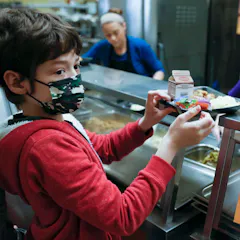
Since nutrition standards were strengthened in 2010, eating at school provides many students with healthier food than is available cheaply elsewhere. Plus, reducing stigma increases the number of kids getting fed.

Michigan Gov. Gretchen Whitmer’s proposed tax credit is part of a trend toward public support for family caregiving.

Marriage on its own won’t do away with child poverty, and in fact it can create even more instability for low-income families.

The stigma around poverty and government benefits can make those initiatives less effective.

Family caregivers who have stronger support networks and positive communication with loved ones tend to be more resilient.

Republicans and Democrats have committed to making this family-friendly government benefit a little more generous. Unless lawmakers act, it will get much smaller in 2026.

Questions about food insecurity can be less straightforward than they appear.

The share of low-income US families who sometimes or often didn’t have enough food to eat fell from 24.5% to 22.5% between late April and late July of 2020, a research team found.

Funding for the Special Supplemental Nutrition Program for Women, Infants and Children quickly halts during government shutdowns.

The law changed older adults’ caregiving behavior because their children became more able to take paid time off work to care for their own newborns.
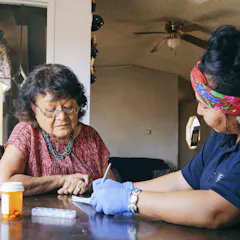
Increasing the number of older people with both Medicaid and Medicare would mean fewer of them would be forced to skimp on the care and treatment they need.
Top contributors
-

Associate Professor of Political Science, University of Richmond
-
Distinguished Professor of Sociology and Public Policy, UMass Amherst
-
Professor of Law, University of Virginia
-
Associate Professor of Public Health, The Ohio State University
-
Professor of Economics Emeritus, University of Michigan
-
Assistant Professor of Community Health, Tufts University
-
Venable Professor of Law, University of Baltimore
-
Professor of Economics and Director of the Private Enterprise Research Center, Texas A&M University
-
Professor of Gerontology, UMass Boston
-
Professor Emeritus of Public affairs and Philanthropic Studies, Indiana University
-
Associate Professor of Social Work, University of Memphis
-
Professor of Law and Energy Policy, University of Pennsylvania
-
Senior Research Fellow and Lecturer of Gerontology, UMass Boston
-
Assistant Professor of Social Work, University of North Dakota
-
Executive Associate Director of the Private Enterprise Research Center, Texas A&M University