
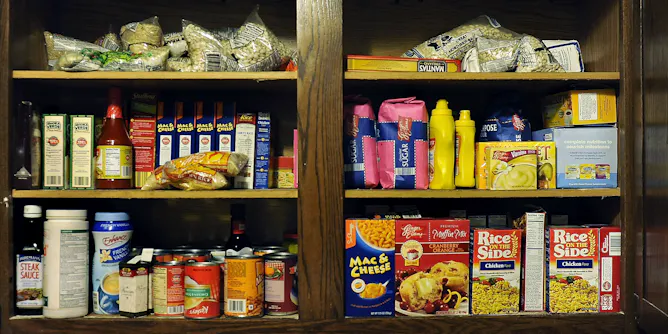
The Biden administration is trying to shore up SNAP, a mainstay of the safety net.
Articles on Safety net
Displaying 141 - 160 of 186 articles

Restricting trade to control the pandemic damages livelihoods, especially those of the urban poor. The control of future pandemics must strike a balance between health and economic activity.

More than 40,000 restrictions, most imposed by states, leave rights, benefits and opportunities out of reach for Americans with past convictions.

Not all Americans can take paid leave, and some workers can’t take any time off at all if they or their loved ones get sick. Those are big problems during pandemics.

From health care to social work, America’s public schools bridge many gaps for children and their families.

The food aid program helps low-income families put food on the table and injects money straight into struggling local economies. It will be critical throughout the crisis the coronavirus is stoking.
A scholar of the American safety net explains how, through her own brother, she’s getting a personal window into what it means to face COVID-19 as a worker in the gig economy.
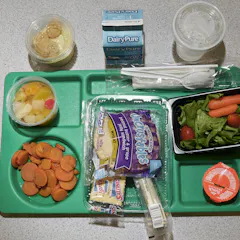
The millions of US children whose parents can’t always afford enough nutritious food for their families get about a quarter of their calories from what they eat at school.
So far, children have not been as sickened by the coronavirus as adults. So why do officials talk about closing schools? And what does this mean for you as a parent? A public health expert explains.
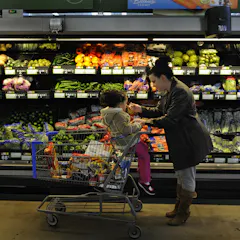
This pillar of the American safety net originated as a solution to the paradox of hunger in the midst of plenty.
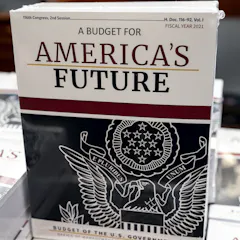
The Trump administration’s budget for healthcare proposes significant cuts to Medicare, Medicaid and the Affordable Care Act.

States are increasingly turning to machine learning and algorithms to detect fraud in food stamps, Medicaid and other welfare programs – despite little evidence of actual fraud.

The Trump administration has proposed a new category that they say will save US$200 million in terminated benefits.

During the Nazi era, roughly 300,000 additional Jewish refugees could have gained entry to the US. But the immigration law’s ‘likely to become a public charge’ clause kept them out.
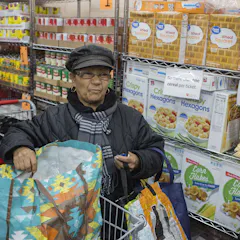
An often invisible force is undercutting support for policies that help Americans facing economic hardship.

During the Nazi era, roughly 300,000 additional Jewish refugees could have gained entry to the U.S. But the immigration law’s “likely to become a public charge” clause kept them out.

With Congress rebuffing efforts to cut benefits, the White House is trying to change the rules.

A study found that grocery shoppers who could change their orders were more likely to swap produce for junk food than the other way around.

In the US, poverty is measured by income level. But that measure misses many other aspects of poverty – like unemployment, poor health and a lack of health insurance.
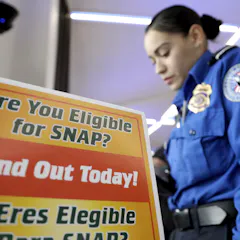
When asked to donate money they had earned through participating in a study, average people tended to choose the less onerous requirements rather than big ones.
Top contributors
-

Associate Professor of Political Science, University of Richmond
-
Distinguished Professor of Sociology and Public Policy, UMass Amherst
-
Professor of Law, University of Virginia
-
Associate Professor of Public Health, The Ohio State University
-
Professor of Economics Emeritus, University of Michigan
-
Assistant Professor of Community Health, Tufts University
-
Venable Professor of Law, University of Baltimore
-
Professor of Economics and Director of the Private Enterprise Research Center, Texas A&M University
-
Professor of Gerontology, UMass Boston
-
Professor Emeritus of Public affairs and Philanthropic Studies, Indiana University
-
Associate Professor of Social Work, University of Memphis
-
Professor of Law and Energy Policy, University of Pennsylvania
-
Senior Research Fellow and Lecturer of Gerontology, UMass Boston
-
Assistant Professor of Social Work, University of North Dakota
-
Executive Associate Director of the Private Enterprise Research Center, Texas A&M University