
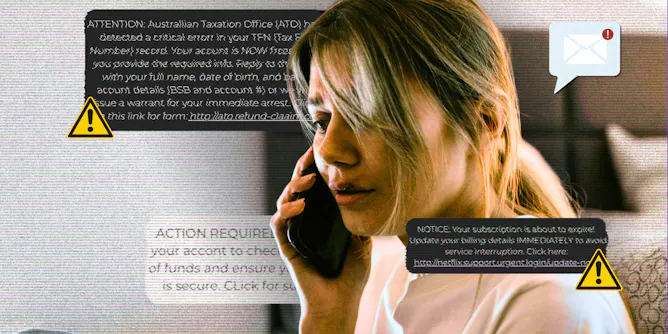
Making a three-step plan with your family – including creating a secret password or phrase – can help keep you safe these holidays and throughout the year.
Articles on Scam
Displaying 1 - 20 of 23 articles

Aspiring authors in Australia are among those who have been scammed by a network of publishing houses using cloned websites and AI tools.

Even an investor who lost US$1 million was willing to talk to Billy McFarland about Fyre Festival II

Last year, Australians lost $2.74 billion to scams, with a 150% increase in losses to job scams, in particular. Here’s what you need to know about these insidious tactics.

Cyber-scams tend to ramp up at this time of year, with criminals and scammers eager to exploit people’s generosity and excitement.
One of the first ‘spam’ messages on record was sent in 1854.

Fraud was up 25% in the UK in 2021/22.

‘Pig butchering’, fake apps and missing person scams and conning people out of huge amounts of money.
Hoax websites are becoming more popular with fraudsters. So it’s more important than ever to protect yourself.

We can all learn from high-profile frauds that have reeled in experts and celebrities alike, such as FTX and Theranos.

What is ‘structured water’ (aka hexagonal water, EZ water, or H3O2)? You might see people advertising it, but it’s not a real thing.

Email fraud is getting more personal.

2021 saw particularly higher losses for vulnerable demographics. The numbers are startling – and the government arguably isn’t doing enough.

Australians are being bombarded with ‘missed parcel’ SMS messages that aren’t as they seem…

Portraying the world of Yahoo Boys – or internet fraudsters – is a growing trend in Nigerian literature. The novels provide a scathing critique of economic exclusion.
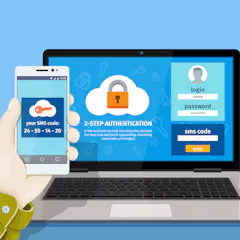
Two-factor authentication is certainly an added layer of security as we traverse the online world. But it comes in various forms, and they’re not all equally protective.

Last year, men were more likely to report losses to investment fraud, while women were the main target for romance fraud. Overall, men reported higher financial loss.

People are turning to tarot while in lockdown as they search for clarity about love, work and life in such uncertain times.

Cryptocurrency fraudsters have swindled their victims out of hundreds of millions – even billions – of dollars. What do they do to earn people’s trust and then take their money?
As younger generations spend more time interacting with people online and less time in real life, they are more likely to experience catfishing – both as victims and instigators.
Top contributors
-

Associate Dean (Learning & Teaching) Faculty of Creative Industries, Education and Social Justice, Queensland University of Technology
-
Professor, Research Centre for Business in Society, Coventry University
-
Senior Lecturer in Psychology, The University of Queensland
-
Visiting Lecturer, University of Greenwich
-
Adjunct Senior Lecturer, Applied Ethics and CyberSecurity, Griffith University
-
Associate Professor, School of Computer Science and Informatics, De Montfort University
-
Professor of Management, University of North Carolina – Greensboro
-
Professor in Cyber Security, Loughborough Cyber Institute, Loughborough University
-
Course Leader and Senior Lecturer in Cyber Security NCSA, University of South Wales
-
Molly Mason Jones Professor of Psychology, Scripps College
-
Cotutelle PhD Candidate in African Postcolonial Literature and Culture, University of Bristol
-
Professor of Cyber Security Practice, Edith Cowan University
-
Senior Lecturer, Department of Psychology, Aberystwyth University
-
Lecturer in Modern European History, University of Bristol
-
Senior Lecturer in Computer Security, Liverpool John Moores University