
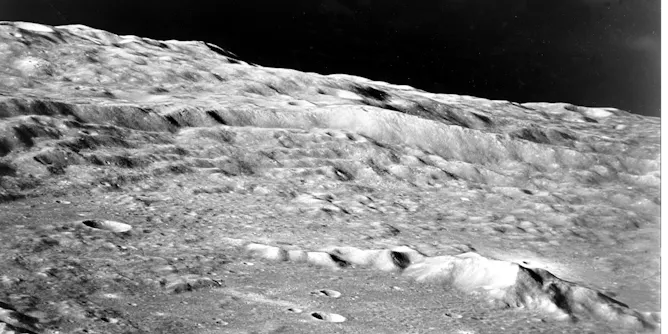
An extreme heating event may have interfered with scientists’ attempts to figure out the Moon’s age by dating lunar rock samples.
Articles on Solar system
Displaying 41 - 60 of 293 articles

In 2017, astronomers found an object they’d never seen before. Now, it’s part of a growing category of elusive ‘dark comets’ – and we might find more soon.
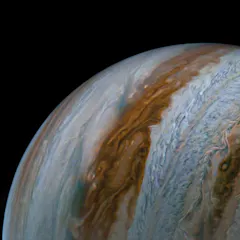
Jupiter’s composition is more similar to that of the Sun than that of the Earth.

Comet Tsuchinshan-ATLAS is one of 2 comets from the Oort Cloud passing by Earth in October 2024.
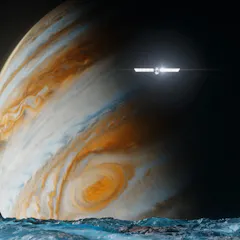
On October 10, Europa Clipper will take off on a long journey to Jupiter’s moon Europa. The icy moon could potentially host alien life – and there’s only one way to find out.
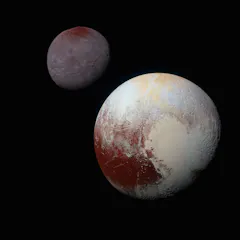
The discovery can also give clues not only about Charon, but other objects out near Pluto.
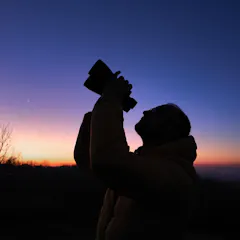
Comet C/2023 A3 (Tsuchinshan-ATLAS) is expected to be the brightest spectacle of 2024. Our charts will help you find it in the night sky.
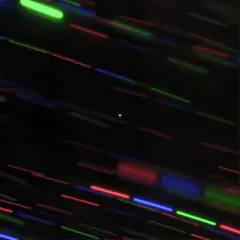
A large space rock will be temporarily captured by Earth’s gravity throughout October and November.
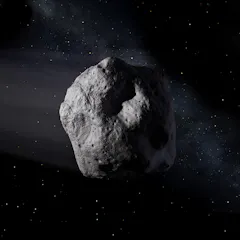
This month, they spotted just the ninth asteroid to be detected before impact with Earth.
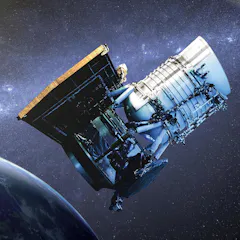
NASA’s enduring NEOWISE mission was just shut down. It was keeping an eye out for potentially dangerous asteroids – but we’re not left defenceless.
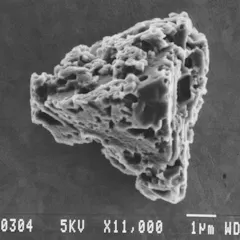
Most presolar grains were destroyed in the formation of the universe. But some survived on meteorites.
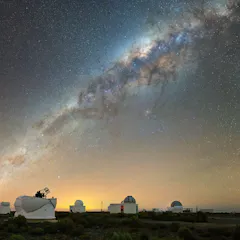
The first International Astronomical Union General Assembly was held just over 100 years ago, in Rome, Italy.

It’s a fundamental requirement for life on Earth. But how does water exist on such a forbidding world as the Moon?
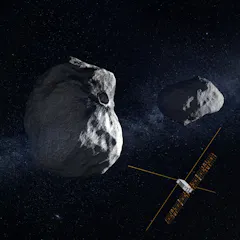
NASA’s DART was the first time we tried planetary defence – attempting to redirect an asteroid. The data from this landmark mission is still yielding new insights today.
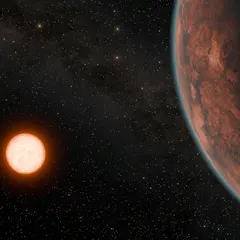
The groundbreaking discovery of a temperate Earth-size planet just 40 light-years away may hold the key to understanding stellar habitability.
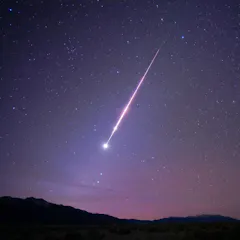
On July 31, Earth will pass through two debris streams that will produce meteor showers. Here’s where to look in the night sky in Australia and New Zealand.
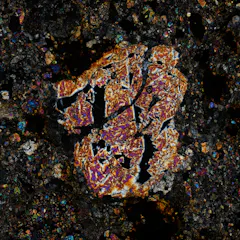
Vast amounts of space rocks litter our Solar System, and sometimes land on Earth’s surface. There are many things we can learn from them.
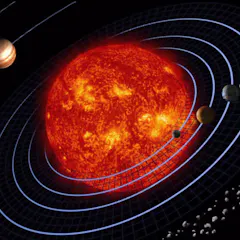
Magnetism and gravity both shape the boundaries of our cosmic neighbourhood.

Studying the water cycle on Mars is essential for assessing its potential habitability, and a new study reveals that significant quantities are present as transient frost on mountain peaks.
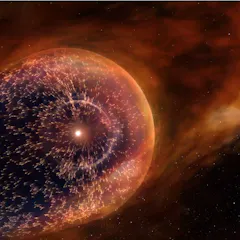
An interstellar probe could help scientists answer fundamental questions about how the Sun influences Earth, space and other planets in the solar system.
Top contributors
-

Professor (Astrophysics), University of Southern Queensland
-
Professor of Planetary Geosciences, The Open University
-
Senior Curator (Astronomy), Museums Victoria Research Institute; The University of Melbourne
-
Associate Professor in Archaeology and Space Studies, Flinders University
-
Professor of Planetary and Space Sciences, The Open University
-
Associate Professor in Astronomy, Monash University
-
Program Manager / Adjunct Research Fellow, Swinburne University of Technology
-
Postdoctoral Researcher in Radio Astronomy, University of Sydney
-
Postdoctoral research associate, University of Oxford
-
Scientist, Max Planck Institute for Solar System Research
-
Senior Instrument Scientist, Australian Nuclear Science and Technology Organisation
-
Lecturer, School of Science, Computing and Engineering Technologies, Swinburne University of Technology
-
Associate Dean of Innovation and Engagement, Swinburne University of Technology
-
PhD Candidate, University of Southern Queensland
-
Research Associate, Curtin University