
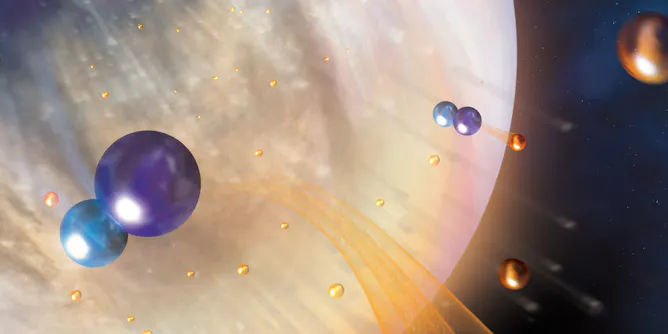
Studying Venus’ water loss can help scientists better understand how planets go from potentially habitable to incapable of supporting life.
Articles on Solar system
Displaying 61 - 80 of 293 articles
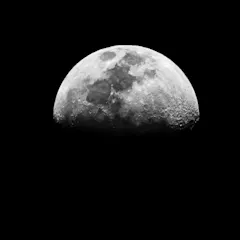
China’s Change'6 is going to explore the Moon’s far side and bring back precious lunar soil for scientists to study.
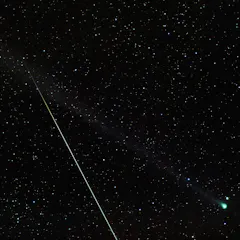
The Eta Aquariid meteor shower peaks each year in early May, but this year it should be particularly good, thanks to dark skies and extra activity.

If you look carefully at the night sky, you may spot this fuzzy visitor with the naked eye – but binoculars will help.

Textbooks often show Earth’s orbit around the Sun as an almost egg-shaped ellipse. The real story is very different.
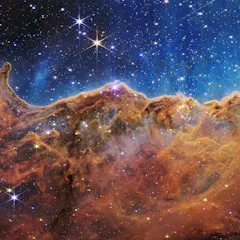
Analysis of fragments of the first solids that emerged out of the birth of the sun date our supernova as being 4.6 billion years old.
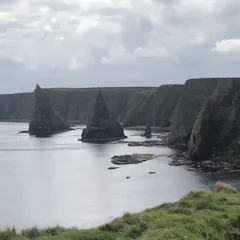
The Solar System could be awash with oceans, not on the surface but hidden inside the most surprising bodies

The largest study yet of ‘twin stars’ shows planetary orbits may be less stable than we thought.
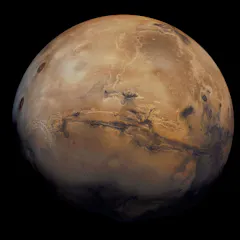
Mars has been a popular destination since space exploration began – and there are plenty of people who’d love to go there.
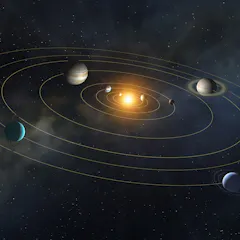
You might hate winter, but at least you know what to expect every year. Other planets have wobbly axes that lead to wild, unpredictable seasons.
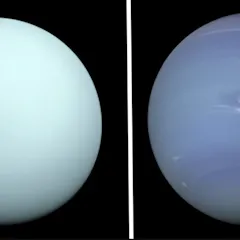
It turns out Uranus actually changes colour throughout the year.
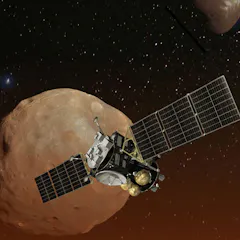
A Japanese spacecraft is expected to reach Martian orbit in 2025 to collect material from the surface of the moon Phobos before returning to Earth by 2029.
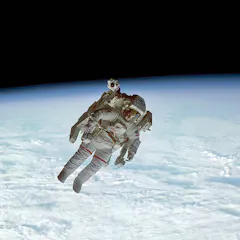
Sixty years ago, philosopher Hannah Arendt argued an interplanetary perspective may be bad news for humanity as we know it.
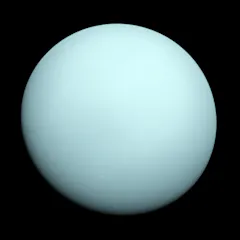
Five of the Uranus moons might be ocean worlds − and if there’s water, there might be life.
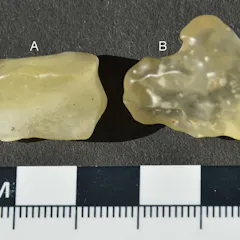
Libyan desert glass originated from the impact of a meteorite on the Earth’s surface.
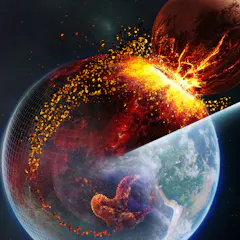
The Moon was formed when it collided with Earth billions of years ago.
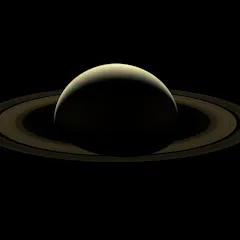
Viral headlines would have you think Saturn’s rings will vanish in just 18 months. Here’s what that really means and why you don’t need to worry.
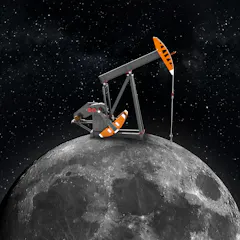
Upcoming NASA missions will help scientists understand the composition of asteroids – which could inform companies one day hoping to commercially mine asteroids.
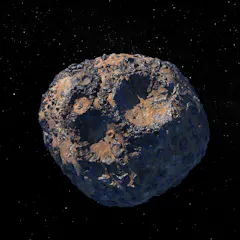
A distant lump of space rock may have a surprising amount in common with the core of our own planet.
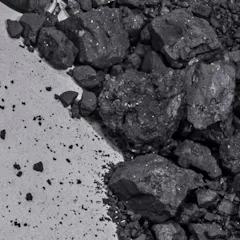
Studying the sample could help answer how water arrived on Earth and how life started.
Top contributors
-

Professor (Astrophysics), University of Southern Queensland
-
Professor of Planetary Geosciences, The Open University
-
Senior Curator (Astronomy), Museums Victoria Research Institute; The University of Melbourne
-
Associate Professor in Archaeology and Space Studies, Flinders University
-
Professor of Planetary and Space Sciences, The Open University
-
Associate Professor in Astronomy, Monash University
-
Program Manager / Adjunct Research Fellow, Swinburne University of Technology
-
Postdoctoral Researcher in Radio Astronomy, University of Sydney
-
Postdoctoral research associate, University of Oxford
-
Scientist, Max Planck Institute for Solar System Research
-
Senior Instrument Scientist, Australian Nuclear Science and Technology Organisation
-
Lecturer, School of Science, Computing and Engineering Technologies, Swinburne University of Technology
-
Associate Dean of Innovation and Engagement, Swinburne University of Technology
-
PhD Candidate, University of Southern Queensland
-
Research Associate, Curtin University