
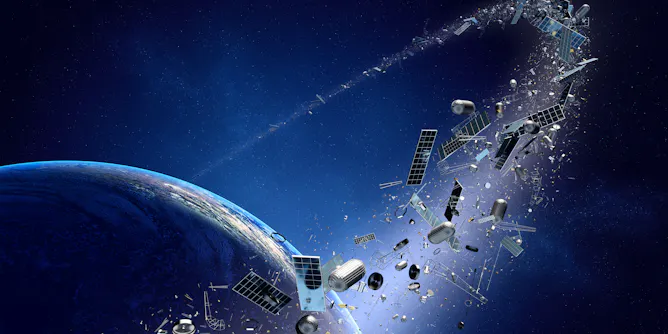
SpaceX recently launched 60 satellites into orbit around Earth as part of its Starlink programme.
Articles on Space debris
Displaying 41 - 60 of 63 articles
Two defunct satellites passed within metres of one another, prompting renewed focus on the dangers of space debris. But with many satellites treated as military secrets, how do we track the hazards?

An Israeli spacecraft carrying tardigrades crashed into the moon. Whether they will survive is irrelevant.
There needs to be an international approach regarding the management and disposal of space junk.
Security cameras captured two separate fireballs over Australia this week. So what’s responsible these bright flashes?

In the space beyond Earth’s atmosphere, countries are focusing on nationalist pursuits and ignoring the consequences for the rest of humanity. How can we keep the peace and build a sustainable future?
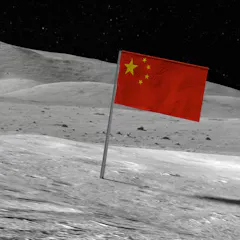
China just became the first country to land a probe on the far side of the moon. It’s a technological achievement and another sign of China’s capabilities and ambitions in space.
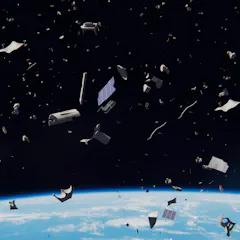
Countries developing technology that removes or blasts away space junk may appear to be doing a public service. But those same technologies can destroy military and communications satellites.
Nearly 50 years since the first man walked on the moon, our morals are still stranded on Earth.
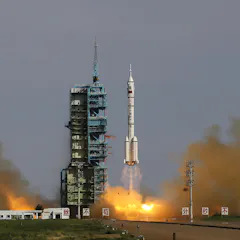
Air resistance makes it near impossible to predict the path of a crashing satellite.
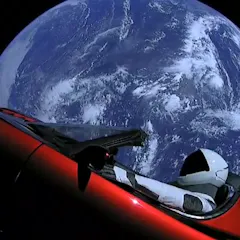
From damaging the environment to contaminating the solar system, SpaceX’s successful launch of the Falcon Heavy rocket also poses risks.
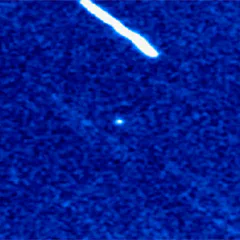
The mystery object seen moving through our Solar system shows the void between the stars is far from empty. So can we expect more interstellar visitors?
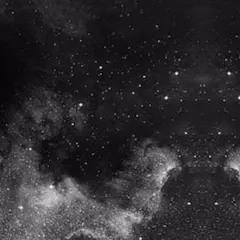
Protecting culturally significant spacecraft enables people on Earth to feel connected to space as the common heritage of humanity.
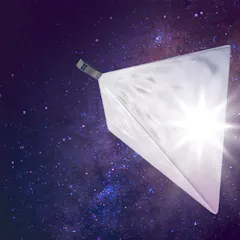
It promises to be one of the brightest objects in the night sky once the Mayak satellite unfolds a giant pyramid reflector. But what is it going to do?
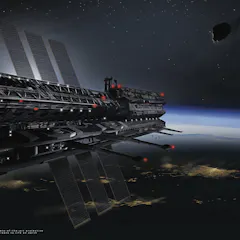
Asgardia is calling for unrestricted research but history has given us many examples where this has resulted in unacceptable consequences.
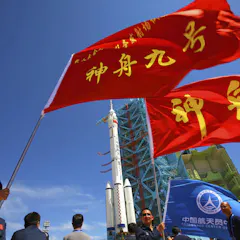
We don’t know where Tiangong-1 will land but the risk of someone being hit is about 1 in 3,200.
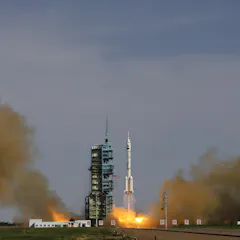
We should welcome the fact that amateur astronomers are increasingly keeping tabs on what’s going on up above.
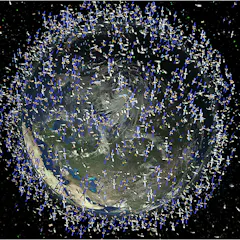
Back of the net! Litter-picking mission will leave space junk caught up in a web.
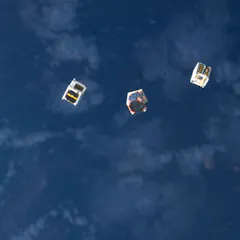
Just about anyone can get a tiny, cheap satellite into orbit these days. As we consider how to deploy them responsibly, inspiration comes from an amateur community of enthusiasts.
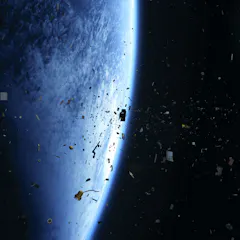
We need to find a way to break through the potentially disastrous stalemate wherever everyone waits for someone else to clear up the junk in orbit.
Top contributors
-

Professor of Planetary and Space Sciences, The Open University
-
Professor of Strategy and Security Studies, Air University
-
Professor, Physics and Astronomy, University of British Columbia
-
Emeritus Professor of International Law, Western Sydney University
-
Associate Professor, Astronomy, University of Regina
-
Associate Professor in Archaeology and Space Studies, Flinders University
-
Professor, Swinburne University of Technology
-
Chief Executive Officer, Australasian Centre for Space Governance; Associate Expert, National Security College, Australian National University
-
Professor (Astrophysics), University of Southern Queensland
-
Associate professor, University of Southern Queensland
-
Senior Lecturer in Mechanical Engineering, University of Auckland, Waipapa Taumata Rau
-
Associate Dean of Innovation and Engagement, Swinburne University of Technology
-
Associate Professor in Astronomy, Monash University
-
Professor of Space Physics, Lancaster University
-
Professor of Advanced Technology Transitions, Arizona State University