

Pollen, algae, insects, radiolarians – each unique microfossil holds clues to how Earth has changed over millions of years. Combining AI with digital scanners helps researchers piece it all together.
Articles on Specimens
Displaying all articles
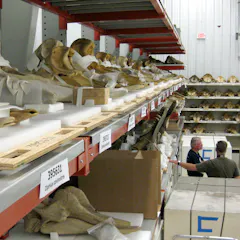
Specimen preservation means researchers don’t need to reinvent the wheel each time they ask a new question, making it critical for the advancement of science. But many specimens are discarded or lost.
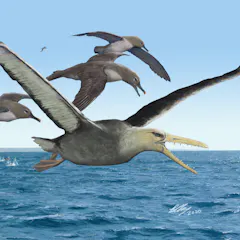
Paleontologists have discovered fossil remains belonging to an enormous ‘toothed’ bird that lived for a period of about 60 million years after dinosaurs.

A tiny percentage of museums’ natural history holdings are on display. Very little of these vast archives is digitized and available online. But museums are working to change that.

Henrietta Lacks’s ‘immortal’ cells changed medical research – although she never knew that.

Forget the pith helmet and butterfly net. Discovering biodiversity now is much more about metagenomics and the 0’s and 1’s of digital databases.

The dead animal specimens that comprise natural history collections contribute a lot toward scientific understanding of their still-living counterparts – and those that have gone extinct.
Top contributors
-

Professor of Paleontology and Director of the University of California Museum of Paleontology, University of California, Berkeley
-
Research Professor of Ecosystem Science and Management, Penn State
-
Senior Collections Manager at McGuire Center for Lepidoptera & Biodiversity at Florida Museum of Natural History, University of Florida
-
Senior Lecturer in Biomedical Sciences, Cardiff Metropolitan University
-
Assistant Professor of Biology, University of North Carolina – Greensboro
-
Doctoral Candidate, Integrative Biology, University of California, Berkeley
-
Assistant Professor of Ecology & Evolutionary Biology and Assistant Curator of Mammals, University of Kansas
-
Postdoctoral Research Fellow in Natural History, Smithsonian Institution
-
Research Geologist and Curator of Paleobotany, Smithsonian Institution