
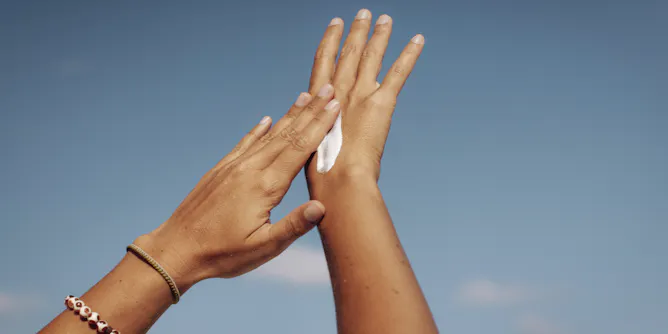
Consumers in Europe and Asia have used sunscreen containing bemotrizinol for decades, and many say its approval in the US is long overdue.
Articles on Sunburn
Displaying 1 - 20 of 36 articles
Australian health authorities have been encouraging ‘no hat no play’ for 100 years.
Tattoos linked to lower melanoma risk but questions remain.
Hot sand, sunburn, and sizzling sausages – summer is full of burn hazards.

The powdery snow that skiers and snowboarders love, especially on crystal clear days, plays a big role in how much your skin will burn.

Sun exposure can cause mutations that promote skin cancer. Getting them early in life means they have more time to overwhelm the body’s protective mechanisms.
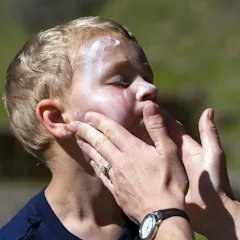
Being severely sunburnt as a child more than doubles the chance of developing future skin cancer but less than half of primary schools questioned in new research have a sun safety policy.
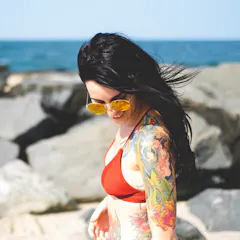
A tattoo can be a large investment in time, money and pain. Here’s how to look after yours this summer.

Widespread screening for skin cancer may not be necessary, but it is important to understand the risks behind UV overexposure and to get checked early if you have concerns.
Spending too long in the sun can damage your DNA. But what about if you retreat back to the shade? How long does it take to get back to normal?
Our ancient ancestors didn’t have clothes or houses – but that constant exposure to the sun helped their skin protect itself from the worst sun damage.
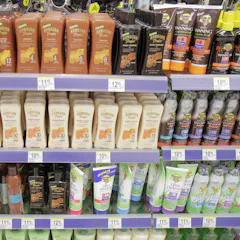
Rising concern about possible environmental damage from the active ingredients in sunscreens could have ripple effects on public health if it causes people to use less of them.
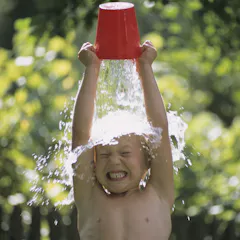
After the announcement of President Biden’s heat initiative, The Conversation revisits stories on high summer temperatures and human health.
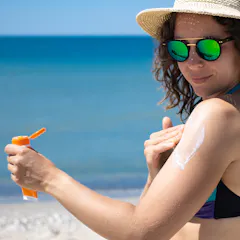
Different sun creams work in different ways and protect against different ultra violet rays.

In Summer, you may need to be extra sun smart if you’re swallowing certain medications or putting them on your skin.

Tree sunburn tends to occur during hot spring days or in early summer, when trees are full of moisture. So why does it happen? And which trees are most vulnerable?
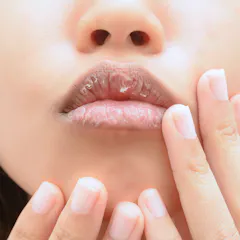
The key is to avoid lip balms that contain certain additives which might worsen the problem. Instead, try balms that are bland and don’t contain flavours, fragrances and colours.
Even if you live in the UK, you’re still at risk of skin cancer. Here’s how to stay safe .
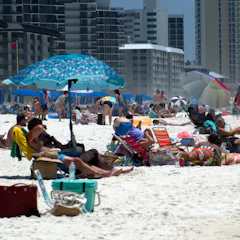
UV radiation can reflect off surfaces like sand or concrete, meaning shade doesn’t always prevent sunburn.
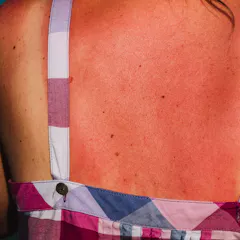
Home remedies like aloe vera and moisturiser might help you “feel” better. But they won’t fix the skin damage in the way antibiotics fix an infection.
Top contributors
-

Postdoctoral Researcher, Dermatology Research Centre, The University of Queensland
-
Professor of Dermatology, The University of Queensland
-
Reader, Department of Pharmacy & Pharmacology, University of Bath
-
Chief Specialist Scientist (Public Health), South African Medical Research Council
-
Postdoctoral Research Fellow, Diamantina Institute, The University of Queensland
-
Professor, ARC Future Fellow & Founding Director, Sir Ian Potter NanoBioSensing Facility, RMIT University
-
Associate Professor of Immunotoxicology; Co-ordinator of Nanosafe Australia and Asia Nano Safe research networks, RMIT University
-
Professor- Departments of Medical Microbiology & Immunology and Dermatology | Member- Foods For Health Institute | Member- Comprehensive Cancer Center | Director- Autoimmunity | Director- Immune Monitoring, University of California, Davis
-
Researcher, University of Pretoria
-
Medical student, University of California, Davis
-
MB BS Phase 1 Lead & Senior Lecturer in Medicine and Molecular Genetics, University of York
-
Head, Department of Medicine, School of Clinical Sciences; Professor of Medicine, Monash University
-
Research Fellow, Queensland University of Technology
-
Assistant Professor of Dermatology, University of Colorado Anschutz
-
Professor of Plant Science, Lancaster University