

Productive work in all other sectors of the economy relies on teachers.
Articles on Teacher workloads
Displaying all articles

There are clear potential time saving benefits. But how these tools might affect the teaching profession more broadly needs to be considered.
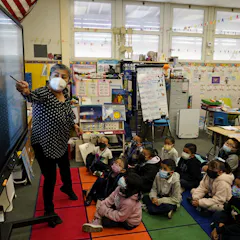
Looser requirements for teacher certification don’t fix teachers’ problems, which are low pay, high workload and lack of respect.

This week, NSW teachers learned they were going to get a “helping hand” preparing lessons from the start of term 4

Difficulties in attracting and retaining teachers have a lot to do with the conditions they find themselves working in. Here are 3 ways to develop a school system that’s fairer and better for all.

Paying good teachers more sounds like a great idea. The problem is the research on performance pay shows it’s counterproductive – and inflicting it on a system in crisis is terrible timing.

High-stress schools undermine teachers’ commitment and risk losing even more from the profession at a time of growing staff shortages. But schools can take steps to reduce the causes of stress.
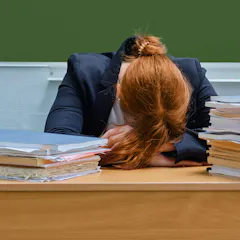
Many teachers are sick of pretending they are “doing OK”. They feel pressured to be unrealistically positive in the face of irrefutable evidence that everything is not great.

The demands of the job mean teachers don’t have enough time to ensure they do the best-quality teaching they can. But our new report has a plan for governments.

In a survey of 1,725 Australian teachers, 86% said they “did not have adequate time to engage with research” and struggled to “keep up with new research”.

Education departments are increasingly investing in student surveys to improve classroom standards. But a study has found teachers don’t change their practice in response to student feedback.

A shortage of special education teachers is threatening states’ abilities to provide high quality education for students with disabilities. Changing teachers’ working conditions can help.
Top contributors
-

Professor of Education Policy and Practice, Youth Studies, Monash University
-
Associate Professor, School of Education, La Trobe University
-
Senior Lecturer, Faculty of Education, Monash University
-
Lecturer in Higher Education, The University of Melbourne
-
Lecturer - Education and Digital Technologies, University of Bristol
-
Associate Professor of Education, Monash University
-
Associate Professor of Education Leadership, University of South Carolina
-
Senior Research DECRA Fellow, Institute for Learning Sciences and Teacher Education, Australian Catholic University
-
Associate professor, Curtin University
-
Associate Professor of Education, Iowa State University
-
Senior Associate, Grattan Institute
-
Lecturer, School of Education, Charles Sturt University
-
Professor of Social Impact, University of Technology Sydney
-
Executive Dean, Faculty of Education, Philosophy and Theology, University of Notre Dame Australia
-
Professor, University of Sydney