

The faster and easier option isn’t always the best.
Articles on Thinking
Displaying 1 - 20 of 44 articles

Second-guessing yourself? Here’s how it can hurt (and at times help) your confidence.
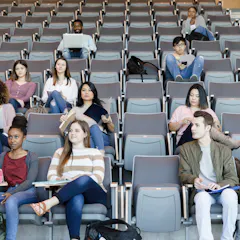
Students – and all manner of professionals – are tempted to outsource their thinking to AI, which threatens to undermine learning and credibility. A philosophy professor offers a solution.
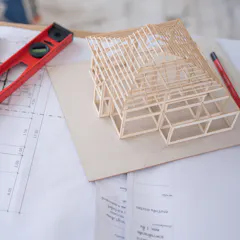
Kant’s 3 rules can offer a helpful check as to whether we are not only living well but thinking well.
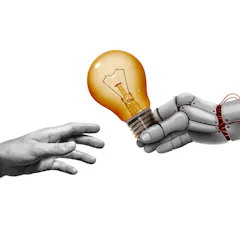
Maybe the tool matters less than the user.

Whether AI can ‘think’ is a different question than whether it is ‘intelligent.’

During the Industrial Revolution, craftsmanship retreated to the margins. As AI becomes widely adopted, will the same happen to original thinking?
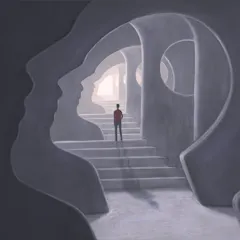
René Descartes said the only thing we can be certain about is that we think. But what is the nature of thoughts? Philosophers have pondered this for centuries.

Through self-development, or ‘Bildung’ in German thought, salon culture sought to resist absolutism and foster democratic discourse. This shaped the modern Western university.
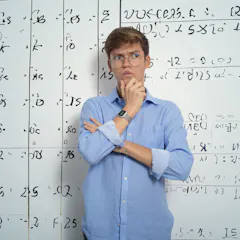
Eating right, exercising, playing sports, reading and journaling are just a few of the ways you can keep your brain in top shape.
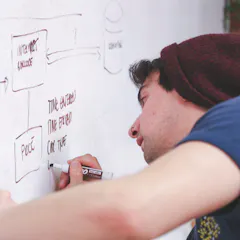
Undergraduate writing courses are about learning to think, synthesize and judge the credibility of sources — and interact with an audience.

Doing two things at the same time isn’t always as productive, healthy or safe as focusing on one thing at a time.

Being open to the possibility you could be wrong about your beliefs is an important part of learning about the world. But this trait is not enough on its own.

Scholars differ over whether having students use AI in their assignments will help or hurt their careers after graduation.
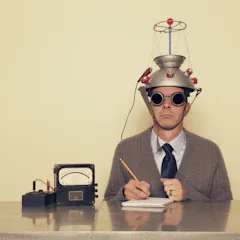
The idea that the least skilled are the most unaware of their incompetency is pervasive in science and pop culture. But a new analysis of the data shows that the Dunning-Kruger effect may not be true.

Spontaneous trips down memory lane: why and how the mind wanders.

When working from home, women struggled more than men to find time for the sustained effort needed to produce good, publishable research. Lack of thinking time is a problem for all knowledge workers.
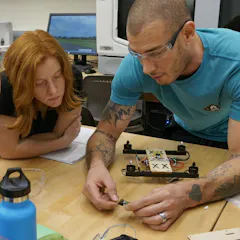
Solving mathematical equations is only part of the job. Students should be spending more time thinking about the human dimensions of the problems they are trying to solve.
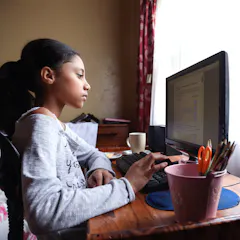
Whether they’re in a classroom or online, students should be encouraged to move around. An expert on learning with technology explains why.

Where we would be without our brains? But think about it. How do they work?
Top contributors
-

Senior Lecturer in Philosophy and Education; Curriculum Director, UQ Critical Thinking Project, The University of Queensland
-
Professor of Clinical Psychology, Curtin University
-
Assistant Professor of Nonprofit Management and Leadership, University of Florida
-
Professor of Behavioural Science, Kingston University
-
PhD Candidate in Economics, Australian National University
-
Assistant Professor of History of Behavioral Science, The Ohio State University
-
Pro Vice-Chancellor (Educational Innovation), The University of Melbourne
-
Senior Research Scientist at the Australian E-Health Research Centre, CSIRO
-
Director of the Learning, Instruction & Technology Lab and Professor of Educational Psychology, School of Education, The University of Queensland
-
Professor of Kinesiology and Physical Education, University of Toronto
-
CSIRO
-
PhD candidate in Instructional Design, UNSW
-
Professor of Psychology, Kingston University
-
Assistant Professor of Engineering, University of San Diego
-
Principal Research Scientist, Australian eHealth Research Centre, CSIRO