
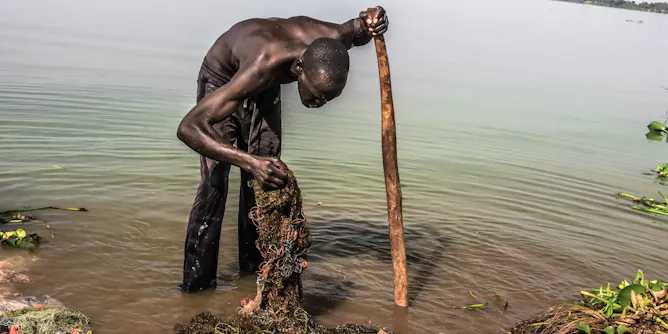
The organisms that cause greening are highly concentrated in Kenya’s shallow Winam Gulf.
Articles on Toxic algae
Displaying all articles

Images of the 2011 tsunami did not look as I had expected, and pointed to the sublime, when experience exceeds our frameworks of understanding. My exhibit ‘Salients’ treats this theme.
Cleaning up the Great Lakes was a big job when the US and Canada undertook it in 1972. Today it’s far more challenging.
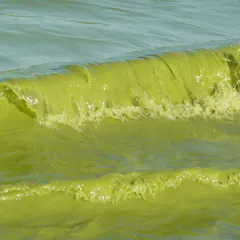
Warmer waters, heavier storms and nutrient pollution are a triple threat to Great Lakes cities’ drinking water. The solution: Cutting nutrient releases and installing systems to filter runoff.

Red tide and a blue-green algae outbreak are fouling hundreds of miles of coast, killing fish and driving tourists away from beaches. Some of the causes are natural, but human actions play a big role.

Toxic algae blooms like the intense one now fouling Florida’s waterways harm wildlife and people in various ways. They’re also on the rise.

They give us part of the air we breathe but microscopic phytoplankton can also be toxic. They are also on the move thanks to climate change so a new Australian database hopes to monitor any changes.

The same conditions – ultimately tied to nutrient runoff – that created the damaging toxic blooms and dead zones in US waterways of recent years are forecast to return this year.
Top contributors
-

Research Associate, Faculty of Science, University of Technology Sydney
-
Associate Professor of Biological Oceanography, University of South Florida
-
Professor Emeritus of Environment and Sustainability, University of Michigan
-
Professor, Director of Florida Sea Grant, University of Florida
-
Associate Professor, Communication Studies & Media Arts, McMaster University
-
Professor of Earth Sciences and Executive Director, Environmental Resilience Institute, Indiana University
-
Associate Professor of Environment and Sustainability, Western Michigan University
-
Professor and Assistant Chair of Geology, Kent State University
-
Distinguished Research Professor and Director, Great Lakes Center for Fresh Waters and Human Health, Bowling Green State University
-
PhD candidate, Michigan Geomicrobiology Lab, University of Michigan
-
Professor of Biology, University of Michigan
-
Professor of Geography, Bowling Green State University