

There is no approved vaccine to curb the Ebola outbreak in the Democratic Republic of the Congo and Uganda. But new funding offers hope.
Articles on Vaccine development
Displaying 1 - 20 of 74 articles

Chaos at the CDC and the sharp move away from mRNA vaccines has public health experts alarmed.

Research teams across Canada are now building on homegrown innovation to expand the potential of RNA vaccines beyond infectious diseases.

Pathogens are constantly evolving to become resistant to treatment in the perpetual battle between humans and infectious diseases.

The bacterium that causes Lyme disease is a master of disguise, changing its appearance to evade the immune system as it moves from the ticks that carry it to humans or animals.

Annual flu vaccines are in a constant race against a rapidly mutating virus that may one day cause the next pandemic. A one-time vaccine protecting against all variants could give humanity a leg up.

An effective nasal vaccine could stop the virus that causes COVID-19 right at its point of entry. But devising one that works has been a challenge for researchers.
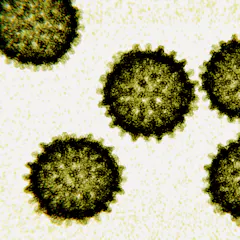
Using a Nobel Prize-winning technique called cryo-EM, researchers were able to identify potential areas on the hepatitis C virus that a vaccine could target.

Canadian scientists have made significant contributions during the pandemic response, including vital roles in developing COVID-19 vaccines. But underfunding puts the future of science in Canada at risk.
New boosters protect against the original COVID strain as well as Omicron. In future, we might see variant-proof vaccines or those delivered in the nose or mouth.

An inhaled COVID-19 vaccine would go directly to where the body would use it: the mucosal surface of the airways. This could mean less waste and more benefit, lower costs and reduced side-effects.
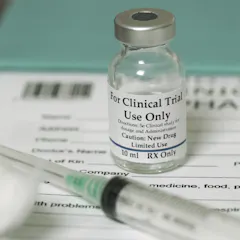
A new network of public clinical trials institutes is urgently needed to replenish the empty pipeline for new antibiotics.

Various strategies are being pursued to boost worldwide vaccine coverage.

It sounds too good to be true, a vaccine that can protect against future virus variants. But governments around the world are keen to learn more.

Increasing skills and the availability of raw materials would be a bigger boost for vaccine production right now.
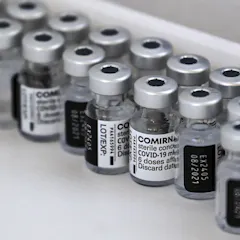
Skyrocketing demand coupled with shortages of vital components is leading to bottlenecks in the supply chain of Pfizer’s and other mRNA vaccines.

The R21 vaccine protected three-quarters of children against malaria in trials.
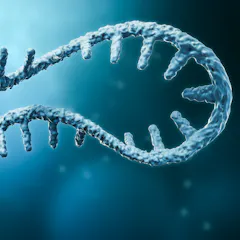
We have two mRNA COVID-19 vaccines so far. But what else can this technology do?

The development of the COVID-19 vaccines is part of a vast system of public subsidies and universities, not corporate ambition.
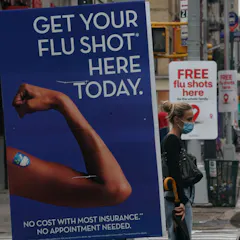
You need a new shot every year because current flu vaccines provide limited and temporary protection. But researchers’ new strategy could mean a one-and-done influenza vaccine is on the way.
Top contributors
-

Professor of Immunology and Associate Dean, Research and Graduate Studies, University of Guelph
-
Associate Professor of Viral Immunology, Department of Pathobiology, University of Guelph
-
Associate professor, Department of Family and Community Medicine, University of Toronto; York University, Canada; University of Sydney
-
Professor, School of Population Health, UNSW
-
Professor, Infectious Diseases and Microbiology, The University of Queensland
-
Vaccine Knowledge Project Manager, University of Oxford
-
Clinician-scientist, Laboratory Medicine and Pathobiology, University of Toronto
-
Associate Professor and ARC Future Fellow, The University of Western Australia
-
Vice-Chancellor's Research Fellow, School of Health and Biomedical Sciences, RMIT University
-
Professor of Immunology, RMIT University
-
Associate Professor of Bioethics, University of Portsmouth
-
Infectious Diseases Specialist and Clinical Professor, University of Tasmania
-
Ph.D. Student in Microbiology and Immunology, Vanderbilt Vaccine Center, Vanderbilt University
-
Senior Project Manager, Jenner Institute, University of Oxford
-
Ph.D. Candidate in Chemical & Physical Biology, Vanderbilt Vaccine Center, Vanderbilt University