

Around 40 to 50 times more energy goes into producing, transporting and selling food than can be recovered from recycling it.
Articles on Waste
Displaying 21 - 40 of 294 articles

It’s cheaper and quicker to dump waste illegally. At one location, it’s used to support collapsing land – a practice called ‘literal landfilling’.

For many citydwellers, parks are sanctuaries, But they may also be home to harmful pathogens.

A new World Bank report shows that the world is struggling to deal with ever-growing quantities of waste.

Every city is different but they can learn from each other.
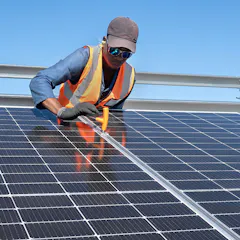
A just transition to a green economy with broad growth in employment will require deliberate efforts.

Packing lunchboxes everyday can seem like a thankless and impossible task. It needs to be healthy, low waste … and something your child will actually eat.

The environmental cost of fast fashion purchasing could be reduced with some industry changes.
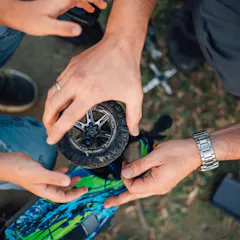
Hundreds of items are taken to repair cafes after Christmas in the hope that they can be fixed.

Many multi-unit residential buildings are designed or managed in ways that make recycling and proper waste disposal difficult.

Ever wondered if it’s wise to pour that old paint water down the sink? It can’t do any harm right?! The problem is not what you do, but what everyone contributes.
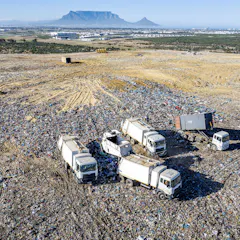
In South Africa, landfill practices impose a huge burden on the economy, environment and communities.

The arrival of a supercenter results in a 7% bump in consumer waste, a study found.

Breweries nationwide create waste at several stages of the beer-making process. Repurposing parts of this waste could improve antibacterial drugs.

An EcoBall match is a live demonstration of the circular economy.

Most people want to properly dispose of their waste, but they’re typically not prepared. Land managers can help users meet the moment.

Research shows most Australians believe they are good recyclers – but they’re often wrong. Here’s how to avoid common recycling mistakes.

The EU is vulnerable to shortages of materials that are required for clean technologies.

Local efforts to transform discarded garments and textile waste into valuable products are evidence that fashion and degrowth are compatible.
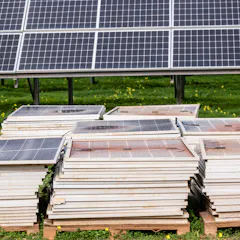
Older rooftop solar systems are being scrapped – often well before the end of their useful life. Establishing a product stewardship scheme is part of the solution.
Top contributors
-

Professor of Applied Environmental Science, University of Southampton
-
Senior Research Fellow, BehaviourWorks Australia, Monash University
-
Research associate, Loughborough University
-
Professor of Global Environmental Politics, University of California, Berkeley
-
Lecturer, School of Life and Environmental Sciences, Deakin University
-
Professor and Director Centre for Agricultural Engineering, University of Southern Queensland
-
Associate Professor at School of Property, Construction and Project Management, RMIT University
-
Senior Principal Research Scientist, Environment, CSIRO
-
Professor of Law, Griffith University, Griffith University
-
Emeritus Professor, School of Environment and Science, Griffith University
-
PhD Candidate in Environmental Science, Policy, and Management, University of California, Berkeley
-
Research Principal, Institute for Sustainable Futures, University of Technology Sydney
-
Associate Professor and Research Director, Institute for Sustainable Futures, University of Technology Sydney
-
Associate Dean and Head of Project Management, RMIT University
-
Associate Professor in Construction and Environmental Performance, The University of Melbourne