
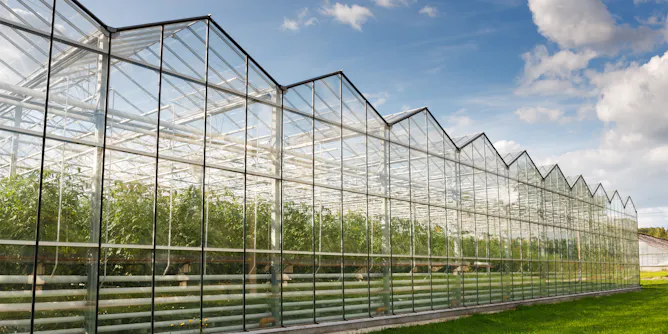
The proposed Rivenhall greenhouses could burn all household waste but the project must prove its low-carbon credentials to be more than just hot air.
Articles on Waste
Displaying 41 - 60 of 294 articles

A process called “exaptation” places repurposing resources and adaptations at the heart of evolution; what if our homes were designed on the same basis?
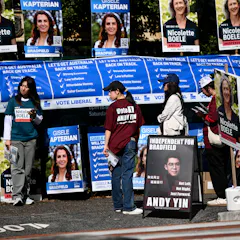
From corflutes and how-to-vote cards to 250,000 pencils, 240,000 volunteer vests and 80,000 ballot boxes, here’s what happens to election materials after polling day.

A survey shows people with healthy eating habits tend to waste less food than those who focus on choosing ethical and environmentally friendly products.

Not all plastic is the same. Old yogurt cups and milk jugs, for example, don’t play well together when being turned into new materials. However, there are solutions.
Soil erosion, water pollution, waste production and the loss of biodiversity are among multiple pressures degrading New Zealand’s environment.
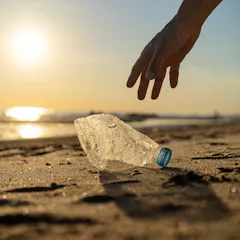
A CSIRO study has found 39% less plastic pollution in and around Australian coastal cities over ten years. It also found more places with no rubbish at all.
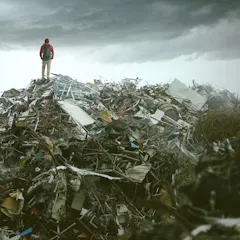
Waste, as a thing, an idea, a problem, has always been wholly determined from a human standpoint.
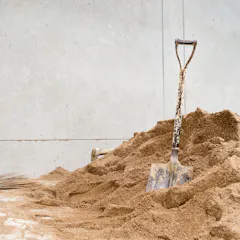
The world’s appetite for sand is surging – and it comes at a real cost to the environment. The alternative: a paradigm shift in metal mining to also extract sand.
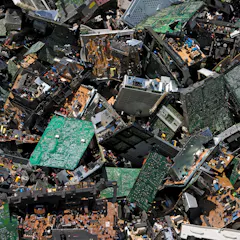
Less than 25% of all e-waste globally gets recycled. That’s because there are many challenges involved – but there is a way forward, too.
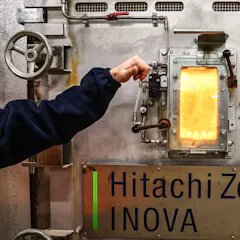
England plans to nearly double its number of waste incinerators.
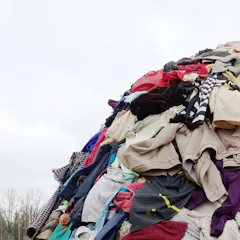
We give or throw away more and more clothes every year, overwhelming charities and triggering large exports of secondhand clothing. There’s a better way

Imagine going on a run and using your body heat to power your fitness tracker.

Many Australians are involved in Buy Nothing groups that allow locals to ask for and give away unwanted stuff for free. They bring circular economy principles to life, but depend heavily on women.
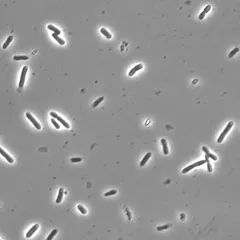
The world is full of microbes, and many of them like the taste of waste. Some carbon monoxide-loving microbes can be harnessed to transform waste into valuable biofuel.
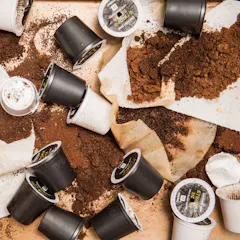
As concern about plastic pollution mounts, the federal government is revising its standards for calling products recyclable. A recent fine against Keurig could be a sign of things to come.

A proposed chemical recycling plant in western Michigan may provide a handful of jobs but little environmental benefit.
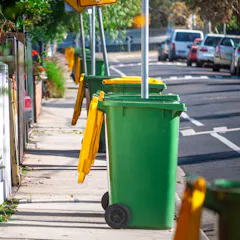
We all say we like recycling. But contamination rates are high. Victoria’s government hopes a new bin for glass and recycling soft plastic can help.

Australian consumers deserve a legal right to repair beyond the warranty. If we fail to keep up with the UK and EU, we risk becoming a dumping ground for cheap and nasty appliances.

The most common vapes on the market are single-use, disposable ones. They contain valuable resources, yet aren’t designed to be recycled.
Top contributors
-

Professor of Applied Environmental Science, University of Southampton
-
Senior Research Fellow, BehaviourWorks Australia, Monash University
-
Research associate, Loughborough University
-
Professor of Global Environmental Politics, University of California, Berkeley
-
Lecturer, School of Life and Environmental Sciences, Deakin University
-
Professor and Director Centre for Agricultural Engineering, University of Southern Queensland
-
Associate Professor at School of Property, Construction and Project Management, RMIT University
-
Senior Principal Research Scientist, Environment, CSIRO
-
Professor of Law, Griffith University, Griffith University
-
Emeritus Professor, School of Environment and Science, Griffith University
-
PhD Candidate in Environmental Science, Policy, and Management, University of California, Berkeley
-
Research Principal, Institute for Sustainable Futures, University of Technology Sydney
-
Associate Professor and Research Director, Institute for Sustainable Futures, University of Technology Sydney
-
Associate Dean and Head of Project Management, RMIT University
-
Associate Professor in Construction and Environmental Performance, The University of Melbourne