
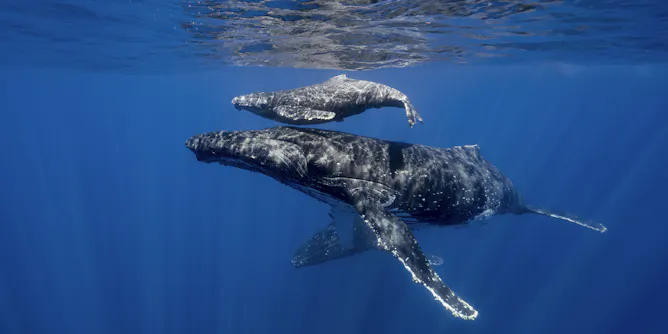
Our latest study takes a closer look at the emotional lives of humpback whales.
Articles on Whales
Displaying 1 - 20 of 201 articles
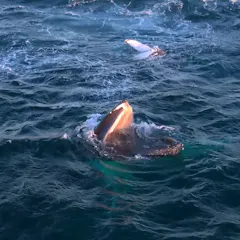
The discovery challenges a long-held assumption about where and when whales feed – and could help us better protect them.
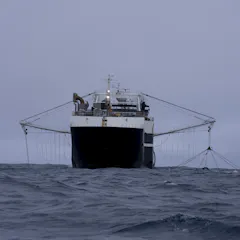
With location regulations no longer in force, fishing boats are harvesting thousands of tons of krill from very few areas, increasing competition with penguins, seals, whales and other marine life.
Could marine heatwaves in the cold Southern Ocean be making animals and birds migrate? It’s possible – but we need better monitoring to know.
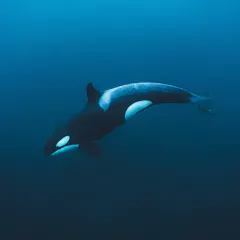
This never-before observed behaviour can tell us a lot about whale intelligence.
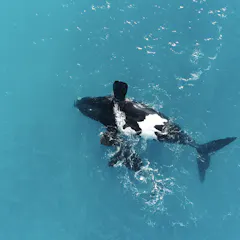
This behaviour is unique, rather perplexing and not reported in other large whales.
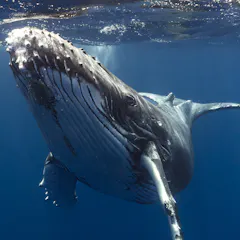
Wildlife expert Vanessa Pirotta talks whale digestion on The Conversation’s Curious Kids podcast.
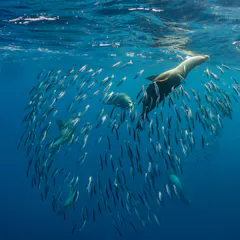
A dip in anchovy stocks is not only vital for Peru’s economy, but also essential for supporting fish farming and food production worldwide.

Chinese scientists have discovered hundreds of ancient whale carcasses deep in the Diamantina Zone off the coast of Western Australia.
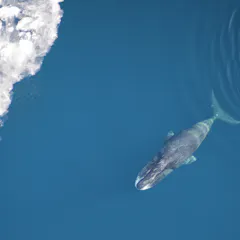
New research used whaling logbooks to explain why only two of the four bowhead whale populations are bouncing back from whaling, which was abandoned a century ago.
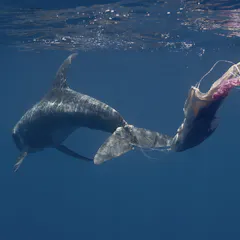
Entanglement is a major animal welfare issue for marine mammals. A successful rescue is not just whether an animal is cut free but whether it recovers from injuries.
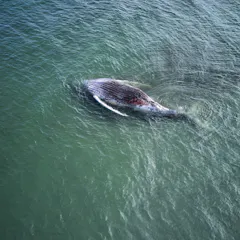
Like everyone, I cared about Timmy. We all did. But our responses need to be ethical.
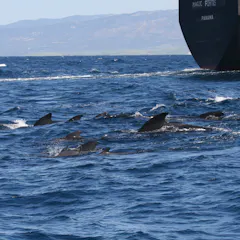
A new study highlights how noise pollution in the ocean is changing animals’ behaviour.
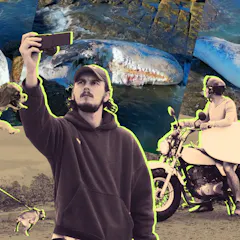
Don’t be a selfie tragic. Avoid dead whales, rock ledges and hungry sharks. Oh, and the carcass might explode.
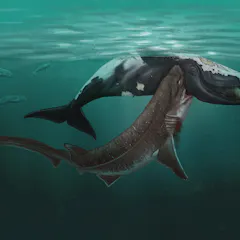
Could new populations of seals and porpoises attract the descendants of some of the large shark species that were thriving in this region 4-5 million years ago?
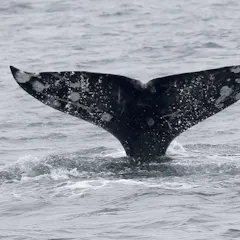
In the past, the gray whale population recovered fairly quickly. But data on baby whales show that isn’t happening, and a new study finds an alarmingly high mortality rate.
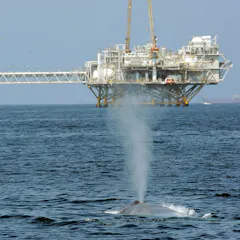
The committee voted to exempt some oil and gas operations from the Endangered Species Act in the name of national security.
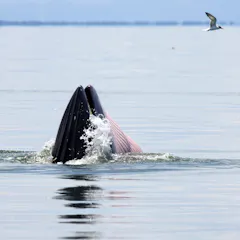
Biological matter left behind in the water allows us to follow these animals without ever setting eyes on them.

Whether capturing them on film, containing them in amusement parks, or subjecting them to scientific experiments, our curiosity about whales and dolphins has compelled us to capture them out of the ocean.
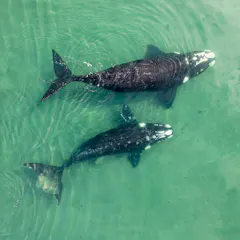
This reproductive slow down seems closely linked to climate-driven changes in the remote Southern Ocean.
Top contributors
-

Whale Scientist and Lecturer, Faculty of Science and Engineering, Macquarie University
-
Research Fellow in Marine Science and Manager Whales & Climate Program, Griffith University
-
Curator of Vertebrates, Museum of New Zealand Te Papa Tongarewa
-
Adjunct Professor, Institute for Marine and Antarctic Studies, University of Tasmania
-
Professor Evolution & Ecology, UNSW
-
Reader in Biology, University of St Andrews
-
Honorary Professor at Bangor University; Director of Sea Watch Foundation, Bangor University
-
Adjunct Research Associate, Monash University
-
Senior Curator, Vertebrate Palaeontology, Museums Victoria Research Institute
-
Senior Researcher in Marine Biology, Aarhus University
-
Lecturer, UWA Oceans Institute, The University of Western Australia
-
Antarctic Law Researcher, Institute for Marine and Antarctic Studies and the Antarctic Climate and Ecosystems CRC, University of Tasmania
-
Associate Professor, School of Science, Edith Cowan University
-
Professor of Ocean Sciences, University of California, Santa Cruz
-
Lecturer in Ecology, Scotland's Rural College