

When deciding whether and how to respond to residential schools denialism, teachers should consider the type of denialism, the students involved and their school and community context.
University of British Columbia

The University of British Columbia is a global centre for research and teaching, consistently ranked among the top 20 public universities in the world. Since 1915, UBC’s West Coast spirit has embraced innovation and questioned the status quo. With close to 63,000 students from 160 countries and more than 5,400 faculty on two campuses in Vancouver and the Okanagan, UBC is a place where bold thinking develops into ideas that can change the world. Its entrepreneurial perspective encourages students, staff and faculty to challenge convention, lead discovery and explore new ways of learning.
Links
Articles
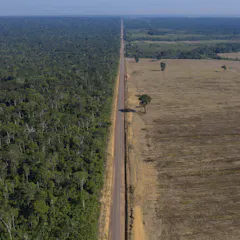
Sustaining Brazil’s recent deforestation gains will require stronger environmental enforcement beyond the rainforest and resistance to political efforts that could weaken it.
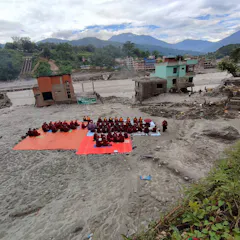
Development in known hazard zones is creating untenable risks for communities around the world. Here’s how Nepal and the global community can build back differently.

Le Canada a passé le dernier siècle à défendre les démocraties européennes. Aujourd’hui, il leur demande de lui rendre la pareille.

Canada has spent the last century defending European democracies. Now it’s asking them to return the favour.
More common extreme weather events can create opportunities for invasive species to spread.

Bacteria have transformed some viruses — now called gene-transfer agents — into a means of exchanging genetic material among themselves.
From almost 350 questions, nine experts answer the most common ones you asked.

A better understanding of the factors driving kindergarten school absences is needed, as are policies aimed at reducing the number of missed days.

As uncertain as Donald Trump’s new world order is, science can explain the effects of his aggression and how to respond.

The proportion of a watershed that is logged isn’t the only factor that determines flood risk. The landscape and climate matter too.
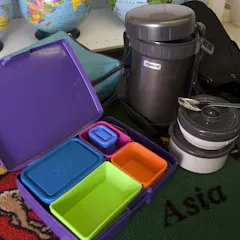
Canada’s ambitious vision for improving access to school food needs to be bolstered by community collaboration and high-quality research.
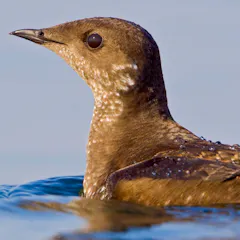
Facing pressures in both marine and terrestrial environments, the marbled murrelet is listed as threatened under Canada’s Species at Risk Act.

What happens to democracy when the independent people capable of resisting abuses of power are replaced by systems designed to make those abuses easier?
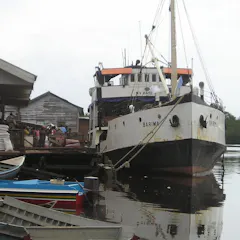
Frequent travellers of a Guyanese ferry that sunk in July allege routine overloading, unsecured cargo and engine failures.

New research shows that Canadian attacks on Indigenous rights are part of a clear international trend of what’s known as recolonization.

Math achievement gaps begin in kindergarten and persist through Grade 9, highlighting the importance of investing in children’s early development.

Announcing ambitious education policy goals is easier than ensuring institutions, employers and educators have the resources necessary to achieve them.

From space hotels and artificial meteor showers, to a new giant mirror that reflects sunlight to Earth — low-Earth orbit is getting weird.
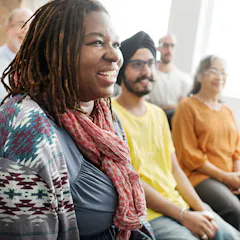
An ethics process must not become so preoccupied with the potential harm of participation that it overlooks the certain harm of exclusion.
Authors
-

Chair in Business and Professional Ethics, University of British Columbia
-
Associate Professor & Global Challenge Lead, Urban Transformations Research Centre, Western Sydney University; University of British Columbia
-
Clinical Associate Professor, Faculty of Medicine, University of British Columbia
-
Professor of Microbiology and Immunology, University of British Columbia
-
Associate Professor of Food, Nutrition and Health, University of British Columbia
-
PhD Candidate, Department of Forest Resources Management, University of British Columbia
-
Assistant Professor, Social Studies and History Education, Department of Curriculum and Pedagogy, Faculty of Education, University of British Columbia
-
PhD Candidate in Resources, Environment and Sustainability / Research Assistant, University of British Columbia
-
Professor, Department of Pediatrics, University of British Columbia
-
Liber Ero Postdoctoral Research Fellow, Institute for the Oceans and Fisheries, University of British Columbia
-
Associate Professor, Department of Anthropology and School of Public Policy & Global Affairs; Ivan Head South-North IDRC Chair, University of British Columbia
-
PhD Candidate, Institute for the Oceans and Fisheries, University of British Columbia
-
Lecturer, Political Science, University of British Columbia
-
Professor and Director, Institute for the Oceans and Fisheries, University of British Columbia
-
Professor, Department of Forest Resources Management, University of British Columbia