

Despite their name, Tasmanian devils could be found across mainland Australia thousands of years ago.
Articles on Aboriginal life
Displaying 1 - 20 of 31 articles

A world-first study involving 4,000 Australian adults shows political parties shouldn’t assume Indigenous candidates will face voter rejection.
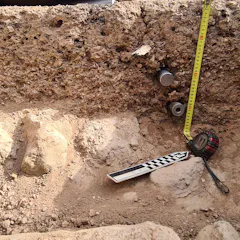
Our research at the site – which was traditionally restricted to women – has also uncovered tools previously only associated with male crafters.

To First Nations women, ‘care’ is more broad and all-encompassing than traditional definitions. We need a new approach to capturing, and appreciating, their work, paid and unpaid.

Aboriginal Elders play an important role as community leaders and cultural knowledge holders. Supporting this aspect of ageing well is crucial.

People in the Gurindji community of Kalkaringi in northern Australia call their sign language ‘Takataka’.
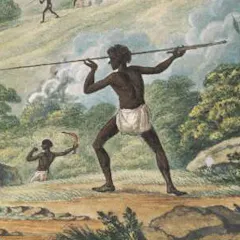
History has told us Aboriginal people in Tasmania almost exclusively occupied open plains. Revelations to the contrary could transform modern conservation.
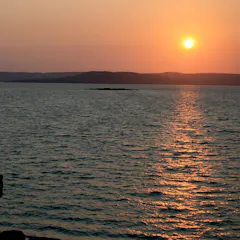
The first people to make it to Australia could have navigated their way by sea crossing, reaching the north-west coastline of the island continent more than 50,000 years ago.

Part of the land inhabited by some of the early Australians is now submerged, but details of their life is now revealed in an excavation on an island off the continent’s north-west coast.

Aboriginal people stayed settled in places across Australia for 50,000 years until Europeans arrived, showing a strong connection with the land.

A history of displacement and disconnection is still reverberating for Australia’s Indigenous people – and tackling the fall out means looking at the whole picture.
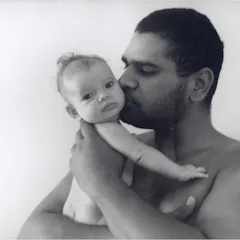
Bill Leak’s cartoon of a drunk Aboriginal father who doesn’t know his son’s name exemplifies a long tradition of white men’s fantasies about the inferiority of Aboriginal people.
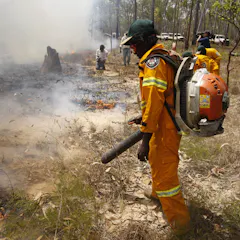
European invasion completely disrupted the way aboriginal Australians managed fire. Learning from Australia’s first people could help us fight fires in the future.

Just one generation ago Australian schoolkids were taught that Aboriginal people couldn’t count beyond five, wandered the desert scavenging for food, had no civilisation, couldn’t navigate and peacefully…
Findings by ANU’s Centre for Aboriginal Economic Policy Research indicates improvements to skills and policy changes has…

Language and Indigenous experts have welcomed a government report that recommends bilingual school education programs for Indigenous communities, saying it will benefit all Australians and help get some…
There is a larger absolute increase in mortality after a bone fracture among Canadian First Nations peoples (Canadian Indigenous…
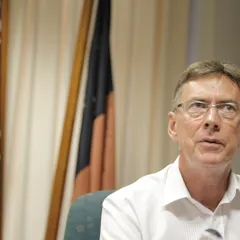
The recent Northern Territory election attracted an unusual amount of media attention amongst the “politically informed public”, especially in the south-eastern states of Australia. Media reporting saw…
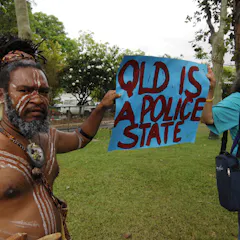
When a prisoner has served their time, it’s difficult to understand why they would be stopped from engaging in public debate or communicating with the media. But a new precedent has been set by the High…
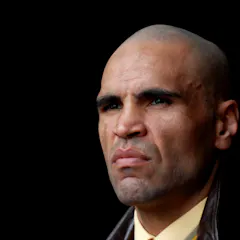
Muslim conversion is growing in Indigenous communities. In the 2001 national census, 641 Indigenous people identified as Muslim. By the 2006 census the number had climbed by more than 60% to 1014 people…
Top contributors
-

Professor of Pyrogeography and Fire Science, University of Tasmania
-
Distinguished Professor, Charles Sturt University
-
Sean Ulm is a Friend of The Conversation.
Director, ARC Centre of Excellence for Indigenous and Environmental Histories and Futures, James Cook University
-
Laureate Professor in Archaeology, The University of Western Australia
-
Honorary Fellow Asia Institute, The University of Melbourne
-
Lecturer, Victoria University
-
Postdoctoral fellow, Australian National University
-
Conjoint Associate Professor at the Centre for Primary Healthcare and Equity, UNSW
-
Professor of Linguistics, Yale University
-
Emeritus professor, School of Regulation and Global Governance, ANU, Australian National University
-
Senior Principal Research Scientist, CSIRO
-
Industry/Professional Fellow, Institute for Sustainable Futures, University of Technology Sydney
-
Professor, School of Social and Political Sciences, Director, The (so-called) Australian Centre, The University of Melbourne
-
Chancellor, Western Sydney University
-
Executive Director, The Stronger Smarter Institute; Professor of Education, University of Canberra