
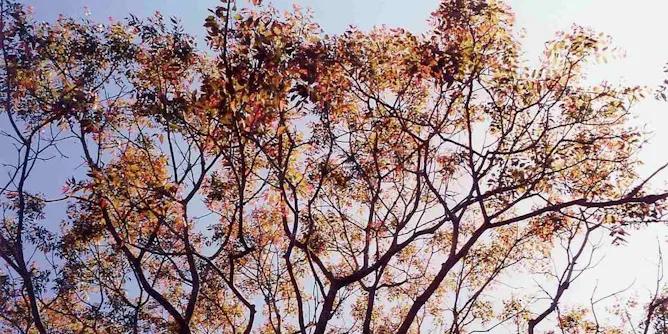
Native deciduous trees are rare in Australia, which means many of the red, yellow and brown leaves we associate with autumn come from introduced species.
Articles on Botany
Displaying 61 - 80 of 125 articles
We may think of plants as passive life forms, but they can cooperate, share resources, send one another warnings, and distance themselves from their communities when survival depends on it.
This Easter, read about this remarkable species of resurrection fern — plants that appear dead and dry, but under the right conditions rapidly spring to life.

Glaciers support a unique community of plants, many of which are found nowhere else.

For some sand-dwelling plants, stickiness is a defense tactic that keeps predators at bay.
As invasive species transform the world, frontline agencies take solace that species needing unique partners can’t invade alone. A new study on figs shows they may find new partners to invade anyway.
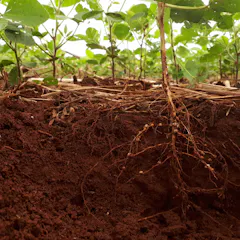
Researchers have unearthed a ‘biological switch’ which could boost crop yield worldwide.
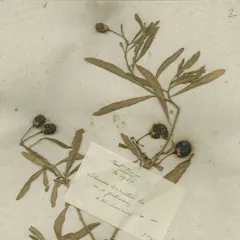
Johann August Ludwig Preiss was the first professional botanist to systematically collect flora in the Colony of Western Australia. Yet he is little remembered today.
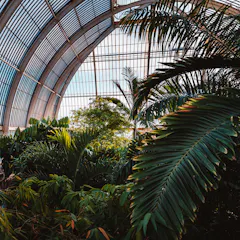
Scientists still report species as being ‘discovered’, even if they’ve been used by local populations for years.

Botany was an integral feature of Britain’s colonial and imperial ambitions.
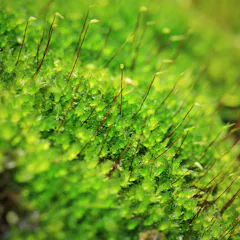
New research has pinpointed the genetic boost behind one of the biggest transformations of life on Earth.
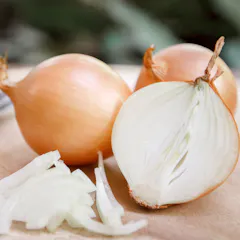
Like many plants, onions have defenses to ward off creatures that may want to eat them. Their secret weapon is a kind of natural tear gas.
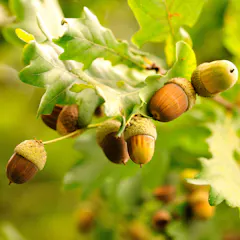
Masting is what biologists call the pattern of trees for miles around synchronizing to all produce lots of seeds − or very few. Why and how do they get on schedule?
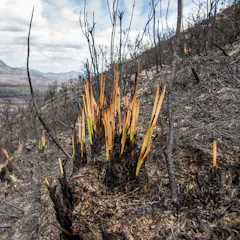
Not only can plants survive fire, they can use the experience of being burned to prepare themselves for future blazes.

A new IPCC report has called for radical changes in food production to avoid catastrophic climate change. Rice-fish farming and mixed crops could help.
Plants clearly lack brains but does all intelligence have to look like our own?
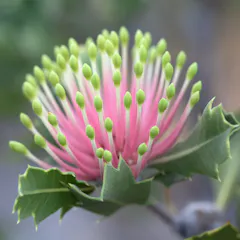
A recent global survey found almost 600 plants have gone extinct. And this figure is likely to be an underestimate.
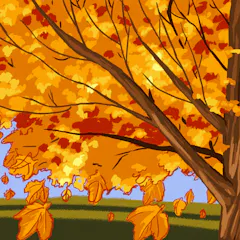
Leaves fall off trees when they aren’t doing their job any more. If there isn’t enough water, the leaf can be damaged and stop working.

Eucalypts have been in Australia for 45 million years. But hundreds of species appeared more recently than previously thought.
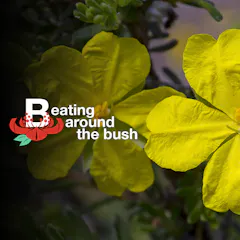
The guinea flower grows right across Australia.
Top contributors
-

Senior Research Associate, School of Agriculture, Food and Ecosystem Sciences, The University of Melbourne
-
Assistant Professor of Plant Evolutionary Biology, University of Tennessee
-
Lecturer and Researcher in Plant Humanities, UNSW
-
Vice President of Academic Affairs and Dean of the College, Grinnell College
-
Founder of Msit No’kmaq
-
e-Flora Coordinator, South African National Biodiversity Institute
-
Professeur, Biologie et Biochimie végétales, IUF, Université de Lorraine
-
PhD Candidate, Social Justice Education, Ontario Institute for Studies in Education, University of Toronto
-
Lecturer in Environment and Sustainability, Keele University
-
Chair of ARC Centre of Excellence for Quantum Biotechnology, The University of Queensland
-
Associate Professor in Environmental Science, Western Sydney University
-
Research Associate, North Carolina State University
-
Professor of Biological Sciences, University of Maryland, Baltimore County
-
Associate Professor of Biology, Columbus State University
-
Postdoctoral research fellow, Australian National University