
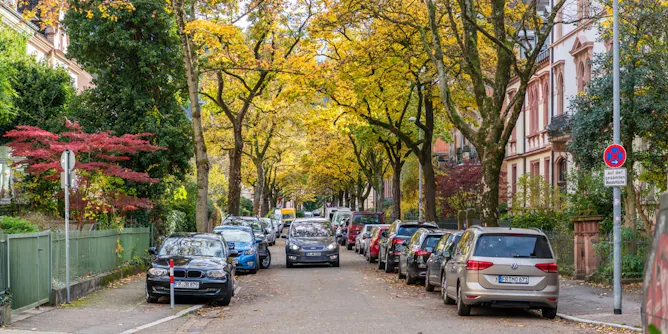
The tiny gardens beneath street trees can boost biodiversity and our connection to where we live.
Articles on Trees
Displaying 1 - 20 of 414 articles

Some European cities have poor tree shade cover and this is ramping up heat for their citizens.
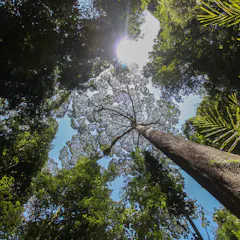
Ecologists thought the largest trees would be most vulnerable to drought. The reality is more complex, with some forest giants unexpectedly resilient.
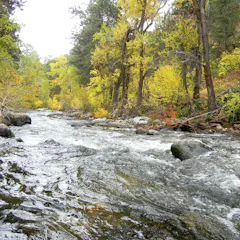
Understanding what happened in these forests 56 million years ago may help humanity recognize similar thresholds before we cross them again, the lead author of a new study writes.

By identifying the genes and molecules crucial to resistance in American chestnuts and other species, researchers hope to use genomic techniques to breed trees that can flourish in the face of blight.
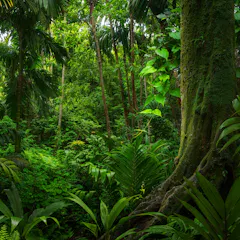
Some of South America’s tropical forests effectively stopped absorbing carbon during the 2015-2016 El Niño.
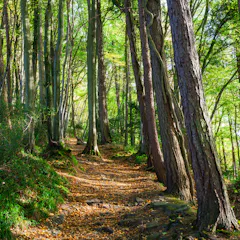
British trees struggle to survive as temperatures get higher, and many die.
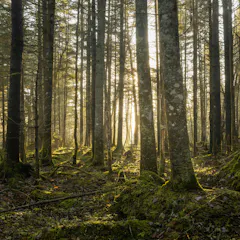
Relocating trees to protect forests struggling with climate change seems promising, but the extreme complexity of ecosystems poses challenges.
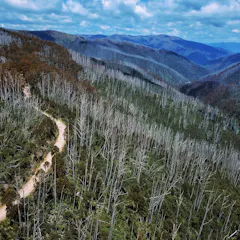
A hotter, drier and more fire-prone future is putting these unique trees at risk.
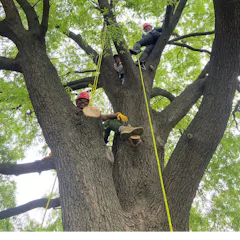
Cities benefit from trees, which can cool concrete sprawls and improve air quality.
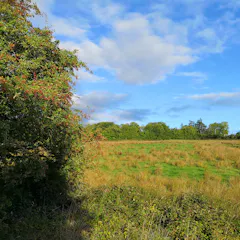
Forests benefit everyone – but farmers carry the risk.
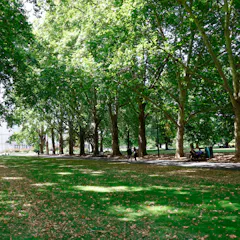
A new study has shown that more vegetation is not automatically better.

Cytospora canker damages peach trees and decreases orchard production over time.

Two big factors influence the length of the allergy season and how bad people’s allergies will be, and both are expanding.
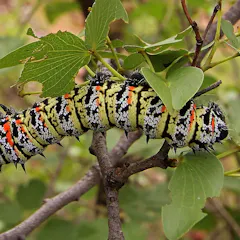
Mopane worms are an important source of food security and cash income for some rural households.
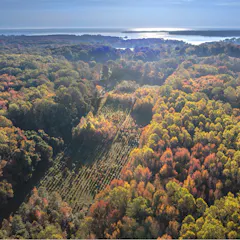
The tree mix matters. Near Chesapeake Bay, scientists have been experimenting with mini-forests for over a decade. The surprising results show how biodiversity pays off.
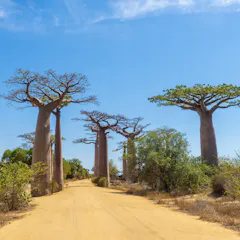
Ancient baobabs in Madagascar have unlocked a 700-year rainfall record that is set to help scientists figure out how to adapt to climate change.
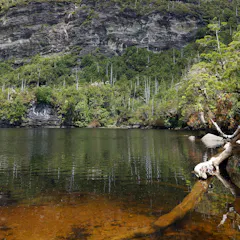
Tannin stains on concrete, cars and decks may be unsightly, but that doesn’t mean tannins are unimportant.
Carbon removal strategies may conflict with biodiversity conservation, but careful choices could bring benefits.
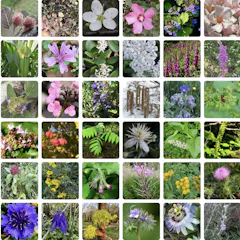
Pl@ntNet, the “shazam” for plants is a well-known app among the hiking community and nature enthusiasts, but not many know that it’s a precious resource for scientists.
Top contributors
-

Senior Research Associate, School of Agriculture, Food and Ecosystem Sciences, The University of Melbourne
-
Honorary Associate Professor, Forest Measurement and Management, Fenner School of Environment and Society, Australian National University
-
Distinguished Professor of Ecology, Fenner School of Environment and Society, Australian National University
-
Professor of Environmental Science, Australian National University
-
Distinguished Professor, Ecosystem Function and Integration, Western Sydney University
-
Professor Emeritus of Global Change Biology and Terrestrial Systems Science, Oregon State University
-
Professor Emeritus of International Environmental Policy, Tufts University
-
Vice-Chancellor's Research Fellow, Centre for Urban Research, RMIT University
-
Associate professor, The University of Melbourne
-
Professor of Plant Eco-physiology, Western Sydney University
-
Professor in Forest and Landscape Dynamics, The University of Melbourne
-
Vice President of Academic Affairs and Dean of the College, Grinnell College
-
Professor of Atmospheric Science, University of Birmingham
-
Professor, Plant Physiology, James Cook University
-
Distinguished Research Professor and Australian Laureate, James Cook University