

Some families turn to home education only when they feel they have no other option.
Articles on Bullying
Displaying 1 - 20 of 237 articles
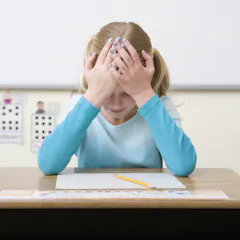
A study tracking nearly 4,000 NZ children finds that, by eroding self-belief, adversity can leave them feeling less connected to school.
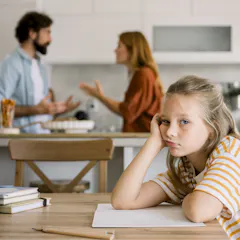
Observing how grown-ups operate provides children with information on how they can shape their worlds to get what they want and avoid what they don’t want.
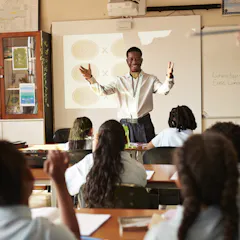
Teachers’ past experiences of bullying shape how they might understand or respond to learner behaviour.

New research suggests that bullying prevention work should address the broader classroom environment, not just students’ individual characteristics and behaviors.

The war on terror is among the Middle East conflicts that sparked a rise of anti-Muslim and anti-Arab discriminatory incidents in the US.
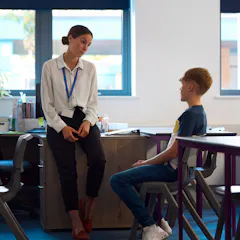
Aggressive behaviour may be modelled and reinforced in homes, schools, and communities.

Teasing is a common but complex behaviour that can signal relational closeness, but it can also have antisocial functions.

With a major inquiry into online harms nearing its conclusion, NZ faces a pivotal decision about how boldly it wants to respond.

A technical fix can’t solve a social problem.
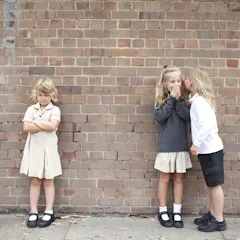
The federal government has encouraged kids to ‘stand up’ to bullies on behalf of victims. But research suggests it may not work and can even be counterproductive.

Factors contributing to school violence are found in the family, the community and the school.
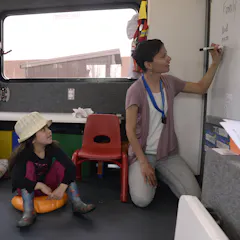
Younger and more diverse teachers reported higher rates of bullying and discrimination by their colleagues. This can also affect the kids they care for.
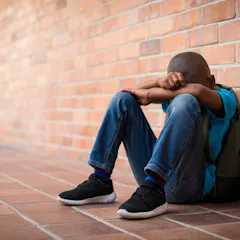
Social initiation practices at school may normalise violence as a means of navigating power and identity among boys.

The internet long ago extended cruelty beyond the school gate and into bedrooms and group chats. The powers of AI extend this reach.
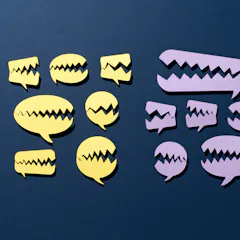
Cyberbullying and cybertrolling are alarmingly common among young people. Research suggests we need to do more than limit screen time to curb this behaviour.
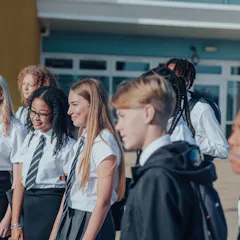
The federal government has released its ‘rapid review’ into school bullying. Most of the submissions came from parents.

Homeschooling ranges from highly structured ‘school at home’ to ‘unschooling’ where kids learn through living.
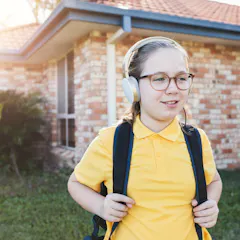
Researchers heard from students who described ‘being picked last for everything’, as well as teasing and physical pushing at school.
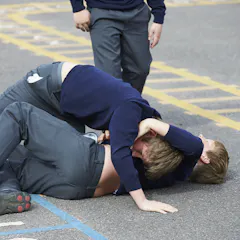
When we look at the definition of bullying, it is not surprising disagreements occur. Identifying bullying is not clear-cut.
Top contributors
-
 Karyn Healy is a Friend of The Conversation.
Honorary Principal Research Fellow in Psychology, The University of Queensland
-
Program Director & Associate Professor Master of Psychology Health and Wellness & Master of Industrial-Organizational Psychology, Adler University
-
Professor, School of Early Childhood & Inclusive Education, Queensland University of Technology
-
Senior Lecturer in Education, Queensland University of Technology
-
Professorial Fellow, University of Canberra
-
Adjunct Professor of Education and Social Development, Adelaide University
-
Leverhulme Early Career Research Fellow, University of Oxford
-
Lecturer in Social Work (Youth), Flinders University
-
Adjunct Professor, RMIT University, RMIT University
-
Presidential Fellow in Organisational Psychology, University of Manchester
-
Senior Lecturer, School of Aviation, UNSW
-
Professor of Psychology, University of Warwick
-
Professor of Psychology, Edge Hill University
-
Professor of Belonging Science, School of Educational Psychology and Inclusion, Faculty of Education, Monash University
-
Adjunct Professor, School of Education, RMIT University