
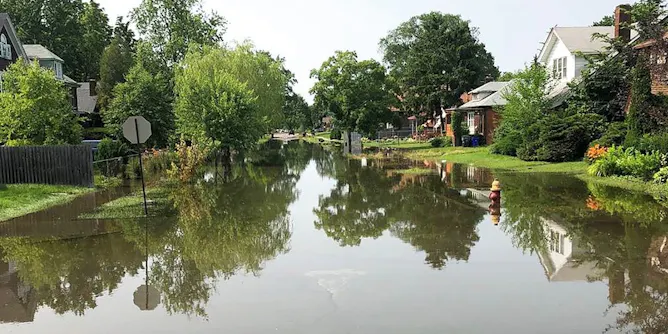
Mapping where water once flowed is important for managing flood risk today in Detroit and elsewhere.
Articles on Cities
Displaying 201 - 220 of 1700 articles

A new report on sustainable and affordable housing falls short by failing to fully consider land-and-housing market dynamics.

Feelings of “time scarcity” are on the rise, but research shows that natural surroundings can help us to slow down.
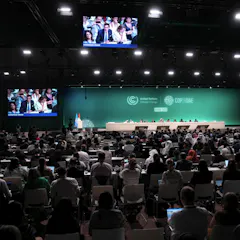
Subnational authorities are leading the charge on a just transition and dealing with climate change impacts. It is time for this key role to be reflected in international climate negotiations.

Citizens in South Africa’s industrial heartland use too much water, the city wastes way too much and there is too much theft of drinking water.

Many incentive programs promote e-bike use, but they aren’t necessarily targeting the right people for the right reasons.

One of the earliest known references to asbestos may come from Theophrastus, a student of Aristotle and his successor at the Lyceum in Athens.

‘Situationists’ believe the physical spaces around us, and how we interact with them, has a significant impact on how we feel.
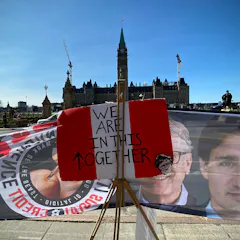
Canada’s cities must be planned around resident
health and well-being, our research reveals the key barriers to developing truly healthy cities.

The inability of city authorities to enforce land-use regulations has allowed people to carry out ecologically unfriendly activities along the water bodies.
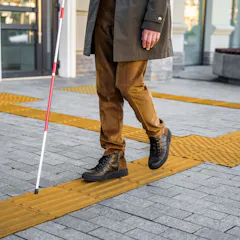
Decades of activism have resulted in legislation and infrastructure to make cities more accessible, but the lived experiences of disabled residents shows there’s still a long way to go.

Focusing on metrics that measure a city’s quality of life could be detrimental to its long-term sustainable development.

Neighbourhood features may have helped youth cope with the mental health impact of pandemic restrictions. Parks didn’t play much of a role but food amenities and the suburbs did.

China has a lot of vacant retail space, including many underused shopping malls. An urban policy scholar describes how the Chinese are rethinking what the mall is for.

AI could take us beyond the concept of smart cities, telling us how and why things happen in urban settings.

Shoplifting has been hyped as a driver of chain-store closures, but did these companies ever really understand urban environments in the first place?

The Canadian federal government is pursuing the idea of “smart cities,” but in the wrong way.
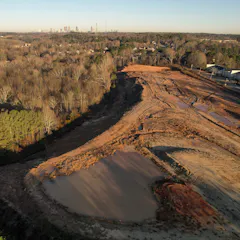
This isn’t the first time that US authorities have criminalized civil disobedience or framed grassroots organizing as a conspiracy.
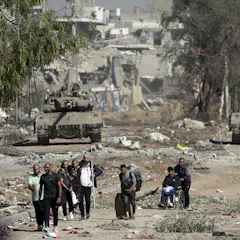
Urban warfare and the extensive tunnel network in Gaza benefit Hamas and pose a major challenge to the Israeli military.

The idea of the 15-minute city has become popular globally. But this approach relies on ableist assumptions and doesn’t reflect inclusive urban design.
Top contributors
-
 John Rennie Short is a Friend of The Conversation.
Professor Emeritus of Public Policy, University of Maryland, Baltimore County
-
Head of Urbanism and Associate Professor of Urban Studies, School of Architecture, Design and Planning, University of Sydney
-
Professor of Sustainability, Curtin University
-
Professor of Human Geography and Planning, University of Tasmania
-
Professor of Urban Policy and Director, Urban Futures Enabling Impact Platform, RMIT University
-
Transport and Cities Program Director, Grattan Institute
-
Senior Lecturer in Urban and Environmental Planning, Griffith University
-
Associate Professor in Urban Planning, The University of Queensland
-
Adjunct professor, School of Media and Communications, RMIT University
-
Associate Professor of Urban Planning, The University of Melbourne
-
Professor of Housing Research, Adelaide University
-
Research associate at African Centre for Cities, University of Cape Town
-
Housing Policy Researcher, Expert Advisor, Housing Assessment Resource Tools and Adjunct Professor, L’Université d’Ottawa/University of Ottawa
-
Emeritus Professor, Urban Planning and Policy, University of Sydney
-
Emeritus Professor of Housing, UNSW